
-
The surface problem: “We can’t find direct emails”
- The deeper issue: email finders amplify whatever is upstream
-
What this misuse really costs
-
Okki Go vs Clay is a workflow question, not a gladiator fight
-
When should a B2B sales team use an email finder? Here’s my rule
-
When not to use an email finder
People often start this conversation from the wrong end. They see a review of okki-go, read a comparison like okki go vs clay, and then ask, “Which email finder is fastest?” I get why. A CRM full of company names with no contact emails feels like a data gap. But after years of emergency list builds, I can tell you: missing emails are rarely the root cause. They are the last missing piece.
So what is an email address finder and when should a B2B sales team use it? An email address finder takes a name and a domain—or a LinkedIn URL—and returns the best known business email address for that person. Most tools also attempt to verify it. The honest ones will tell you verification is not 100%, no matter what the sales page says. The real question is not “which tool?” It is: when does a B2B sales team actually need an email finder?
The surface problem: “We can’t find direct emails”
A B2B services client called me in March 2025 with a 36-hour deadline. They had 400 accounts that looked like fits, but 300 of them had no direct email addresses. Normal turnaround for that kind of list build is three to five days. They wanted a same-day email-finder recommendation.
I asked the question they didn’t expect: what percentage of those 400 accounts fit your ideal customer profile? No one could answer. We spent the first six hours disqualifying accounts and cutting the list to 160. Then we enriched those. The campaign went out on time—not because we found emails faster, but because we stopped trying to reach bad fits faster.
That pattern shows up again and again. The team thinks the problem is contact coverage. The actual problem is upstream: they haven’t decided who should receive the email at all.
The deeper issue: email finders amplify whatever is upstream
An email finder is a contact-layer tool, not a pipeline tool. It tells you how to reach a person. It does not tell you whether that person is worth reaching.
Most sales intelligence features fall into two buckets: account-level signals and contact-level data. The underrated features are not “more contact records.” They are the filters around firmographics, technographics, intent, and trigger events—because those help you build a sharper ideal customer profile. Contact search should happen after those filters, not before.
1. The real blocker is usually the ideal customer profile
If you ask five SDRs to describe your ideal customer profile and get five different answers, an email finder will not help you. You need to settle the target before the tool. Are you going after product-led companies with 50-500 employees? Do you exclude enterprises that already have a mature sales team? Which pain trigger makes them likely to buy now?
I don’t have hard data on how many search credits are spent before teams realize this. Anecdotally: a lot.
2. Account-level qualification is being replaced by contact search
Finding the VP of Sales at a company with 5,000 employees is easy. Finding out whether the company recently changed its revenue model is harder. One is a lookup; the other is qualification. If your B2B sales team skips qualification, the email finder simply lets a rep send the same sequence to more wrong people.
3. Coverage is being confused with quality
“The tool found 95% of the emails!” is a terrible victory metric if the account list was wrong. And even with the right accounts, an email address finder doesn’t tell you if the contact is still in the role, whether your message is relevant, or whether there is a reason to reply. It only tells you that an address exists.
What this misuse really costs
The visible cost is wasted credits. The invisible cost is bigger. When you keep reaching out to addresses that don’t fit your ICP, you waste SDR hours, burn domain reputation, and train your team to value activity over fit. That is hard to see in a dashboard until the channel stops working.
That is why I don’t hand out “which email finder” advice as a first step. If the workflow problem is upstream, a faster finder simply makes the wrong workflow faster.
Okki Go vs Clay is a workflow question, not a gladiator fight
Because I work in this space, people expect me to have a strong opinion in the okki-go vs Clay debate. I do, though it’s not the one you’d guess. Both tools are execution engines. If an engine receives bad input, it produces bad output faster.
Clay is powerful when you need to combine multiple data sources into a spreadsheet-like research workflow. Okki Go is more oriented toward agent-native prospecting: taking a defined account list, adding research and outreach steps, and helping an SDR stay in control. The okki go AI agent integration is most useful after a human has defined the ICP and the account qualifications. Without those, an AI agent is just automating bad judgment at scale.
So when you see okki go vs clay content online, translate it into a workflow question. Which layer of the pipeline is actually broken? If it’s just contact discovery, an email finder alone is enough. If it’s everything after contact discovery, you have a bigger process problem.
When should a B2B sales team use an email finder? Here’s my rule
Use an email finder when all three are true:
- Your ideal customer profile is clear. You can describe the ICP, the trigger event, and the buying team in a way a new SDR can repeat without asking.
- You already have a qualified, account-level list. The accounts passed firmographic, intent, or territory checks. The only missing layer is contact information.
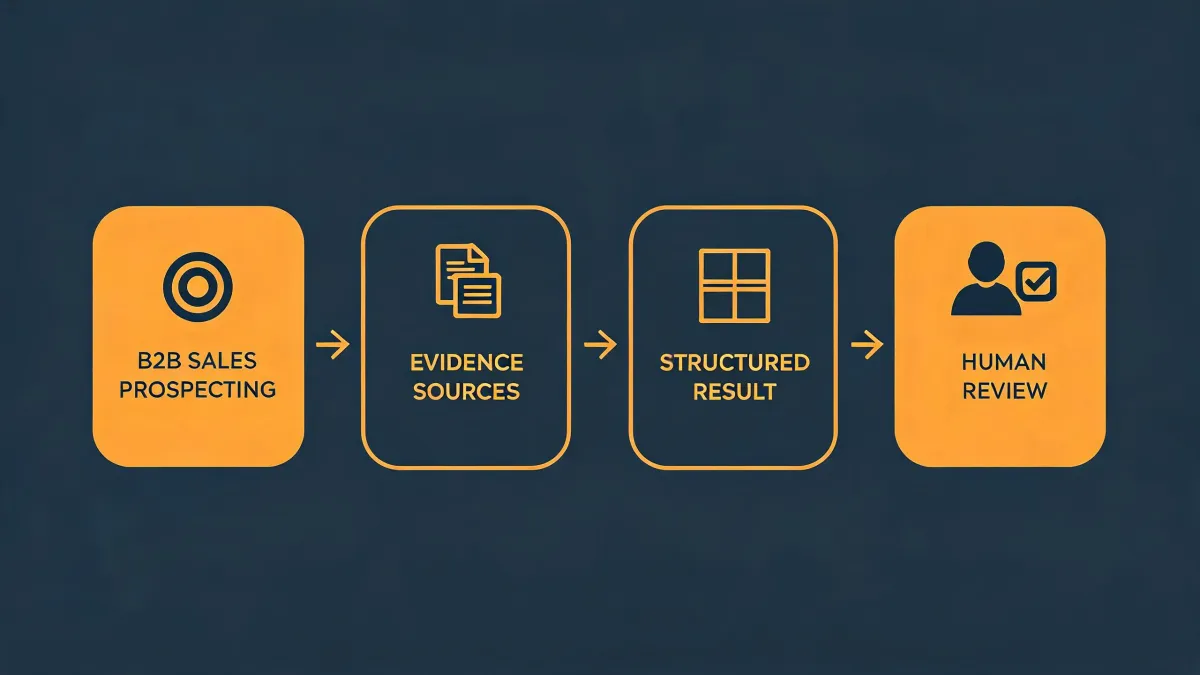
- You are ready for human review. The tool is not deciding who to contact; it is cleaning the outreach list so someone can send a relevant first touch.
For small teams, take this even more seriously. I have seen a three-person company get more real conversations from 60 tight ICP accounts than a larger company got from 5,000 scraped contacts. Small doesn’t mean unimportant; it means easier to be precise.
When not to use an email finder
Don’t use one to rescue an abandoned campaign. Don’t use it as the starting point when reps cannot tell you their ICP. And don’t use it when the problem is response quality with your existing emails. A new address will not fix an irrelevant message.
Manual prospecting is not the enemy. For a small number of high-value accounts, I still recommend manual touches. An email finder should remove the repetitive lookup part, not replace the judgment part.
My experience skews toward B2B SaaS, agencies, professional services, and outsourced sales teams. If your motion is different, your mileage will vary. But the sequence is the same: define the population before reaching the person.
Bottom line: an email address finder is a tool, not a strategy. It should feel like a shortcut after you have done the real work of deciding who to contact. Define your ideal customer profile, qualify accounts, then search for the emails of the humans who matter. That is the only order that makes an email finder feel like it is working.