
Every few months, our sales director shows up with a new acronym. CRM, ABM, ICP, SDR. This time it was AI SDR, and he wanted me to look at Relevance AI. I'm not a RevOps expert. I'm the office administrator who manages roughly $200k a year in software subscriptions, so I get pulled into purchases for one reason: to make sure what we buy actually gets used and invoiced correctly. After a vendor with no proper invoicing cost me $2,400 in rejected expenses, I stopped trusting sales pitches.
So I spent five weeks evaluating Relevance AI platform agents workflows—and trying to answer the question that got buried under the marketing: when should a B2B sales team use a cold email tool at all?
The Surface Problem: Everyone Wants a Cold Email Tool
Let's start with the question behind all the keywords: what is a cold email tool, what features matter, and when should a B2B sales team use it? A cold email tool is a system to find, verify, send, and track outreach emails to people who haven't opted in. The features usually include email finder, email verifier, personalization variables, sequences, scheduling, and deliverability analytics. You use it when your team needs to contact a large number of prospects consistently. You probably should not use it when every prospect is a hand-picked relationship and you have time to write each email like a personal letter.
When I compare email verifier features, I look for syntax checks, MX record validation, SMTP confirmation, catch-all detection, role account detection, and disposable domain flags. If a tool can't tell me whether an address exists before it burns my domain's reputation, I won't send a single campaign. Per FTC guidelines (ftc.gov), cold email still needs truthful subject lines, a real postal address, and a working opt-out. No verifier fixes compliance. But it does keep bounces from making things worse.
The Deep Cause: Most Tools Sell Features, Not Workflows
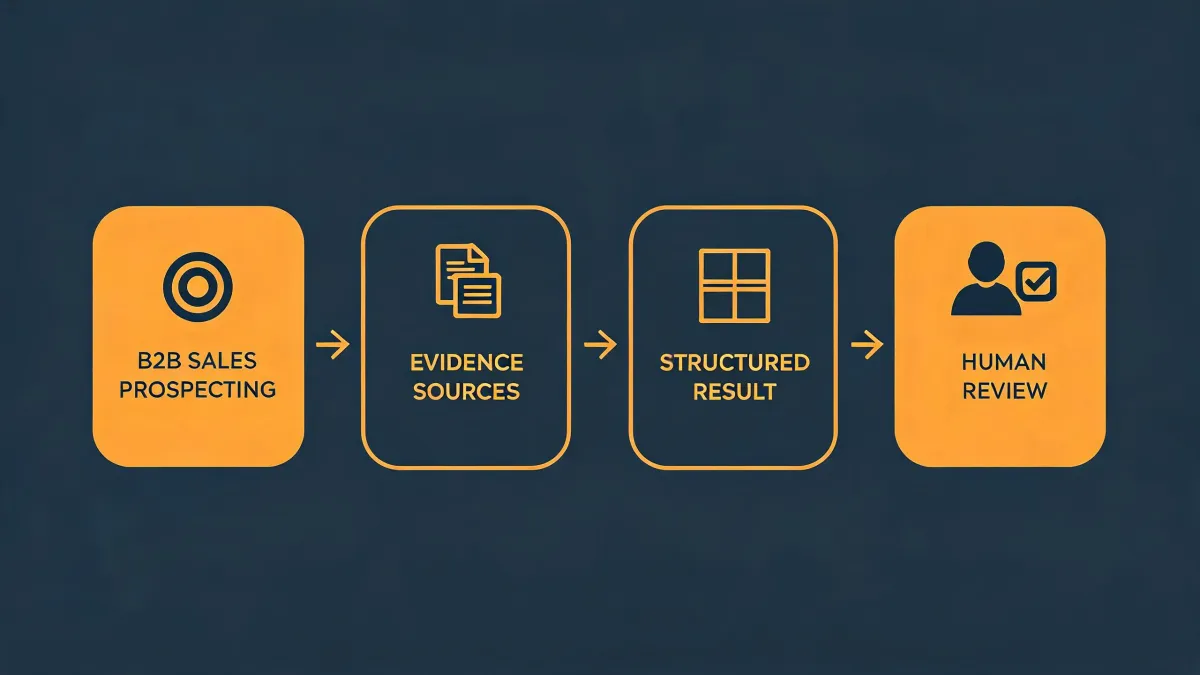
The part I liked isn't a single feature. It's that Relevance AI's platform agents workflows let you combine research, enrichment, intent scoring, verification, and outreach into one run. Most cold email tools are point solutions. This is a workflow. In my test, I set up a workflow to find 50 companies that recently talked about intent data and ABM. The agent searched the web, enriched the contacts, scored the accounts, ran every email through the verifier, and drafted a two-touch sequence. It took me about 40 minutes to set up. That includes a human approval step before anything leaves.
This is what people mean when they say intent data ABM platform. You can take account-level intent signals, rank accounts by likely buying activity, and then trigger outreach. Relevance AI is not a full ABM suite like 6sense or Demandbase. But for a small B2B team, having intent data inside an agent workflow removes the most painful part of ABM: the lag between seeing a signal and acting on it.
The Real Cost Is the Time You Lose to Integration
Here's why the time-certainty point matters. The sales team had already missed two quarterly targets. They couldn't afford another month of assembling separate tools. If you have an automation person who can stitch together n8n, Zapier, or Make, that route is flexible and maybe cheaper. But flexible isn't certain. When I saw the set-up time for a purpose-built agent workflow, the difference was obvious. You are paying for certainty, not just for AI.
Why do I keep saying certainty? Because the real cost of a wrong choice is hidden. The license bill is small compared to the wasted list, the burned domain reputation, the Monday morning meeting where someone says the campaign is delayed. I do not mean a platform guarantees results. I mean a good workflow removes the phrase 'I hope the integrations work.'
The best part of finally seeing a clean send queue: no bounce report anxiety. After testing email verifier features, we watched our bounce rate drop from around 8% to under 2% within two weeks—not because verification is magical, but because it stops bad addresses before they hit the mail server.
Relevance AI Disadvantages: What Reviews and Cons Pages Leave Out
The honest reviews of Relevance AI usually mention learning curve and price. Those are real. But the bigger disadvantage is that an AI agent still needs adult supervision.
- Agent mistakes are quiet until they aren't. In testing, the agent sent a draft with the wrong company name in the opening line. Not because the model is bad, but because the enrichment source had two similar companies. You need a validation step and someone scanning before send.
- Setup is easier than debugging. Drag-and-drop is approachable. Conditional logic, CRM fields, scoring thresholds—that's not a drag-and-drop moment. It's automation thinking.
- Pricing tiers are not a complete story. Public pricing exists, but seats, agent runs, credits, and support levels add up. As of Q1 2026, I saw user reviews on G2 and TrustRadius mention bills that surprised them. Ask for a contract model before you sign.
- It's not an ABM platform. It can use intent data, but it won't replace your ad platform, campaign reporting, or account mapping. Don't cancel your current stack until your workflow works.
The most frustrating part of testing an AI sales agent is that the demo runs perfectly. Then the first live-ish workflow hits a weird edge case—a company with no website, a role account that looks valid, a CRM rule that didn't sync. That's when you realize the tool is a craft, not a magic button.
When to Use It (and When to Walk Away)
Use a cold email tool or an AI SDR platform when your outbound needs volume, consistency, and speed. You have a repeatable ICP. Your team can't manually write 30 personalized first lines per day. You need replies to land in a shared inbox or CRM with a clear next step.
Walk away when you only have 100 hand-picked accounts and your sales reps know each one personally. In that scenario, an AI agent is overkill. Also walk away if you don't have a process for replies. An AI SDR that generates meetings no one can follow up on is just a more expensive way to look busy.
My experience is based on one evaluation for a 140-person company. If you're a 10-person startup or a 2,000-person enterprise RevOps team, your experience may be different. And the market changes fast—this was written in Q1 2026, so verify current pricing and features before you trust me.
Final Thought
Relevance AI isn't perfect. It has a learning curve, it needs human review, and pricing needs scrutiny. But if the real problem is time certainty—getting a verified, personalized sequence out the door without a month of integrations—then purpose-built agent workflows are worth the extra effort. Just set up the verification step first. I learned that the hard way.