
-
The Comparison Framework: Relevance AI vs. the Point-Solution Stack
-
Dimension 1: Time-to-First-Campaign
-
Dimension 2: How Does API Company Data Fit Into an Agent-Native Prospecting Workflow?
-
Relevance AI Review: AI SDR Features and the Pros/Cons That Matter
-
Relevance AI Pricing Plans 2024: What I Actually Compared
-
The Risk Dimension: Where the Old Stack Hurt Me
-
Which Should You Choose?
I coordinate rush sales ops for B2B teams. When a launch is 48 hours away and the lead list is missing 40% of the data we need, I'm the one who gets called. So this Relevance AI review isn't a feature tour—it's a practical comparison between two ways to run prospecting: an agent-native workflow and the old point-solution stack.
I went back and forth between the two approaches for three weeks. Relevance AI offered speed and less integration glue. The traditional stack offered familiarity and separate vendors. On paper, I kept leaning toward the safe choice. But my gut said we'd spend more time managing tools than talking to prospects. So I compared both across five dimensions: setup speed, data enrichment flow, AI SDR features, pricing plans 2024, and risk.
The Comparison Framework: Relevance AI vs. the Point-Solution Stack
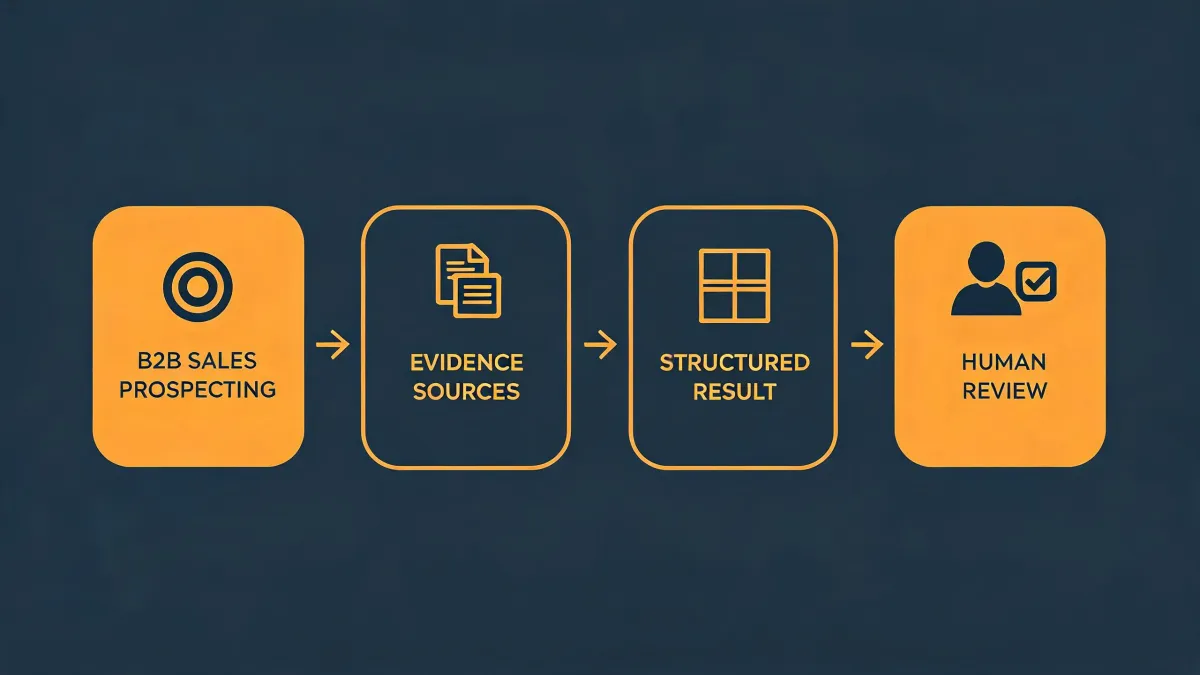
The point-solution stack usually means a data enrichment company API, a sales engagement tool, a CRM, and an automation layer to move records around. Relevance AI is an agent-native platform that can call the same enrichment API, score leads, and execute outreach steps. Same raw materials, but very different architecture.
Dimension 1: Time-to-First-Campaign
When I'm triaging a rush sales ops request, the first question I ask is: how many handoffs exist between the data source and the send button? More handoffs means more things to break. In March 2024, 36 hours before a product launch, my team realized that 60% of our target accounts didn't have decision-maker emails. Normal fix: run a batch data append, wait for the enrichment vendor to process it, then manually clean and upload. With Relevance AI, we wrote an instruction in plain English: 'For every account in the launch list, pull the decision-maker email from our enrichment API, score by intent, and draft a personalized cold email.' Setup took 20 minutes. The old stack would have taken a day and a half—and that's if nothing went wrong.
Dimension 2: How Does API Company Data Fit Into an Agent-Native Prospecting Workflow?
This is the exact question I get from RevOps teams. In an agent-native workflow, the agent is the orchestrator. You connect the enrichment API once, then tell the agent what to do with it.
Here's the thing: API company data is only as valuable as the workflow around it. For example, when a new target account enters the system, the agent calls the enrichment API to pull firmographics, tech stack, and contacts. It then checks intent data. If the account matches the ICP, it writes a personalized cold email and sends it. If not, it moves the account to a nurture sequence or triggers LinkedIn automation. The data isn't just stored in a CRM; it's acted on automatically. That's what makes it GTM automation, not just data enrichment. If you're evaluating any 'data enrichment company GTM automation' stack, ask whether the enriched record can trigger the next best action. If not, you're just paying for a more expensive address book.
Relevance AI Review: AI SDR Features and the Pros/Cons That Matter
The AI SDR features in Relevance AI don't just write email. They can research a target account, summarize recent hiring, and suggest a reason to reach out. That's the kind of work my junior SDRs used to spend mornings doing.
Pros: natural-language agent builder, built-in orchestration for cold email and LinkedIn automation, transparent agent logs, and native enrichment/intent connectors.
Cons: AI SDR features still need human review. Output quality is high, but it's not a set-and-forget system. Deep custom workflows have a learning curve. And pricing for agent runs can be confusing if you're used to per-seat SaaS.
Relevance AI Pricing Plans 2024: What I Actually Compared
Relevance AI pricing plans 2024, based on our April 2024 purchase order, had a free tier, a Pro plan in the low-$20s per month per editor, and a Business plan around $49 per month with more agent runs and integrations. We started on Pro and moved to Business after a month because our volume justified it. That's not an official price list; check the current page because pricing changes. But it gives you a starting point.
Now compare that to the point-solution stack. A good data enrichment API subscription is often $100-$300 per month, based on quotes we received in 2024. A sales engagement tool is $50-$100 per seat. An automation tool adds another $20-$100 per month. And you still need a data engineer's time to tie it together. The surprising part: Relevance AI's pricing wasn't the deciding factor. It replaced multiple renewals and a pile of integration maintenance.
The Risk Dimension: Where the Old Stack Hurt Me
The upside of the old stack was control. The risk was that nothing fails loudly until the campaign flops. I kept asking myself: is saving a few hundred dollars per month worth waking up to 1,200 emails with broken personalization? I found out the hard way.
I still kick myself for approving a custom integration without dry-running the field mapping. The enrichment vendor wrote company names correctly, but the first-name field was mapped to a job-title column. 1,200 cold emails went out with 'Data Engineer' as the first name. That's not the enrichment API's fault and it's not the engagement tool's fault. It's the integration glue between them. In an agent-native workflow, the orchestration layer is part of the platform, so you have fewer places where data can silently break.
Which Should You Choose?
If you need speed, have an enrichment API you already pay for, and want AI SDR features without hiring a data engineer, Relevance AI is the stronger choice. It's especially good for emergency rollouts and for teams that want one place to see the entire prospecting workflow.
If your compliance team requires data to stay in a specific data center, or you've already built a stable point-solution stack that you don't mind babysitting, the traditional approach is still defensible. But don't pretend it's cheaper when you count integration time.
After two years of emergency fixes, I didn't expect to side with the new platform so clearly. But when every dimension is measured against 'what happens at 5 p.m. the day before launch,' agent-native won.