
-
What Is Relevance AI? A Platform Description That Actually Helps
-
Relevance AI Free Plan Features: More Than a Teaser
-
The Data Enrichment Features That Actually Move the Needle
-
Sales Skill for AI Agent Workflows: Judgment, Not Prompting Tricks
-
How Does API Documentation and Email Verification Fit Into an Agent-Native Prospecting Workflow?
-
What About the "Just Buy the Enterprise Plan" Objection?
-
The Bottom Line
I'm going to say something that gets me eye-rolls at RevOps meetups: The Relevance AI free plan is not a watered-down teaser. For small B2B teams, it's often the right way to start agent-native prospecting.
I say this from the emergency side of sales operations. In my role coordinating outbound infrastructure for B2B companies, I've handled 40+ rush setups in the last three years—everything from a client who needed a 1,000-contact cold email flow in 48 hours to a startup that realized the day before their launch that their human SDRs couldn't keep up. The tools that save me in those moments aren't the most expensive ones. They're the ones that let us act fast, test with real data, and treat small pilot projects with respect.
If you're sitting on the fence about Relevance AI, this is for you.
What Is Relevance AI? A Platform Description That Actually Helps
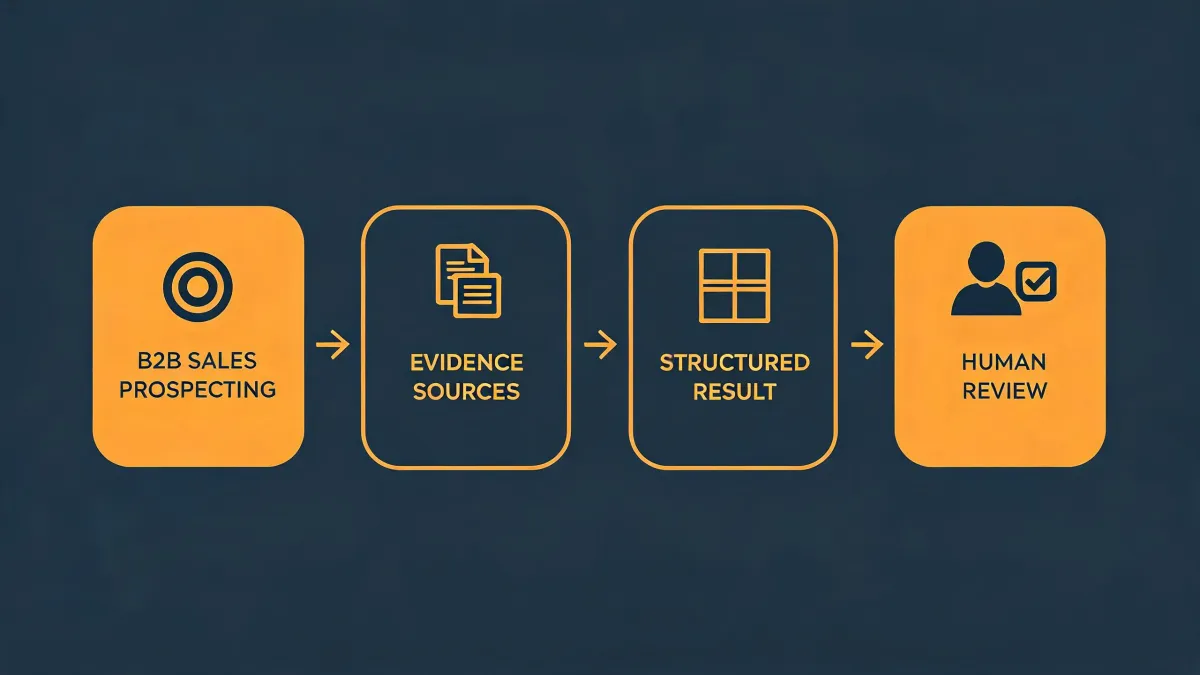
Relevance AI is an AI sales prospecting platform built around agent-native workflows. Instead of stitching together a separate sequencing tool, enrichment tool, and LinkedIn automation script, you get an environment where an AI SDR can own the entire outreach loop: find leads, enrich them, verify them, send personalized cold emails, and hand the good conversations to a human.
The phrase "agent-native" gets thrown around a lot, so let me pin it down. An agent-native workflow is one where the AI agent is the first-class citizen, not a bolt-on chatbot. You tell it what good looks like in natural language, and it carries the workflow through—checking data, segmenting, deciding who to contact, and surfacing exceptions. That's different from a traditional sales stack where the human has to micromanage every step.
This platform description matters because it changes how you think about buying. You're not buying another tool. You're buying a worker that can operate your outbound system with the right supervision.
Relevance AI Free Plan Features: More Than a Teaser
I've tested a lot of "free plans" in my career. Most are enough to get a demo scheduled, but not enough to get actual work done. The Relevance AI free plan features are different, at least in the way they're structured: you get enough to build a real agent, define your ideal customer profile, connect data sources, and run a limited cycle of enrichment and cold email sends.
If you're a small team, that's huge. It means you can validate the core loop—enrichment, verification, AI SDR outreach—without making a case to finance for a $500/month subscription.
To be fair, I'm not 100% sure on the exact free plan limits because they change as the platform evolves. Don't hold me to specific numbers. But what I've seen is that the free tier lets you test the workflow that actually matters: can the agent find a dozen good leads, enrich them, and write outreach that doesn't sound like a robot having a panic attack?
And here's where my "small customer no discrimination" bias comes in. When I was starting out, the vendors who treated my $200 orders seriously are the ones I still recommend for $20,000 projects. Relevance AI's free plan has that same energy. It treats small teams as potential customers, not as leads to be ignored until they're big enough to warrant a sales call. That's rare, and it's one of the reasons I'm comfortable recommending it.
The Data Enrichment Features That Actually Move the Needle
An AI SDR is only as smart as the data it sees. Let the AI write clever cold emails all day; if the contact list has the wrong person, a dead domain, and no firmographic context, the campaign dies quietly.
This is where Relevance AI's data enrichment features come in. The platform can append the missing context that makes outreach feel like it was written by a human who did their homework: company size, industry, role, recent hiring signals, and intent data. That's not a nice-to-have. It's the difference between "Hey [First Name], we help companies grow" and "Hey Alex, I noticed your RevOps team just posted two open roles—here's how we helped a similar team cut response time."
The most common blindspot I see in sales tech designs: buyers focus on message copy and completely miss data quality. (The question everyone asks is "what will the AI say?" The question they should ask is "what does the AI actually know about the person before it says anything?")
In an agent-native workflow, enrichment isn't a one-time cleanup. It's a stage the agent runs continuously. The agent should enrich as it qualifies, using new intent signals to decide whether to move a lead into outreach or drop it. That's how you keep your AI SDR from becoming a volume machine that emails everyone and hopes.
Sales Skill for AI Agent Workflows: Judgment, Not Prompting Tricks
Here's the uncomfortable part I tell every client: the sales skill for AI agent success is not prompt engineering. It's sales judgment.
You need to know who your best customer is, and be able to describe them with enough precision that an AI agent can recognize them. You need to decide which objections are worth handling and which ones mean "not a fit." You need to know when to let the agent pass a conversation to a human. That's judgment, not wording magic.
Relevance AI lets you train agents in natural language—which is exactly why the sales skill becomes more important, not less. If you say, "reach out to any company that downloaded our pricing page," the agent will happily email procurement managers, students, and competitors. If you say, "target heads of RevOps at B2B SaaS companies between 50 and 500 employees, with at least one recent signal like a new VP of Sales," the agent has a chance.
In my experience, teams that spend 45 minutes debugging their ICP definition get better results than teams that spend three weeks adding every new sales tool on the market. (And yes, I've cleaned up both kinds of projects.)
How Does API Documentation and Email Verification Fit Into an Agent-Native Prospecting Workflow?
This is the question that separates serious buyers from people who just want to press "send." So let's answer it directly.
API documentation matters because an agent-native workflow lives or dies by its connections. The API docs tell you what the agent can trigger, what webhooks it can listen to, and whether you can sync activity back to your CRM. If you skip the API docs because they look technical, you risk building an AI SDR that starts conversations in a spreadsheet and forgets to log them in Salesforce. (Our most recent emergency client learned this the hard way. The agent was setting meetings, but their CRM was a ghost town.)
Email verification matters because cold email is still the backbone of outbound, and deliverability is a reputation game. Email reputation is measurable in tools like Google Postmaster and Sender Score, and both make it clear that bounces hurt. One campaign sent to 1,000 unverified addresses can poison a domain's sender score for weeks. In an agent-native workflow, verification should sit between enrichment and send. The agent removes invalid addresses, catches role-based emails if you're targeting decision-makers, and flags disposable domains before they hurt you.
So the short version: API documentation and email verification aren't side quests. They're the guardrails of the whole system. API documentation defines what the agent can safely do. Email verification defines who the agent is allowed to talk to. Skip either one, and you're not building an agent-native workflow—you're building an auto-spammer with extra steps.
What About the "Just Buy the Enterprise Plan" Objection?
To be fair, I get why some people think small teams should just buy a bigger platform with more native integrations and a thicker data contract. That can work if you have an implementation team, a vendor relationship, and a budget buffer. For a small or mid-market team trying to move fast, the enterprise route often feels like ordering a full catering service when all you need is a sandwich.
Granted, self-serve tools like Relevance AI require some hands-on setup. You'll write prompts, define ICPs, and likely send a few test emails to your own team before you're comfortable. But that's not a bug. The hands-on part is where you learn the sales skill for AI agent workflows. You can't skip the learning curve and then complain that the AI doesn't "just work."
I'd rather see a small team ship a focused, data-verified AI SDR workflow in two days than wait six weeks for an enterprise deployment. That's not because enterprise tools are bad. It's because speed matters in a sales emergency—and small doesn't mean unimportant.
The Bottom Line
If you ask me, Relevance AI is best understood as a way to treat your sales pipeline like a system, not a lottery ticket. The free plan lets small teams test that system before committing. Data enrichment makes it capable at scale. API documentation and email verification keep it safe. And the real sales skill for AI agents—judgment—makes it worth trusting.
I can only speak to B2B services and outbound-heavy RevOps teams. If you're running entirely inbound, the calculus might be different. But for teams like the ones I work with, the formula is becoming hard to ignore: start small, respect the data, and treat the AI agent like a junior SDR who needs clear direction and solid guardrails.
That last part can't be automated away. But the right tool will respect it—and it won't ignore you just because you're not a hundred-person enterprise yet.