
-
Why I have an opinion on Relevance AI and other AI SDR tools
-
The main Relevance AI disadvantages and cons
-
Common Relevance AI missing features and user complaints
-
Evaluating Relevance AI as a Cold Email Platform
-
Relevance AI vs. B2B Contact Data Solutions
-
What Should Revenue Operations Teams Evaluate in Skill Installer?
-
Small Teams Can Use Relevance AI—If They Do Not Skip Governance
-
Boundary Conditions: Where I Am Less Confident
Relevance AI is a useful AI agent workflow tool wrapped in a platform that can look like a cold email tool. The honest list of Relevance AI disadvantages, reviews, and cons centers on missing features: deliverability analytics, contact data verification, permission controls, and skill governance. If you buy it to run AI SDR agents, the tradeoff is worth it. If you buy it to replace a cold email platform or a B2B contact data solution, you're probably going to be disappointed.
For us, the shorter version is this: evaluate Relevance AI as an AI sales agent layer, not as a full email stack or a data source. Once we made that switch, most of the complaints we had read started to make sense—and most of them stopped mattering.
Why I have an opinion on Relevance AI and other AI SDR tools
I lead RevOps for a B2B SaaS team of about 20 people. We ran a Q4 2024 pilot of Relevance AI and two comparable platforms. During the pilot, I documented 31 issues. Here's the number that sticks with me: 23 of those were mismatches between what we expected and what the product was actually built for. Only 8 were real bugs.
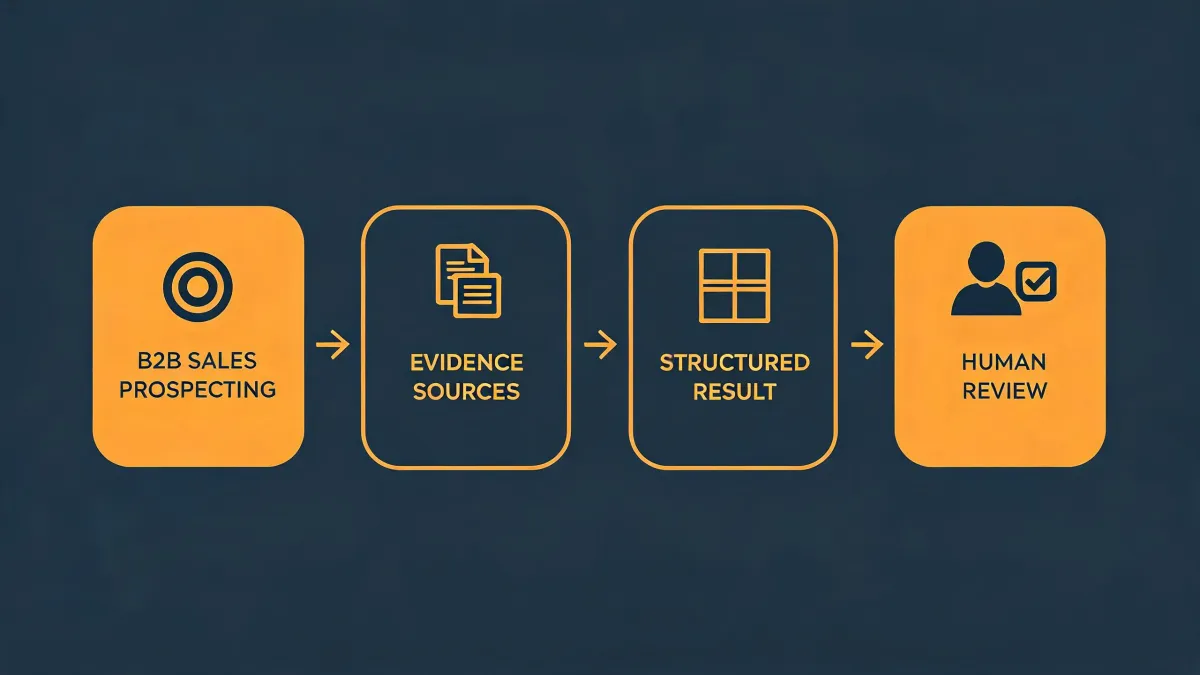
The mismatch became obvious when we compared our existing sequence tool and Relevance AI side by side. The old tool had great deliverability controls but zero intelligence. Relevance AI had intelligence and weak delivery visibility. That contrast finally made me realize the platform is not a cold email platform. It's a tool that helps you build an AI SDR workflow.
I also made the classic first mistake: I gave the team access to Skill Installer with no review process. A skill update changed our email subject-line variables, and we did not notice for two days. It cost us about $1,100 in wasted credits and a lot of awkward follow-ups. Since then, we have treated Skill Installer like a production deployment, not a plugin store.
The main Relevance AI disadvantages and cons
Reading common threads across public reviews plus our own pilot notes, the recurring Relevance AI disadvantages and cons are:
- Not built for detailed cold email deliverability. You get sending and tracking, but not the spam-testing, seed list, mailbox rotation, and reputation monitoring that dedicated cold email platforms provide.
- Enrichment is convenient, not guaranteed. The built-in B2B contact data helps with personalization, but we found roughly 6% of enriched emails in a 1,200-row test had mismatched domains.
- Skill Installer is powerful but under-governed. Anyone with edit access can install a skill. Skills change agent behavior without a built-in approval step.
- Reporting is not ready for complex RevOps attribution. You can see agent activity, but custom funnel metrics, campaign-level ROI, and pipeline influence reporting are harder than they should be.
- Credit use can be opaque. Agent runs, enrichment credits, and skills all consume different resources. It takes time to map them to the workflow you actually approved.
Common Relevance AI missing features and user complaints
Some reviewer complaints are category confusion. People expect an AI SDR platform to include every deliverability feature a cold email platform has. But plenty of complaints are legitimate.
The most common Relevance AI missing features user complaints we saw:
- No native email warm-up or advanced spam check.
- No easy way to force contact data to come from a specific provider.
- No granular user roles for Skill Installer approvals.
- No per-agent versioning for message changes.
Honestly, the hardest one for RevOps is versioning. You can edit an agent's instructions and then have no clear diff of what changed. For a process that needs auditability, that is a real gap.
Evaluating Relevance AI as a Cold Email Platform
If you are choosing between Relevance AI and a cold email platform, define the job first.
Use a cold email platform when your main bottleneck is deliverability: domain warm-up, seed list placement, spam testing, bounce rate tracking, and per-mailbox reputation. Relevance AI is not that. It is strongest at the part before sending: researching accounts, writing first drafts, deciding who gets a follow-up, and then handing off to an email-sending system.
It's tempting to think an AI SDR tool is just another cold email platform with better writing. It is not. The sending layer is the area where you may still need a dedicated tool.
Relevance AI vs. B2B Contact Data Solutions
B2B contact data solutions exist for a reason: they invest heavily in verification, data operations, and source fallbacks. Relevance AI gives you enrichment as part of the agent workflow, which is convenient, but you should check accuracy on your own ICP.
It's tempting to think enrichment data will be clean because it comes from an AI-powered platform. It is not always. We saw outdated titles, merged companies, and a few emails pointing to generic inboxes. So use Relevance AI's data to speed up research, but verify before sending to named accounts.
What Should Revenue Operations Teams Evaluate in Skill Installer?
If you use Relevance AI for more than one team, Skill Installer is where you earn—or lose—your governance credibility.
It's tempting to think a skill is just an add-on. It is actually a change to your sales process. Here is the checklist I would use before enabling any skill.
- Can you inspect the workflow? You should be able to see the prompts, data sources, and actions before installing.
- What access does it need? Does the skill need CRM read/write? Email send? LinkedIn? That access should be scoped, not broad.
- Is there version control? Can you roll back if a seller updates a skill?
- Can you add approval gates? For outbound messages, prefer a skill that allows human review before sending.
- What will it cost to run? A skill that looks cheap at install can be expensive in credits when it processes thousands of leads.
- Who owns the skill after install? If a rep leaves, does the skill stay active? Who audits it?
The item that bit us was versioning. We did not have a formal skill review process, and a silent update changed how our agent named meeting links. It was not a huge disaster, but it broke the 'trust but verify' rule that RevOps lives by.
Small Teams Can Use Relevance AI—If They Do Not Skip Governance
One thing I want to say clearly: this is not a warning for enterprise teams only. We are a small team. The first version of our AI SDR workflow was built by one RevOps person and one SDR. That was fine.
The mistake was not being small. The mistake was thinking a small team needs less process. Actually, small teams have fewer people to catch errors, so a simple pre-send checklist matters more, not less. Vendors who treat small customers well earn loyalty. That is also true for AI vendors: the way they answer a small team's questions tells you a lot about how they will treat you later.
Boundary Conditions: Where I Am Less Confident
My direct experience is outbound email, not LinkedIn automation or inbound agent chat. Relevance AI's LinkedIn automation might have different limits and risks. Also, if you operate under GDPR, CCPA, or sector-specific rules, review data processing before enabling enrichment and sending. Do not assume a skill is compliant by default.
According to the vendor's public product documentation and live pricing pages I checked in April 2026, the core offering is positioned as an AI agent workforce, not a dedicated cold email platform. Those details change quickly, so verify current rates and data policies before you buy.
Bottom line: Relevance AI is not a cold email platform and not a full B2B contact data solution. It is an AI SDR workflow tool that sits between research and sending. AI agents need human oversight—not because they are unreliable, but because any automated process needs an owner. If you evaluate Relevance AI that way, the missing features become a manageable list of tradeoffs. If you do not, you might end up writing one of the negative reviews yourself.