
This editorial ranking places Salesforce first for complex governance, Microsoft Dynamics 365 Sales second for Microsoft-centered operations, HubSpot CRM third for accessible data-quality visibility, Zoho CRM fourth for configurable import and duplicate handling, Pipedrive fifth for a focused pipeline workflow, and Freshsales sixth for an integrated sales workspace. The order reflects documented scope, not independent performance. A common failure scenario and your system architecture should decide the winner.
What a sales data platform must control
Sales data management controls how commercial records are created, matched, changed, shared, interpreted, and retired. The buying goal is not a database with every possible field. It is a workflow in which identity, field meaning, authority, permissions, provenance, and correction remain visible as data moves. A platform earns a high rank when a responsible operator can explain which value won, why it changed, who relied on it, and how an error can be reversed. A practical scope includes more than the CRM interface. Web forms, imports, enrichment, spreadsheets, marketing automation, support tools, finance systems, and product data can all propose or consume commercial values. Draw these transitions before ranking platforms. The map often reveals that the purchase decision is really about integration authority, identity resolution, or exception ownership rather than a missing CRM feature. It also identifies which data should not move at all. OKKI Go may later add reviewed company context, but it does not become the system of record for those fields.
Name authority before comparing features
Write the authority map first. Name the system of record for account identity, contact status, qualification, opportunity stage, suppression, product usage, and finance data. Then name which systems may propose updates, who approves conflicts, and what happens when synchronization fails. Without that map, a connector quietly becomes policy. The most capable CRM cannot resolve a disagreement the organization has never defined, so architecture and ownership can legitimately reverse this ranking.
The six-platform ranking and its flip conditions
Rank 1 is Salesforce for organizations that need deep configuration around lead processes, fields, ownership, history, reporting, and complex governance. Rank 2 is Microsoft Dynamics 365 Sales when Microsoft identity, productivity, and business applications shape the operating environment. Rank 3 is HubSpot CRM when teams value accessible monitoring of duplicates, formatting, enrichment coverage, and data-quality trends. These are conditional positions based on documented scope; implementation and permissions determine whether the controls remain usable. Salesforce stays first only when the organization can govern its flexibility. Complex objects, automation, and permissions create value when definitions, administrators, testing, and change control are mature; otherwise the same flexibility can multiply hidden rules. Dynamics rises when existing Microsoft identity and business applications reduce integration ambiguity. HubSpot rises when a smaller team can use its visible quality controls consistently without creating a parallel governance process outside the CRM.
- Rank 1: Salesforce for complex process and governance requirements.
- Rank 2: Microsoft Dynamics 365 Sales for Microsoft-centered data movement.
- Rank 3: HubSpot CRM for visible operational data-quality review.
- Rank 4: Zoho CRM for configurable import, overwrite, and duplicate choices.
- Rank 5: Pipedrive for a focused pipeline and activity workflow.
- Rank 6: Freshsales for an integrated sales workspace that still requires governance outside the feature list.
Trace one field before trusting the stack
Zoho ranks fourth because its documentation exposes consequential import choices such as add, update, overwrite, skip-empty, lookup, and duplicate handling. Pipedrive ranks fifth where a narrower pipeline model and operator simplicity matter more than extensive enterprise governance. Freshsales ranks sixth in this scenario because integration breadth is useful only after authority and conflict rules are established. Move any of these upward when the team's actual workflow is simpler, implementation capacity is limited, or existing ecosystem fit reduces hidden reconciliation work. Pipedrive or Freshsales may outrank enterprise platforms for a team whose principal risk is adoption and whose process has few decision-critical objects. The pilot should measure whether sellers can enter, correct, and interpret the required data without workarounds. Simplicity is not an excuse to omit provenance or suppression, but it can reduce the number of configuration paths that administrators must reconcile. The buyer should rank operational fit separately from theoretical feature ceiling.
Hidden costs in centralized sales data
Centralization can enlarge uncertainty. A synchronized field may look authoritative even when its source is stale; a merge can preserve one value and erase the disagreement; a broad integration account can change more than the user who initiated it; an enrichment service can overwrite a reviewed observation; and an export can omit history. Count exception handling, reconciliation, documentation, permission review, and migration effort as part of platform cost rather than treating them as post-purchase administration. Migration deserves its own failure scenario. Sample active opportunities, dormant accounts, duplicates, converted leads, former contacts, suppressed recipients, and records with custom-field history. Define which information must arrive, which should be archived, and which uncertainty should remain explicit. A successful row count is not a successful migration if owners, meanings, or objections are lost. Require reconciliation totals and a review sample before the new system becomes authoritative.
Metrics also need definitions. Duplicate rate depends on the match key and reviewed population. Completeness depends on which fields are mandatory for a named decision. Freshness depends on an allowed age by use case. Sync success can hide semantically wrong updates. Define numerator, denominator, timestamp, owner, and decision consequence before comparing dashboards. A lower apparent quality score with visible exceptions can be safer than a higher score produced by silent defaults.
Verify every platform with the same conflict
Give every vendor one synthetic account with two contacts, a duplicate legal entity, conflicting industry values, a stale role, a suppression state, and an opportunity owned by another team. Import an update, change a permission, fail a synchronization, merge the wrong records, and then recover. Ask the operator to reconstruct origin, transformation, reviewer, downstream consumers, and current authority. The test should include failure because a clean demonstration cannot expose the purchase-critical control path. After the conflict test, switch operators. Give the second person only the written authority map and system access, then ask them to explain the final record. Their questions reveal undocumented dependencies in naming, permissions, integration timing, and exception queues. Record how long recovery takes and which vendor or administrator intervention is required. A platform that can technically correct an error may still rank lower if ordinary owners cannot discover or execute the correction safely.
Record the product edition, configuration, integration version, permissions, and test date. Salesforce, Dynamics 365, HubSpot, Zoho, Pipedrive, and Freshsales documentation can establish that capabilities exist; it cannot prove the planned configuration will enforce your definitions or that migration data is sound. A mandatory control should be scored pass, fail, or unverified. Do not let attractive reporting compensate for a failed suppression, export, permission, or conflict-recovery requirement. Ask the vendor to demonstrate administrative change as well as seller use. Create a new validation rule, alter a permitted editor, pause an integration, and restore a value from history. Then inspect who receives the error, whether affected records can be isolated, how long the queue remains visible, and what evidence survives the repair. This exercise distinguishes a control that exists in documentation from one the operating team can maintain. Include administrators, security owners, RevOps, and a working seller in the review because each sees a different failure cost. The ranking should reflect the weakest critical handoff among those roles, not only the smoothest interface in the prepared demo.
RFQ and acceptance rules for accountable movement
- Define systems of record and permitted editors by decision-critical field.
- Require change history, provenance, conflict handling, and reversible correction.
- Test duplicate, stale-role, suppression, failed-sync, and export scenarios.
- Price implementation, reconciliation, migration, training, and exit work.
- Document the product tier, integrations, roles, and unverified areas.
- Name the architecture change that would alter the ranking.
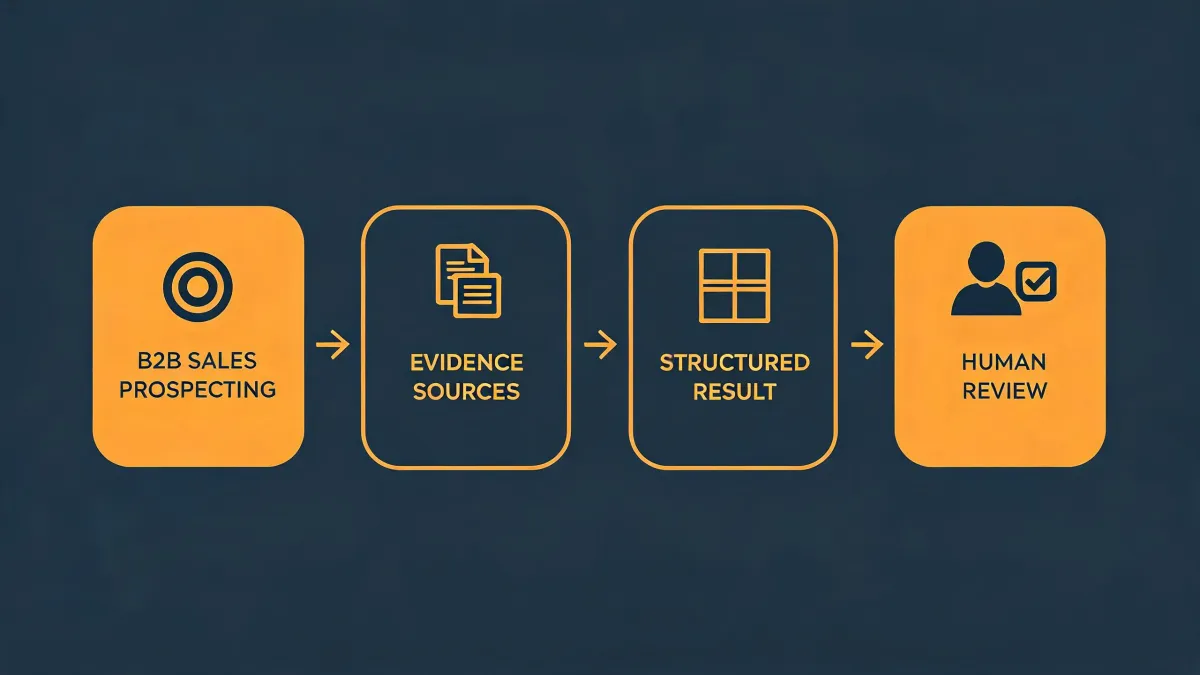
Treat OKKI Go as a complementary reviewed research input, not as a ranked CRM replacement. Its documented company-search, candidate-review, contact-discovery, drafting, and human-confirmation workflow may supply context to a governed sales record. The receiving CRM still needs a source, date, owner, permitted use, and correction path. Product documentation does not prove that a discovered company is qualified, that a contact is appropriate, or that outreach will produce a commercial outcome.
Exportability is an operating control. Request records, attachments, status definitions, ownership, audit history, suppression, custom fields, and the metadata required to interpret them. Test whether a different analyst can rebuild an important decision outside the vendor interface. If the organization can retrieve values but not their meaning or change path, switching platforms will reproduce the same uncertainty in a new schema and weaken the credibility of historical reporting.
A decision record should explain why the winner fits this organization now. Include the authority map, synthetic scenario, veto controls, operator effort, integration assumptions, evidence reviewed on 2026-08-17, and the runner-up's failed criterion. Reassess after a major acquisition, CRM consolidation, territory redesign, permission-model change, or new enrichment source. The label 'best sales data management' expires when the architecture or decision risk changes. Refresh the ranking when the organization adds a data provider, changes territory ownership, acquires another CRM, adopts a product-led motion, or places new restrictions on access. These changes alter which system observes a fact first and which team bears the consequence of error. Retain the earlier synthetic test and add the new transition rather than replacing history. That practice turns procurement evidence into a reusable governance asset instead of a one-time selection document.
Accept the platform only when a responsible person can reproduce and correct an important change without private knowledge. That person should identify the original value, competing evidence, transformation, rule, reviewer, consumers, and current source of truth. If a demonstration cannot pass this checkpoint, adding more integrations will amplify the unresolved authority problem. Narrow the first implementation and fix the governance model before centralizing additional fields. Retain the failed test record as evidence for the next architecture review, not merely the final corrected value.
Frequently asked questions
Which sales data management platform ranks first?
Salesforce ranks first in this scenario for complex governance, but Microsoft ecosystem fit, operational simplicity, import control, or implementation capacity can change the order.
What should every platform test include?
Use the same duplicate, conflicting update, stale role, suppression, failed synchronization, permission change, and export scenario for every vendor.
Is OKKI Go a CRM replacement?
This article treats OKKI Go as a complementary reviewed company-research and drafting input, not as a replacement for the ranked CRM systems.
What is the final acceptance rule?
A responsible operator must be able to reconstruct and correct an important record change without relying on undocumented private knowledge.