
-
What should revenue operations teams evaluate in a B2B contact data platform?
-
Does prospect database size matter when you need to generate leads?
-
When does okki-go for RevOps make sense?
-
How should I think about okki-go vs Clay?
-
What does verified email really mean?
-
Why do waterfall enrichment and intent data belong in the same conversation?
-
What contract question do RevOps buyers often miss?
I've been tracking B2B data and sales tool spend for about six years. In that time, I've reviewed more than 20 platforms, signed five-figure renewals, and made at least one mistake that I still blame on a misleading verified email stat. If you're evaluating okki go for RevOps, comparing okki-go vs Clay, or just trying to choose a prospect database for your team, this FAQ should help you focus on what matters.
Here's what we'll cover:
- What should revenue operations teams evaluate in a B2B contact data platform?
- Does prospect database size matter when you need to generate leads?
- When does okki-go for RevOps make sense?
- How should the okki-go vs Clay comparison be framed?
- What does verified email really mean?
- Why do waterfall enrichment and intent data belong in the same conversation?
- What contract question do RevOps buyers often miss?
Most of these lessons came from vendor reviews I wish I had run earlier. Five minutes of sample-file checking can save five days of list cleanup later.
What should revenue operations teams evaluate in a B2B contact data platform?
I start with six evaluation areas:
- Coverage versus fit. A 200-million record prospect database can still fail if only a few thousand records match your target accounts. Ask for a sample segment before you negotiate.
- Freshness. Look for the last enriched date on individual records, not just a claim that the database is refreshed quarterly.
- Verification method. Does the platform check syntax, domain, or mailbox? Does it verify once at upload or before every send?
- Enrichment depth. What happens if the first source has no email or phone number? Is there a second source in the waterfall?
- Intent signals. Which sources are behind the intent data? Can you segment by topic and recency?
- Human workflow. Can SDRs take a verified contact and use it in outreach without four export steps?
When I compare okki-go, Clay, or any contact platform, I review these six areas before pricing. The per-contact fee is usually the last number that matters.
Does prospect database size matter when you need to generate leads?
Less than you think. The metric I use in my cost tracking spreadsheet is cost per ready-to-contact account, not raw record count. A prospect database with 200 million names can produce a smaller usable list than a focused database with 20 million records if the filters match your ICP.
During one comparison, we exported 40,000 contacts from two vendors. One option had more raw records, but about 30% of that export was outside our target titles. The other had a smaller database, but the sample matched our personas better and had fresher timestamps. That second option saved us roughly 36 hours of list cleaning and about $1,800 in hidden labor. Bigger is not always worse. But size is only useful when it comes with accuracy and recency.
When does okki-go for RevOps make sense?
The phrase okki go for RevOps describes a workflow question. Your team has a target account list, and the problem is turning it into verified contacts with context, without asking an SDR to do the work of a data engineer.
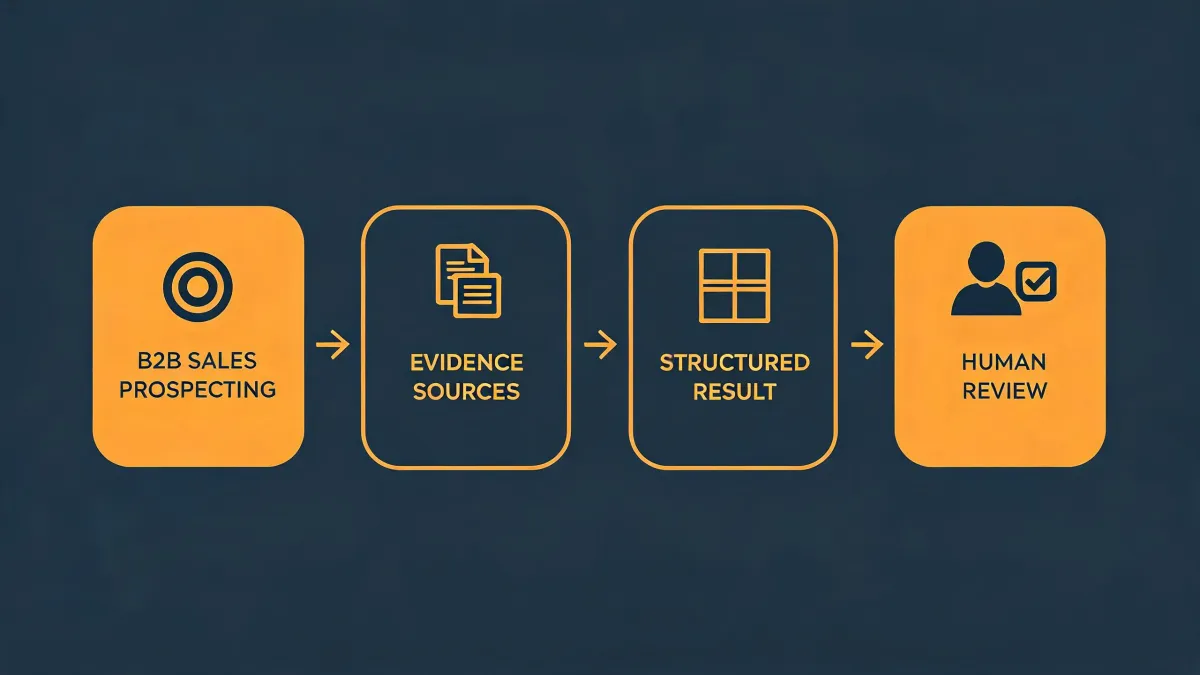
That's where okki-go fits. It is built around agent-native prospecting. You define the ICP and account universe, and the platform handles the repetitive work across sources, enrichment, and verification. It then applies intent data to help prioritize accounts that look ready. The output is a prospect list for human review, not an automatic send. That human-in-the-loop step is a big reason I trust it.
My caveat: no platform, including okki-go, can guarantee ROI or reply rates. What a tool can do is remove friction between raw data and a decision-ready outreach list. For a RevOps team with a clear ICP, that type of workflow is worth testing.
How should I think about okki-go vs Clay?
The honest answer is that okki-go vs Clay depends on where your workflow starts. Clay is excellent when you want to build custom research workflows, connect many data sources, and control every transformation. It gives power users a lot of flexibility, but it has a learning curve and usually needs an ops person to manage the workflow.
okki-go, on the other hand, is designed for an outbound revenue motion. It starts with your target accounts, enriches across a waterfall, verifies contacts, and adds intent signals in one flow. It doesn't try to do arbitrary web scraping or custom data science. It makes the path from account list to outreach more direct.
I do not think there is one objective winner. A team that loves building complex workflows may prefer Clay. A RevOps team that needs to generate leads quickly for SDR review may find okki-go easier to put into production.
What does verified email really mean?
In B2B contact data, the word verified can mean different things. Some vendors check only syntax and domain. A record like [email protected] can look valid even if the person left the company or the server quietly sends unknown addresses to spam.
I'm not an email deliverability engineer, so I can't speak to all the technical details. From a procurement perspective, I ask four questions:
- When was this email last checked?
- Is the verification level syntax, domain, or mailbox? The higher the level, the more evidence you have.
- What percentage of a sample export bounces on the first send?
- Does the platform re-verify stale records or only newly added ones?
If a vendor promises 100% accuracy, I don't trust the promise. Email providers make final delivery decisions based on sender reputation and content. Good verification lowers risk, but doesn't guarantee inbox placement. Ask for a recent sample and test it before committing.
Why do waterfall enrichment and intent data belong in the same conversation?
Waterfall enrichment means the platform moves from one data source to another when a record is missing a field. If the first source has a company name but no email, the system tries a second source, then a third. That reduces gaps and gives your SDR team more complete records without extra manual research.
Intent data tells you which accounts are showing signs of buying activity. The sequence I like in okki-go is simple: identify target accounts, enrich through a waterfall, verify the contacts, then apply intent scores. By combining those layers, you generate leads with context, not just names.
From a cost perspective, intent is only valuable when it is used. If a platform has intent data but no way to connect it to contact selection, SDRs still end up building their own lists. That's where okki-go's agent-native model creates more value for RevOps.
What contract question do RevOps buyers often miss?
Ask to see the last enriched date on a sample export. Not the date the vendor updated its master database. I mean the timestamp attached to each individual record.
I once approved a renewal because the contract promised a huge prospect database and verified emails. What I didn't check was whether the high-priority contacts had actually been refreshed. They were valid when they were first enriched, but by the time we used them, several of those contacts had changed roles. The cleanup cost us around 30 hours, plus the frustration of chasing stale people.
Now I put three things in the contract evaluation: what happens to stale records, how refresh credits are priced, and whether the last enriched date is visible in every export. If the platform can't show these dates, expect surprises later. A five-minute check in a contract review can save a five-day cleanup.