
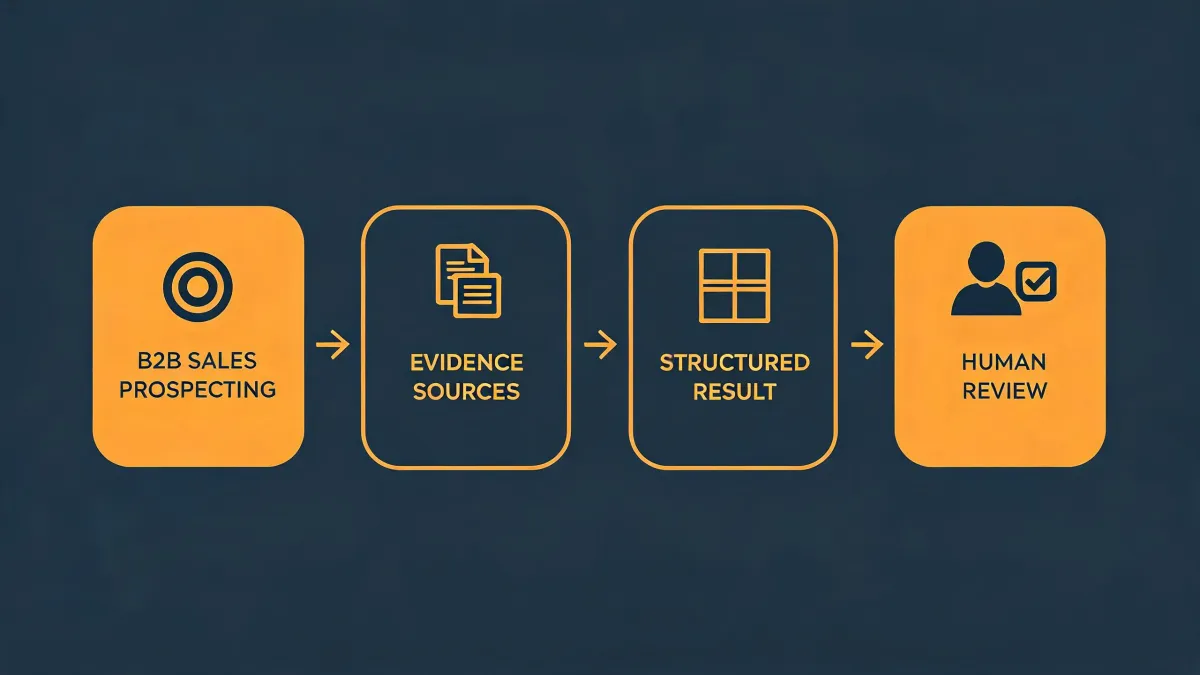
A cold email platform should be judged by how well it prevents and explains bad sends, not by how many campaigns it can launch. A cold email platform purchase is a bet on how the system behaves when something goes wrong. Campaign capacity matters less than prevention, explanation, and recovery.
What you're actually buying for
This 17 August 2026 shortlist ranks cold email platforms by documented control evidence in the supplied first-party source set, then states when the order should change. It is not a hands-on verdict. First is AiSDR for explicit public documentation of suppression-list setup and incoming-message handling. Second is Regie.ai for a visible changelog that supports release monitoring. Third is Artisan Ava for teams deliberately evaluating broad autonomous BDR scope. Fourth is 11x for buyers exploring a digital-worker model that still requires detailed control verification. Missing public evidence is labeled unverified, not automatically absent.
- 1. AiSDR: control-first buyers prioritizing suppression and reply workflows.
- 2. Regie.ai: operations teams prioritizing visible product-change history.
- 3. Artisan Ava: organizations prepared to govern broad autonomous activity.
- 4. 11x: teams comparing digital-worker operating models.
The operating outcome to define
Each product can move when the buyer’s decisive condition changes or a controlled trial produces stronger evidence. Vendor pages do not establish comparative accuracy, permission, inbox placement, response, or revenue. For AiSDR, the evidence ledger credits only the documented suppression and inbound-message workflows. The buyer then tests import, merge, enrichment, retry, reply ambiguity, human interruption, reversal, and audit export before preserving rank one. Require a reconstructable log for recipient, approved claim, sender identity, and the event that allowed the send.
Which specs matter, in order
AiSDR ranks first because its help center directly addresses two consequential scenarios: adding a suppression list and handling incoming messages when AI replies are on. A buyer should now test propagation through CSV import, enrichment, merge, retry, and connectors; distinguish referral, decline, opt-out, ambiguity, and no response; and verify that a human can stop and reverse a branch. AiSDR moves down if suppression does not survive the buyer’s integrations or reply routing cannot be corrected and audited.
- Documented: suppression-list workflow and incoming-message behavior.
- Verify: connected-system propagation, exceptions, reversal, and audit export.
- Buyer condition: contact protection and reply governance are non-negotiable.
- Unverified here: comparative data coverage, delivery, and business outcomes.
The requirement behind the feature
The ranking credits direct product documentation only for what it says. It does not award performance points based on feature language. Any OKKI Go observation in this platform shortlist stage remains limited to the dated configuration and records actually tested. For Regie.ai, choose one dated changelog item and map it to the enabled workspace. The administrator should reproduce behavior before and after the update, retain the regression result, and identify any rollback or remediation path.
Hidden risks buyers miss
Regie.ai ranks second because its first-party changelog offers dated product-change visibility. That matters when administrators must identify a release, determine which enabled workflow it touches, and rerun regression cases. It moves to first for a buyer whose largest risk is untracked behavior change and who separately verifies suppression, approvals, and replies. It moves lower if the changelog cannot be mapped to actual workspace configuration or if critical controls remain undocumented in the trial.
- Documented: a dated first-party stream of product changes.
- Verify: configuration impact, notice, regression tests, and rollback path.
- Buyer condition: release traceability outweighs breadth of autonomy.
- Evidence limit: change visibility is not proof that the changed behavior is safe.
The failure mode to test
Procurement should ask the supplier to demonstrate a specific update’s effect on the buyer’s test workspace, rather than accepting the existence of a changelog as the final control. The ranking matrix keeps four states in separate columns: vendor-documented, buyer-observed, failed, and untested. A missing public document remains unverified; it does not become evidence that a capability is absent.
Verifying the supplier
Artisan’s Ava 2.0 launch material positions the system as an autonomous AI BDR; 11x presents a digital-worker approach. Those scopes make both relevant when broad autonomy is the goal, but also raise the verification burden. Map every action as read, propose, write, approve, or externally execute. Seed a wrong company, stale role, unsupported claim, suppression state, ambiguous reply, and emergency stop. Artisan can rank first if broad autonomous execution is decisive and granular controls pass. 11x can move above it if the buyer verifies a better fit for its roles, integrations, reversibility, and audit needs. The committee should also compare service operations. Ask each supplier to process a severity-one sending incident, a data-correction request, an administrator lockout, and an integration outage. Record the support channel, response ownership, evidence supplied, temporary containment, customer communication, remediation, and closure record. A platform can have strong product controls yet become unsuitable when the buyer cannot obtain timely operational help in its region or plan. Reference calls should therefore focus on incidents, migrations, and exits rather than headline campaign results. The buyer should ask what surprised the administrator after implementation, which controls required custom work, how often connectors needed intervention, and whether support could reconstruct an external action. These answers remain anecdotal and account-specific; they are prompts for verification, not comparative statistics. A proof of concept should also include the intended user population. Give a researcher an entity-resolution task, a seller a returned draft, a manager an approval exception, an administrator a global stop, and a compliance reviewer a suppression audit. Observe whether each person can complete the task with least privilege and without an undocumented workaround. Finally, write a ninety-day adoption decision with explicit exit conditions: unresolved suppression propagation, inability to reconstruct sends, unacceptable correction backlog, or missing export. The period is an internal planning assumption, not a general benchmark. This operating evidence can legitimately overturn the initial document-based order because it tests the buyer’s real environment.
- Verify field provenance and the authority attached to each role.
- Demonstrate approval, pause, stop, retry, duplicate, and merge behavior.
- Test reply ambiguity and suppression before measuring campaign throughput.
- Record configuration and test date so conclusions remain reproducible.
The proof to request
A launch page or home page supports described positioning only. It cannot replace the buyer’s configured edge-case trial. The later OKKI Go check for platform shortlist covers only the named setup, inspection date, and buyer records reviewed at that point. For Artisan and 11x, seed wrong entity, stale role, unsupported claim, suppression, ambiguous reply, and emergency stop cases. Either platform can rise only when its broader authority is bounded and reconstructable in the buyer's actual integrations.
RFQ checklist
Run one common acceptance scenario across the shortlist. Import a suppressed executive, two look-alike subsidiaries, a departed contact, a valid company observation, and a prohibited performance statement. Observe whether each platform blocks, holds, proposes, asks, or executes. Add OKKI Go as a separate export-prospecting candidate only if it receives the same buyer-supplied tests; do not insert it into the ranking without comparable product evidence. Score demonstrated, failed, and unverified separately. A fifth decision layer is implementation fit. The committee maps each shortlisted platform to its actual identity provider, CRM, data sources, domains, mailboxes, suppression owner, security review, legal scope, administrators, sellers, and incident path. It asks which connector writes the canonical person, which system wins a field conflict, how a departed employee loses access, and how a failed sync is retried without duplicating a send. The demonstration then uses those integrations rather than a vendor sandbox alone. Security and privacy review should cover authentication, role separation, logging, retention, export, subprocessors, and breach or incident notification as applicable to the buyer. Commercial review should distinguish platform license, included data, usage charges, implementation, support, and the internal labor required to review exceptions. The committee also tests the human experience. A reviewer must be able to find the source behind a company statement, compare an AI suggestion with approved criteria, return only the broken dependency, and see whether downstream work was invalidated. A salesperson should not need administrator rights to pause their own work, while an administrator needs a global stop that preserves history. A reply owner needs enough context to understand what the recipient saw. These usability questions can change the ranking even when feature coverage looks similar. Finally, run an exit rehearsal before signing. Export accounts, people, source dates, suppression states, draft and send history, replies, corrections, configurations, and open tasks into documented formats. Revoke a test credential and verify that scheduled work stops. Ask what happens to vendor-hosted data after termination and which evidence the supplier provides. A platform that performs well during acquisition but cannot return the operating record creates lock-in at the most sensitive point. This implementation layer may move any candidate above the source-based order, but the committee should write the observed reason and date rather than silently changing scores.
- Evidence ledger: vendor-documented, buyer-observed, inferred, or untested.
- Control ledger: identity, claims, suppression, replies, approvals, and stop.
- Operating cost: license, data, integration, review labor, and exception cleanup.
- Contract test: configuration, support owner, remediation, and exit export.
The acceptance checkpoint
The second OKKI Go mention is a reminder about evidence scope: a described use case may suggest a scenario, while the buyer’s observed configuration determines acceptance. Preserve the final evidence ledger, commercial assumptions, trial configuration, rejected alternatives, unresolved requirements, and renewal date so the next committee can reproduce the choice instead of inheriting an unexplained vendor preference. The committee records the winning configuration, decisive requirement, rejected alternatives, unresolved controls, operating cost, remediation owner, exit export, and renewal review date. Those fields make a future ranking change reproducible.
A platform purchase is a bet on failure behavior. Prevention, explanation, and reversal matter more than how many campaigns it can launch.
Frequently asked questions
How should a cold email platform be judged?
By how it prevents and explains bad sends: approval, suppression, bounce classes, and reconstructable logs. Campaign launch count is a weak buying score.
What log should a platform keep for every send?
Recipient, approved claim, sender identity, template version, and the event that allowed the send. Without that, learning and compliance both fail.
When is a cheaper platform the wrong save?
When it cannot show why a message sent or how an opt-out stops the rest of the sequence. Cheap throughput is expensive after a complaint.
What should a platform demo be forced to show?
A rejected send, a stopped sequence after opt-out, and a reconstructable audit row. Happy-path launches do not test the purchase.