
It started with a Slack message from our VP of Revenue, not a dramatic RFP. “We’re drowning in manual research. Find me an AI prospecting platform that doesn’t make us look like spammers.”
I’m the office administrator for a 150-person company. That title makes it sound like I order supplies. In practice, I manage the purchase side of our GTM stack—the CRM, enrichment tools, email platforms, and anything sales asks for. I oversee roughly $180,000 in annual software spend and I report to both operations and finance. When something breaks, finance asks me first. When a vendor disappoints us, I’m the one who has to fix it.
In February 2025, that meant evaluating AI sales assistant tools. I’m not an SDR. But after five years of buying sales tools, I know that software decisions rarely fail because of missing features. They fail because the workflow around the tool doesn’t match how the team actually operates.
My first pass was a spreadsheet. I called it the “okki go alternatives” comparison, even though I wasn’t sure what okki-go was yet. I listed the usual suspects from our existing stack and the new AI-native tools everyone in RevOps was talking about.
I thought lead generation software had become commoditized. Pick a database, add an email verifier, connect a sequence tool, done. That oversimplified version misses the real problem: in the AI era, the bottleneck isn’t writing messages. It’s knowing which messages should never be sent.
Why I added okki-go to the list
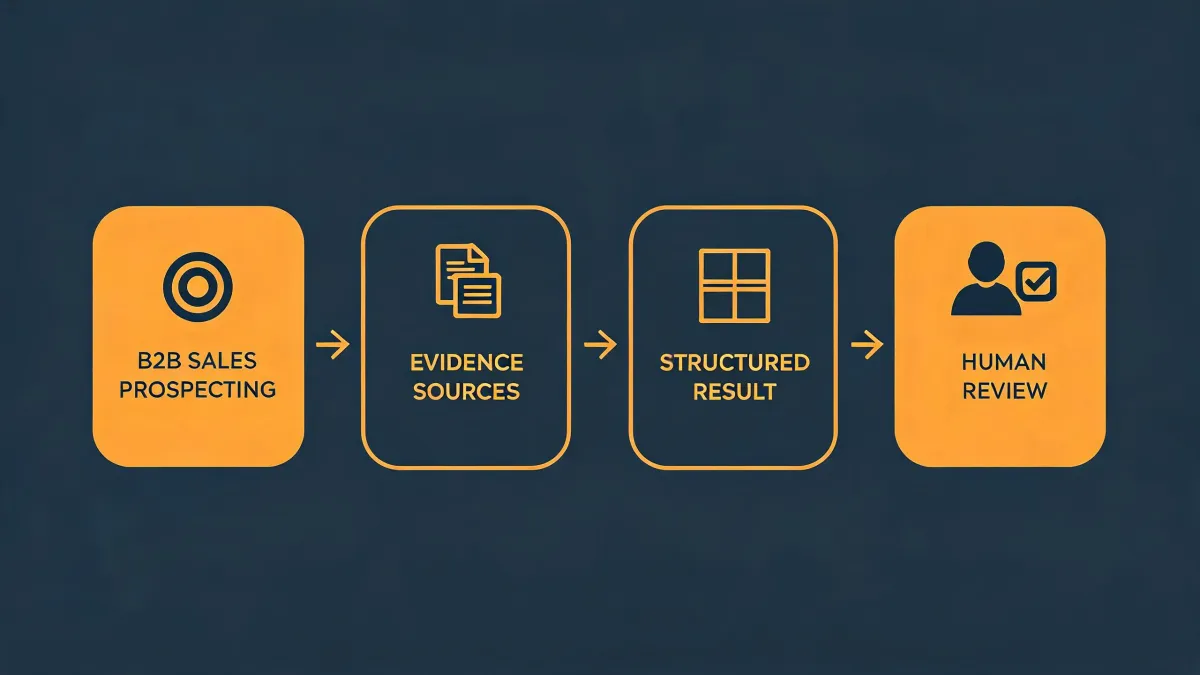
A RevOps friend kept mentioning okki-go’s agent-native prospecting workflow. I almost ignored it because “agent” was the buzziest word of the year. Then I saw a demo where the rep didn’t try to sell me on database size. She walked through the guardrails: AI plans, drafts, enriches, and then stops before a real person reviews.
That “stops before” part was the difference.
Most tools treated human review as an optional toggle. okki-go treated it as the core workflow. That may sound like the same thing, but it’s not. An optional review step gets skipped when people are busy. A required workflow step gets built into how the team thinks.
What the okki-go human review workflow actually does
If you search for “okki go human review workflow,” you’re probably asking the same question I did: is this real, or just a safety label?
In the March 2025 pilot, we configured okki-go so that every outbound email sequence, every LinkedIn step, and every CRM update needed approval. The AI agent did the heavy lifting: it built segments, found contacts, verified email addresses, and drafted sequences. But nothing reached a prospect until an SDR opened the review queue and approved it.
The queue wasn’t a formality. Each item showed why okki-go picked that company and person, which source contributed the data, and what the AI intended to send. The SDR could approve, edit, or reject. If a rep rejected a contact, that feedback didn’t disappear into a black hole.
The first few days were slow. Some SDRs thought the review queue was unnecessary. But then the mistakes started showing up.
The surprise was contextual, not grammatical
I expected the AI to produce cringy copy. It did sometimes. That wasn’t the real issue.
The real surprise was that the wrong suggestions looked logical. In week one, okki-go suggested reaching out to a director at a company that had just announced layoffs. The AI’s reason: the company hired a new VP of sales. That was true, but it ignored the broader context. Our product is about building pipeline. Sending aggressive growth copy to a team in the middle of restructuring would have been tone-deaf. The SDR caught it in the review queue and rejected it before it went out.
Another time, an SDR recognized a prospect who had already told us no at a conference six months earlier. There’s no database field for “this person was nice but not interested in a follow-up.” Humans know. okki-go left room for that knowledge to matter.
That was the moment the pilot changed. The review workflow stopped being a bottleneck and started being a safety net.
How AI sales assistant features fit into an agent-native prospecting workflow
On paper, the question was simple: how does ai sales assistant features fit into an agent-native prospecting workflow? The answer I eventually gave our VP was this: AI sales assistant features only make sense when they operate inside an agent-native workflow. In okki-go, lead extraction, email sequencing, verification, and CRM enrichment aren’t separate islands. They’re tools the agent can use to pursue a goal. The human review workflow is the guardrail that keeps those features useful instead of dangerous.
We tested natural-language commands, too. I typed: “Build a list of Series B companies in healthcare with fewer than 200 employees and draft a five-touch email sequence.” okki-go turned that into an actual workflow. It was impressive, but the approval step before sending is what made it feel safe enough to let our SDRs use.
What happened after four weeks
I won’t give you a “replies increased by 300%” story, because a four-week pilot can’t prove that. What I can tell you is this: our SDRs stopped fearing the AI and started using it as a thinking partner. The review workflow caught at least three messages that would have damaged our reputation. We sent fewer emails in March than we had before the pilot, but the ones we sent were better targeted.
We also caught data problems. One suggested contact list included companies that were technically in our ICP but had no budget signal and no meaningful trigger. Another tool would have sent anyway. okki-go’s human review made us ask why we were contacting them at all.
I’m not going to pretend the tool magically understood our business after four weeks. It didn’t. Our SDRs trained it by rejecting bad suggestions and editing weak copy. The workflow forced them to be part of the loop, which is exactly what I wanted.
Who should look at okki-go alternatives
okki-go won our evaluation, but I’m not going to tell you it’s best for every team. If you don’t have a human who can review outbound, or if you want zero human involvement because you’re running ultra-high-volume campaigns, an agent-native workflow that stops for approval may feel like friction.
If your main problem is a stale database and you already have sequence automation, you might not need okki-go. If your sales team expects a tool that works completely unattended, this will frustrate them. And if you need GDPR or CCPA advice, don’t take my word or any vendor’s word. Do a legal review. Compliance isn’t a checkbox you can automate away.
For our situation, okki-go was the right balance. It didn’t replace SDRs, and we didn’t want it to. It gave our team an assistant that handled research and drafting while still requiring a human call on the final send.
That boundary is not a limitation. In outbound sales, it’s the whole point.
Lessons from the buyer side
Comparing okki-go alternatives taught me that the tool isn’t the strategy. The strategy is deciding who owns the final judgment. Start there, then pick software that supports that workflow.
If you’re evaluating okki-go, ask to see the review queue, not just the AI writing. Test how it handles exceptions. Ask yourself who on your team will spend ten seconds reviewing before every send. If no one will, no AI sales assistant feature can save you from the consequences of sending the wrong message.
I still buy software for a living. The spreadsheet is still there, but the criteria changed. Lead generation software used to be about more leads. Now it’s about more thoughtful leads. That’s why okki-go’s human review workflow earned a spot in our stack.