
There’s no single best prospecting stack
I’m not an SDR. I’m the office administrator who buys software for our sales team. That means I see the invoices, the renewal dates, the security reviews, and the complaints when a tool doesn’t work. I’ve handled roughly $180,000 in annual software spend across 14 vendors, and I’ve learned one thing: the right answer to 'Okki Go vs ZoomInfo?' depends on your situation. It’s tempting to compare them by database size or per-contact price. But the real decision is about workflow fit, data quality, and how much human judgment you want in the loop.
So instead of a single verdict, here are four scenarios. Find the one that sounds like your team.
- Scenario 1: Small sales team, founder-led prospecting, tight budget.
- Scenario 2: Scaling RevOps team with CRM, SDRs, and defined ICP.
- Scenario 3: Outbound agency managing multiple clients.
- Scenario 4: Low-volume, high-value market test where the big database is overkill.
Scenario 1: Small team, founder-led sales, tight budget
If you have one to five people doing outbound, your biggest risk isn’t lack of data. It’s lack of focus. I’ve seen teams buy a premium database before they can describe their ICP in one sentence. That’s backwards.
In this scenario, a LinkedIn tool is usually the first useful layer. What is a LinkedIn tool and when should a B2B sales team use it? At its simplest, it’s software that helps you search, organize, and engage with prospects on LinkedIn—Sales Navigator, automation helpers, and CRM connectors. It’s worth using when your buyers are active on LinkedIn and your outreach depends on context: a job change, a post, a mutual connection. It’s less useful if you’re blasting generic messages. LinkedIn rewards relevance. Spam gets ignored.
For Okki Go review purposes, here’s what I’d check: Can it enrich from LinkedIn profiles without creating duplicate CRM records? Does it keep a human-in-the-loop step before sending? Does the email verification step happen before the first touch, not after? Those details matter more than a long feature list.
I’m not 100% sure this applies to every niche, but in my experience, small teams get more value from a narrow, well-verified list of 200 accounts than from a 200,000-contact database. Quality beats volume. Every time.
Scenario 2: Scaling RevOps team with CRM, SDRs, and defined ICP
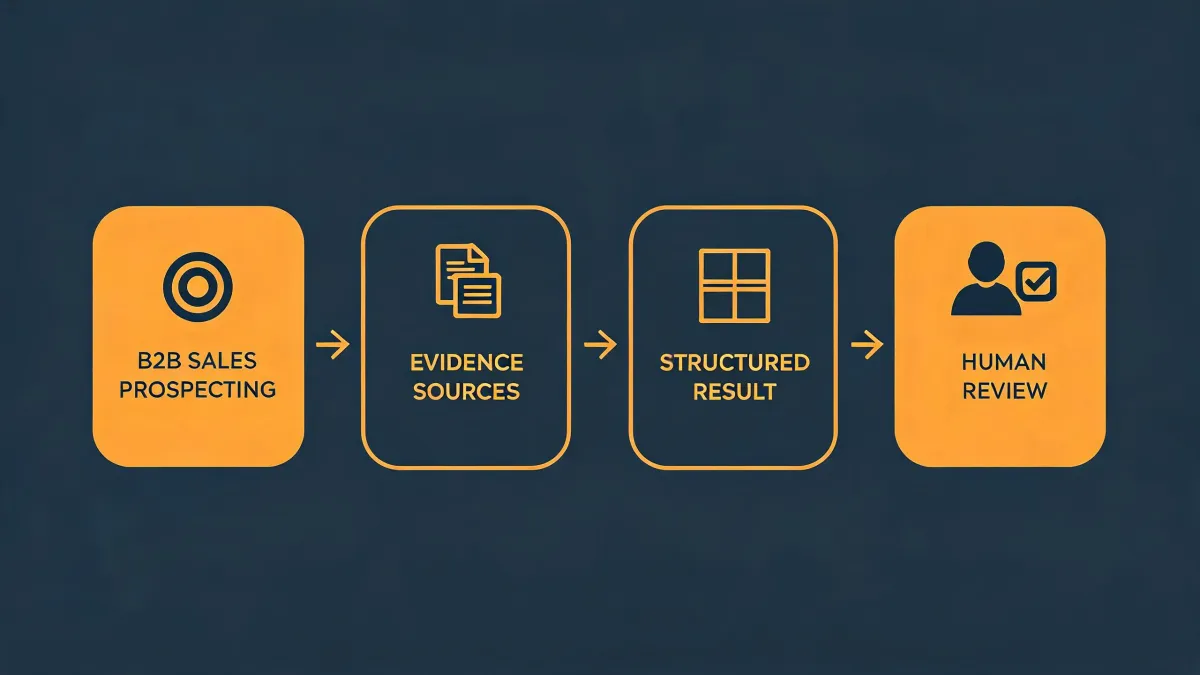
Now you have 10+ sellers, a CRM that people actually update, and a RevOps person who owns routing and reporting. This is where Okki Go vs ZoomInfo becomes a real comparison. ZoomInfo is a well-known B2B data platform with broad contact and company coverage. It can be a strong fit if you need a wide net and you have the process maturity to suppress bad fits. Okki Go seems positioned differently: agent-native prospecting, waterfall enrichment plus intent, and human-in-the-loop outreach. That combo is more about workflow than raw database size.
If you’re evaluating Okki Go review criteria at this stage, don’t start with the pricing page. Start with your data model. Ask:
- How does the tool handle duplicate accounts across territories?
- Does intent data map to your CRM stages, or is it a separate dashboard nobody checks?
- Can SDRs override automated sequences without breaking reporting?
- What does email verification API documentation look like if we need to integrate?
That last point is important. Email verification API documentation tells you how a vendor thinks about reliability. I look for clear rate limits, error codes, webhook behavior, retry guidance, and whether the docs explain what happens when a mailbox is catch-all or risky. If the docs are vague, the integration will be vague. And vague integrations create dirty data.
I skipped a verification step in 2025 because a list looked clean. That was the week our domain reputation dropped. Not a disaster. Still embarrassing. Now I treat verification as a gate, not a nice-to-have.
Scenario 3: Outbound agency managing multiple clients
Agencies have a different problem: repeatability across clients. You need to prove you’re not burning domains, not sending the same pitch to everyone, and not confusing one client’s intent signals with another’s. This is the scenario where Okki Go’s agent-native approach may appeal—if it can isolate client workspaces, log every touch, and keep a human review step before launch.
Here, the Okki Go vs ZoomInfo decision usually comes down to contract flexibility and workflow control. ZoomInfo may be useful for broad list building. Okki Go may be useful for sequencing enrichment, intent, and verification into one agent-assisted flow. But don’t assume every 'intent' provider means the same thing. I assumed that once. Didn’t verify. Turned out one vendor’s intent was based on content downloads, another on job postings, another on web visits. Very different signals.
For agencies, I’d also demand clear email verification API documentation even if you don’t plan to build a custom integration today. Why? Because client CRMs change. Your process should not break when a client moves from HubSpot to Salesforce. Good docs are a sign that the vendor expects technical buyers, not just end users.
Scenario 4: Low-volume, high-value market test
This is the counterintuitive one. If you’re testing a new market with 50 target accounts, you probably don’t need Okki Go or ZoomInfo yet. You need conversations. A LinkedIn tool plus manual research plus a lightweight email verification check is often enough. It’s slower. It’s also cheaper and more honest.
Most teams overbuy at this stage because they confuse activity with traction. They buy a big database, load 5,000 contacts, send a generic sequence, and learn nothing except that strangers don’t reply. Better to send 50 well-researched messages and learn why people say yes or no. Sales prospecting is not a volume contest. It’s a learning loop.
Use this scenario if your deal size is high, your buyer list is small, and your positioning is still changing weekly. You can always upgrade later. You can’t unburn a domain or unspam a prospect’s inbox.
How to tell which scenario you’re in
Ask these five questions. They’ll usually point you to the right branch.
- How many sellers? 1–5: Scenario 1. 10+: Scenario 2. Multiple clients: Scenario 3.
- Do you have a RevOps owner? If no, don’t buy enterprise workflow tools yet. Scenario 1 or 4.
- Is your ICP stable? If it changes weekly, Scenario 4. If it’s locked, Scenario 2 or 3.
- What’s your current bounce rate? If you don’t know, fix verification before buying more data.
- Do you need API-level control? If yes, read the email verification API documentation before the demo.
One more thing: quality is brand perception. The first email your prospect gets is your company. If it’s sent to a dead address, personalized with wrong data, or pushed out without a human check, that’s the impression you’re paying for. Saving a few hundred dollars on a cheaper list usually costs more in damaged trust. Per FTC guidance, outbound claims should be truthful, not misleading, and substantiated. That applies to what your SDRs say and what your software vendor promises. Source: FTC Business Guidance on Advertising, ftc.gov.
So which should you choose—Okki Go or ZoomInfo? If you need broad coverage and have the process to manage it, ZoomInfo is worth a look. If you want an agent-native workflow with enrichment, intent, and human-in-the-loop outreach, Okki Go may fit better. But the real answer is your scenario. Pick the branch that matches your team, not the demo that looked best. That’s it.