
-
Step 1: Map your actual workflow before you look at features
-
Step 2: Count the integrations that matter, not the total number
-
Step 3: Read reviews for patterns, not star ratings
-
Step 4: Test B2B buyer intent data on your own accounts
-
Step 5: Check the LinkedIn automation limits and compliance
-
Step 6: Ask what data enrichment actually covers (and whether you need it)
-
Three mistakes to avoid before you sign
Two years ago—in 2024, to be exact—I almost signed a $4,200 annual contract for an AI sales platform that looked perfect on paper. The demo was smooth. The feature list was long. The sales rep used words like "fully integrated" and "scales with you."
Then I ran the numbers.
By the time I added the integration upgrade, per-seat fees we didn't need, and enrichment credits we'd burn through in a quarter, the real cost was closer to $6,300. The "fully integrated" part turned out to mean 12 integrations we'd never open and one API rate limit that would have quietly killed our sequences.
That experience changed the way I buy software. I'm the person who handles procurement for a mid-sized B2B company, and for the past six years, I've tracked every invoice, negotiated with vendors, and maintained a spreadsheet that knows exactly what our tools actually cost after the fine print.
If your team is evaluating Relevance AI or any similar AI sales platform—AI SDRs, cold email, intent data, LinkedIn automation, enrichment—this checklist is for you. Six steps, about two hours of work, and it'll save you from at least one expensive mistake.
Step 1: Map your actual workflow before you look at features
Most buyers evaluate tools in the wrong order. They start with feature lists and demos, then try to fit their workflow into whatever the product does best. That's backwards.
Before you look at any platform, take two hours and write down how your SDRs actually spend their Tuesday. Not what the job description says. What really happens:
- Where do prospects come from today? (LinkedIn, databases, event lists, referrals)
- How much research time goes into each new account?
- What data needs enrichment? (email formats, phone numbers, firmographics)
- Which outreach channels actually get replies? (email, LinkedIn, calls)
- What gets logged where? (CRM, spreadsheet, nowhere)
When we did this last year, we found something uncomfortable: our team's bottleneck was email deliverability, not sourcing. LinkedIn automation was maybe 15% of the workflow. The platform we were about to buy had brilliant LinkedIn automation—and almost nothing for deliverability. We would have paid for something that looked great in a demo but didn't move our actual number.
Trust me on this one. The workflow map takes two hours and it's saved me from at least two wrong purchases.
Step 2: Count the integrations that matter, not the total number
The "Relevance AI number of integrations" question comes up in just about every review thread. It's an easy metric to quote, and it makes for a nice comparison table. But I've learned that the total count tells you very little in practice.
Here's what I check instead:
- Does it connect to the CRM you actually use? (HubSpot, Salesforce, Pipedrive—pick the one you live in)
- Are the integrations two-way? A one-way integration looks great in marketing and turns out to be read-only when you need to push data back.
- What are the API rate limits? This is the hidden cost that bites later. "Unlimited API calls" often means "unlimited calls at a standard rate," which becomes a very different thing when you're running multiple automated sequences.
- Is the integration documentation readable by a normal human?
I went back and forth between two platforms for two weeks on this exact step. One had more than double the integrations. The other had the four we actually needed, plus a cleaner API and documentation we could follow without a computer science degree. On paper, the first one won. In practice, the second saved us about 30 hours of build work in the first month alone.
Look for deep, well-supported connections with the tools you use daily. A long list of logos is marketing. The five integrations you'll actually open every week are what matters.
Step 3: Read reviews for patterns, not star ratings
Relevance AI reviews—like reviews for any sales tool—will show a range of pros and cons. That's a healthy sign. A tool with only five-star reviews and zero complaints is either brand new or actively filtering its feedback.
Here's the pattern-reading method I've developed:
- Pull the 30 most recent reviews. Ignore launch-week hype and anything that looks prompted or paid.
- Copy every complaint into a separate document.
- Look for repeated themes. Three customers mentioning slow support or confusing billing is a real pattern. One angry review about a niche edge case is noise.
- Check the reviewer's use case. A solo founder using AI SDRs has very different needs than an enterprise RevOps team. Their pros and cons are not yours.
When I did this exercise for a platform last year, most reviews were positive. But four independent reviewers mentioned that migrating data out of the platform was painful. That information wasn't in any marketing material. It didn't stop us from running a small pilot, but it went into our risk assessment—and it changed how much data we put into the tool from day one.
One more transparency note: pay attention to how reviews talk about pricing. Vendors who list pricing upfront, including what's not included, tend to cost less over the full contract. Vendors who hide pricing until the demo, then hit you with add-on fees at renewal? Those are the expensive ones. I've built an entire procurement policy around that observation.
Step 4: Test B2B buyer intent data on your own accounts
B2B buyer intent data is one of those features that sounds great in a demo and gets fuzzy when you dig in. The demo will show you a cherry-picked list of companies that are "clearly in market." That's not hard to do. The real test is how the data behaves on your accounts.
Here's how I test it:
- Upload 50 accounts you've already closed (mix of won and lost).
- Ask the platform to show intent signals for those accounts.
- Compare the scoring to what you know: did the accounts that bought from you show elevated intent before they became customers?
- Ask how the score is built. Content consumption, job changes, technographic data, or a composite? You need to know what you're paying for.
- Check data freshness. Is it updated weekly, monthly, or in real time?
Weak intent data has a total cost that's easy to miss. If your SDRs spend two weeks chasing signals that don't convert, the lost time costs far more than the platform's subscription. That's the hidden cost nobody puts on the sales deck.
In our side-by-side test last year, the difference in contact rate between two intent data providers on our own closed-won accounts was roughly 30%. That's the kind of number you take to a CFO.
Step 5: Check the LinkedIn automation limits and compliance
LinkedIn automation tools are standard features in AI sales platforms now, and they're the ones most likely to cause trouble if implemented carelessly. If the tool you're evaluating includes it, ask these questions before you commit:
- Does it respect LinkedIn's connection and message limits?
- How long is the "warm-up" period for new accounts, and what does it actually do?
- Does it randomize delays between actions, or does it run on a predictable timer?
- When LinkedIn changes its interface, how fast does the tool adapt? (Slow updates mean your automation breaks regularly.)
- What happens if a customer gets flagged? This is the big one.
Don't ask the sales rep "are you compliant?"—every single one will say yes. Instead, ask: "What happens when a customer gets flagged?" The answer tells you the real story, and it's often very different from the sales pitch.
Looking back, I should have asked this question years earlier. At the time, I didn't understand that a LinkedIn restriction on an SDR's account isn't just an inconvenience—it's burnt outreach momentum and real money to rebuild. The platform you pick should be able to show you, not just tell you, how they handle risk.
Step 6: Ask what data enrichment actually covers (and whether you need it)
Data enrichment is the step where I see the most confusion. The phrase "data enrichment capabilities" gets thrown around so broadly that it's almost meaningless without specifics. So let's define it: enrichment is the process of improving your lead records with additional data—valid email addresses, phone numbers, firmographics, technographics—so your outreach is accurate and personalized.
For most B2B sales teams, enrichment is used for four jobs:
- Email verification: catching invalid addresses before they hurt your deliverability
- Email format detection: generating correct addresses from name and domain patterns
- Firmographics: company size, industry, location, revenue
- Technographics: which tools a company uses (handy for ICP fit scoring)
The key pricing questions are: what's covered in the base plan, and what happens when you exceed it? Per-record or per-credit fees are the most common hidden cost I find in sales platforms. Here's a quick math example: if a tool charges $0.05 per verified contact and your team adds 2,000 new records a month, that's $1,200 a year on top of the base price. Plug that line item into your comparison spreadsheet before it surprises you at renewal.
So when should a B2B sales team use data enrichment? In my experience:
- Your database is stale and bounce rates are creeping up
- You're expanding into a new ICP and building lists from scratch
- You're personalizing at scale and need firmographic or technographic context for every message
If none of those are true, a lighter plan might serve you fine. If all three are true, budget for enrichment the way you'd budget for stamps—it's a volume cost, and it compounds.
Three mistakes to avoid before you sign
After six years of procurement work, these are the buyer mistakes I keep seeing:
- Buying the demo, not the product. A demo is a highlight reel. Even the most honest vendor will show you the polished 5%. If you can't test the platform with your own data and your own workflows, get a pilot or paid trial before committing.
- Mistaking base price for total cost. List every line item: per-seat fees, integrations, enrichment credits, API overages, migration help, support tiers. The difference between "sticker price" and "actual cost" is where budgets go to die.
- Ignoring switching costs. The cheapest entry price doesn't matter if leaving later costs you double in time and risk. Ask how you'd export your data, what the cancellation policy looks like, and how long extraction takes.
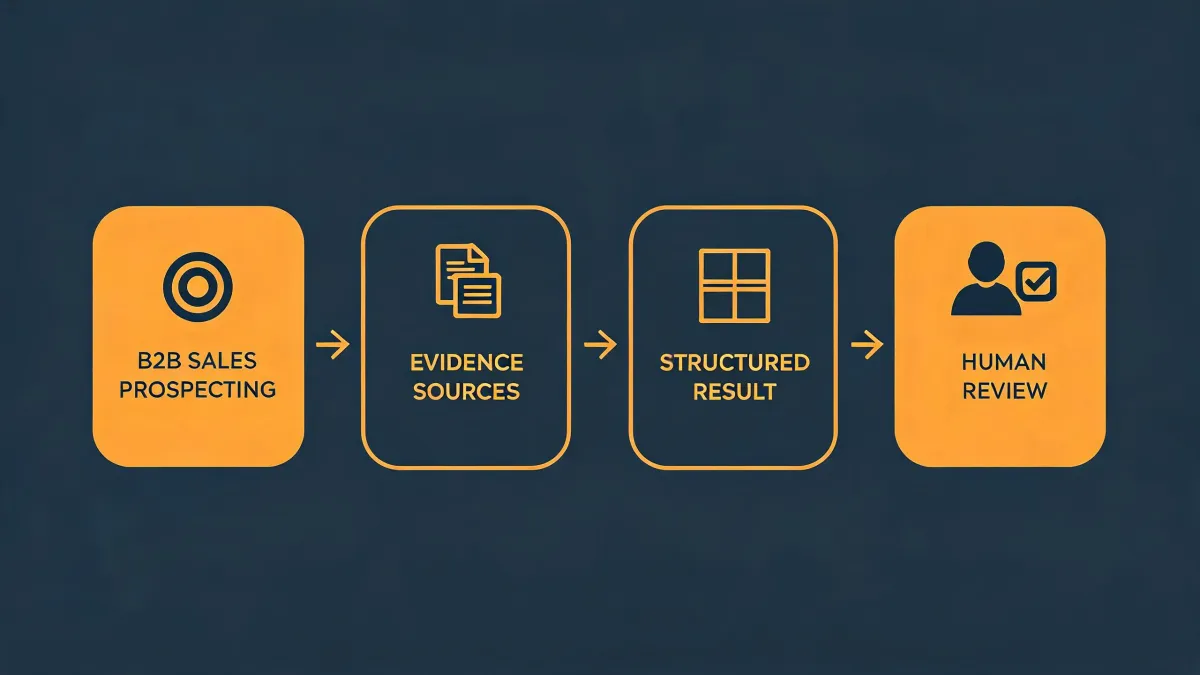
And a final word on expectations. Be skeptical of any platform that promises guaranteed response rates or revenue outcomes—B2B sales doesn't work that way, and vendors who promise certainty are selling a story. Be equally skeptical of "AI agents with zero human oversight." The teams that get real results use AI sales platforms as a multiplier: AI handles prospecting, enrichment, and sequencing, while humans make the judgment calls on messaging and account strategy.
The vendor who lists all fees upfront—even if the total looks higher at first—usually costs less in the end.
That's the checklist. Six steps, two hours, one spreadsheet. If nothing else, the next sales rep who says "fully integrated and scales with you" will have to answer a harder question: "And what's the total cost of ownership?"