
-
Most AI SDR Evaluations Start in the Wrong Place
-
The Okki-Go Human Review Workflow Is the First Thing I Test
- The Okkigo API Integration Tells You More Than the CRM Sync Screenshot
-
What Should Revenue Operations Teams Evaluate in Visitor Tracking?
-
The Autonomy Objection
-
The Transparency Thread Runs Through Everything
-
The Bottom Line: Judge the Workflow, Not the Demo
Most AI SDR Evaluations Start in the Wrong Place
I took over software purchasing for our company in 2021, and since then, I've managed somewhere around $200,000 in annual tooling spend across 16 or so vendors. I report to operations and finance. And I have a habit of ruining sales demos (surprise, surprise). My first question is rarely "what does this do?" It's usually "what happens when it goes wrong?"
That's why I think most AI SDR evaluations start in the wrong place. Buyers sit through a demo and judge how impressive the AI-written emails look. I get it. That's the visible part. But after four years of managing vendor relationships, I can tell you that's not where tools die. They die when responsibility isn't clear. They die when data goes stale inside a quarter. They die when the invoice arrives with a line item nobody approved.
I'm not an outbound sales expert, so I can't speak to message copy or deliverability tactics. What I can tell you from a procurement perspective is how to evaluate an AI prospecting platform before your team wastes six months on it — and why okkigo ended up passing the bar after a few other tools didn't.
The Okki-Go Human Review Workflow Is the First Thing I Test
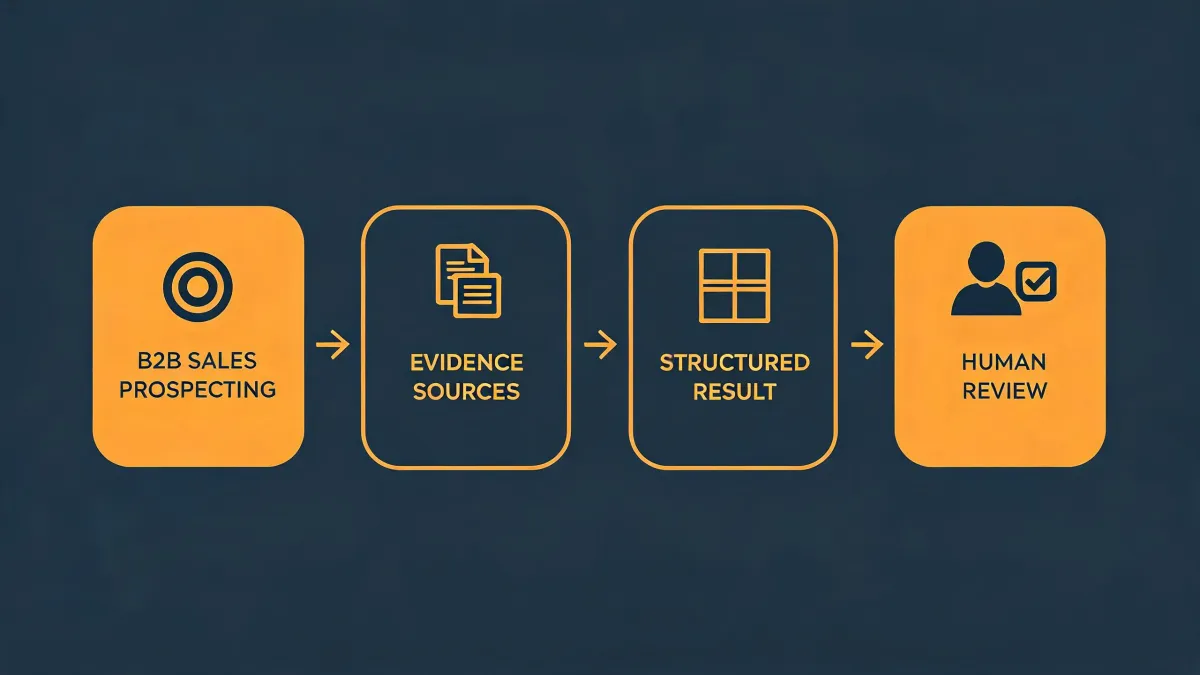
When our RevOps lead added okkigo to the evaluation list in late 2025, I expected another polished pitch. The AI-generated copy in the demo was decent. The sequence logic was fine. But the feature that actually made me sit up was the okki go human review workflow — the fact that AI drafts are held in a review queue and can't go out until a person approves them.
That sounds like a small operational detail until you've cleaned up a weekend automated campaign gone wrong. In late 2024, we trialed a platform that marketed itself as fully autonomous. The AI sent a sequence quoting outdated pricing to a former customer our CEO was about to call. The prospect replied, "Did you mean to send this?" Nobody knew the campaign had fired until Monday morning. There was no approval step, no audit trail, nothing to pause. The vendor said the AI would "learn from the mistake." From where I sat, that was like a supplier handing me a handwritten receipt and asking me to convince finance it was real.
Here's what I check when a vendor shows me a human-in-the-loop workflow:
- Where does the approval obligation actually live? Is it an SDR, a manager, or RevOps?
- Is the audit trail visible? I need to know who approved what, when, and what they changed.
- Can we pause a campaign immediately without submitting a support ticket?
- Can a reviewer edit the AI's draft, or only approve or reject it?
During the okkigo pilot, one AI-drafted email said our service was "the most reliable option on the market." The human reviewer flagged it and removed the claim before it went anywhere. That one moment told me more about the product than the entire demo.
The Okkigo API Integration Tells You More Than the CRM Sync Screenshot
Every AI SDR demo includes a slide showing a clean CRM integration. I don't trust the slide. I ask to see the okkigo API integration documentation because the boring details are what make or break adoption.
Here's the question that matters: does the platform update the CRM naturally through its API, or are we going to be exporting and importing CSVs? I've lived through the CSV version. It works for about two weeks. Then someone runs a list at the wrong moment, the file overwrites a field it shouldn't, and suddenly your sales team is calling someone by the wrong job title. (Note to self: CRM enrichment is downstream of integration quality — not the other way around.)
We run a HubSpot instance with tens of thousands of contact records. I don't need a tool that can write 50 fields to a demo account. I need one that can handle deduplication, respect manual notes, and log outreach activities without turning every contact into a firehose of noise.
CRM Enrichment: Don't Count Fields. Check Recency.
People assume more data means better enrichment. In my experience, the causation runs the opposite way. A vendor with a massive database can give you a bigger record that is also more wrong, because the older fields conflict with the newer ones and nobody knows which source to trust.
When I evaluate crm enrichment, I test with 25 accounts we know cold. I look at whether the tool updates people who recently changed jobs, whether it flags confidence levels, and whether it avoids overwriting a field our team updated manually last week. Okkigo's waterfall enrichment approach made sense to me for this reason: instead of relying on one dataset, it works its way through multiple sources and lands on the freshest verified match. That's not magic. That's just common sense applied to data.
For the LinkedIn Email Finder, Ask "Verified" by Whom?
The linkedin email finder feature is what gets SDRs excited. They build a list in Sales Navigator, push it into the tool, and get email addresses back. I understand the appeal. But I've watched too many teams confuse finding an email with finding a deliverable email.
No reputable vendor can honestly guarantee 100% email accuracy. FTC guidance (ftc.gov) is pretty clear that deceptive headers and missing opt-out mechanisms are on you, not on your data provider. So the real question is what the vendor does to narrow the gap. Does the tool show verification dates? Does it indicate confidence? Does it flag role-based addresses like info@ or sales@ that are technically valid but useless for cold outreach?
One detail that impressed me during our okkigo evaluation: the platform didn't treat the LinkedIn email finder as a standalone trick. It connected the found address to the enrichment and verification flow, so the SDR could see not just the email but the source and the confidence behind it. That's the kind of transparency that makes an operations person trust the tool enough to let it near the CRM.
What Should Revenue Operations Teams Evaluate in Visitor Tracking?
Visitor tracking is the hardest category to evaluate because every vendor shows you a dashboard full of company logos and calls it intent. I think revenue operations teams should evaluate visitor tracking with a simple test: can your team act on this without generating noise?
Here's what I'd put on the evaluation checklist:
- Account identification, not raw traffic volume. Anonymous visits are only useful when they resolve to an account you already know or should know.
- Fit scoring. A visit from a 10-person company in a non-ICP vertical isn't a signal. The tool should help you distinguish signal from coincidence.
- CRM context. Does the visitor tracking data sit next to the existing opportunity, or does it arrive as a random alert?
- Privacy posture. I'm not a compliance lawyer, but the rules around tracking and consent keep getting tighter. Ask your legal team before you plug any visitor identification tool into your site.
- Alert hygiene. If every pricing page visit triggers a notification, your SDRs will mute the integration by the end of week two.
The common misconception is that more visitor data equals more insight. Usually, it's the opposite. Raw visitor tracking creates a false sense of visibility — you know a company looked at your site, but you don't know if it was the decision-maker or a competitor doing research. That's why I'm less interested in the volume of tracked visits and more interested in how the tool connects to outreach triggers, enrichment, and human judgment.
The Autonomy Objection
I know what some founders will say: if you force human review on every AI-generated email, you're capping the AI's potential. It can't learn as fast. It can't scale as quickly.
I hear that argument. I simply don't agree with it. If an AI system needs unrestricted outbound volume to improve, it's not learning from results — it's experimenting on real prospects. And I would rather have a slightly slower system that requires a human to say "yes, I've read this and it's appropriate" than a fully autonomous system that makes me look foolish three emails deep into a sequence.
The tools that survive in our stack are the ones that make responsibility visible. Okkigo's human-in-the-loop design doesn't limit the AI. It gives the AI a safety rail, which means we're actually willing to give it more responsibility over time.
The Transparency Thread Runs Through Everything
Here's where the conversation circles back to procurement. I've learned to ask "what's NOT included?" before I ask "what's the price?" That applies to software contracts just as much as it applies to vendor invoices.
A platform can have the best workflow in the world, but if the contract buries usage limits, API call overages, or surprise data export fees in the fine print, I'm going to catch it — because that's literally my job. What I appreciated about okkigo during the procurement process was that the team didn't try to hide the operational details behind sales theater. They showed us the review flow, the integration docs, the enrichment logic, and the data sources. That doesn't guarantee the tool is perfect. It does tell me they're not afraid of being examined.
I'm not saying okkigo is the only platform that does this well. I am saying that's the standard I'd hold every AI SDR vendor to.
The Bottom Line: Judge the Workflow, Not the Demo
AI writing quality improves every few months. Models get better. Tone gets more natural. But the operational discipline around the AI — who reviews it, how it syncs, where the data comes from, and what the contract actually says — doesn't improve on its own. That's the part you have to evaluate before you sign.
If you're in revenue operations and someone asks you to evaluate an AI SDR platform, start with the human review workflow. Then check the API integration. Test the CRM enrichment on accounts you know cold. Ask hard questions about the LinkedIn email finder and visitor tracking. And if the vendor can't show you those details, the demo was just a demo.