
I don't run RevOps. I run procurement, which means I'm the one who gets the quote, the contract, and the invoice after your team has already fallen in love with a demo. Over the past six years, I've reviewed more than a dozen sales intelligence and AI prospecting tools, tracked every dollar in our cost management system, and built the TCO spreadsheet that eventually killed more than one 'obvious' choice.
From the outside, this looks like a problem of choosing the right platform. Search 'relevance ai features and pricing,' and you'll get feature lists, pricing pages, and comparison blogs. But the problem is not the features. The problem is that a lot of RevOps teams evaluate sales intelligence features before they understand their own workflow. That mental shortcut is expensive.
The Surface Problem: You're Comparing a Menu, Not a Meal
A typical evaluation starts with a spreadsheet: list the features, compare the prices, mark who has intent data, email tracking, and the biggest B2B contact database. It feels objective. It feels thorough. But a long feature list is a menu. It tells you what's possible, not what will actually get used.
From the outside, it looks like the biggest database and the broadest feature set equal the best value. The reality is that many of those features are never used, and the ones you need often cost extra. We once found 40% of our subscription spend sitting on dormant seats because the evaluation optimized for the wrong thing. Not ideal, but workable. Then the renewal came, and 'workable' became 'expensive.'
People look up 'relevance ai features and pricing' and compare per-seat rates. Then they discover that B2B contact database counts are not apples-to-apples. Then they get a bill for data refresh or API usage that wasn't in the headline price. That's the surface problem: you're making a buying decision on the same numbers every other vendor wants you to see.
What's Really Going On Underneath
Too many teams aren't evaluating sales intelligence features. They're evaluating marketing pages.
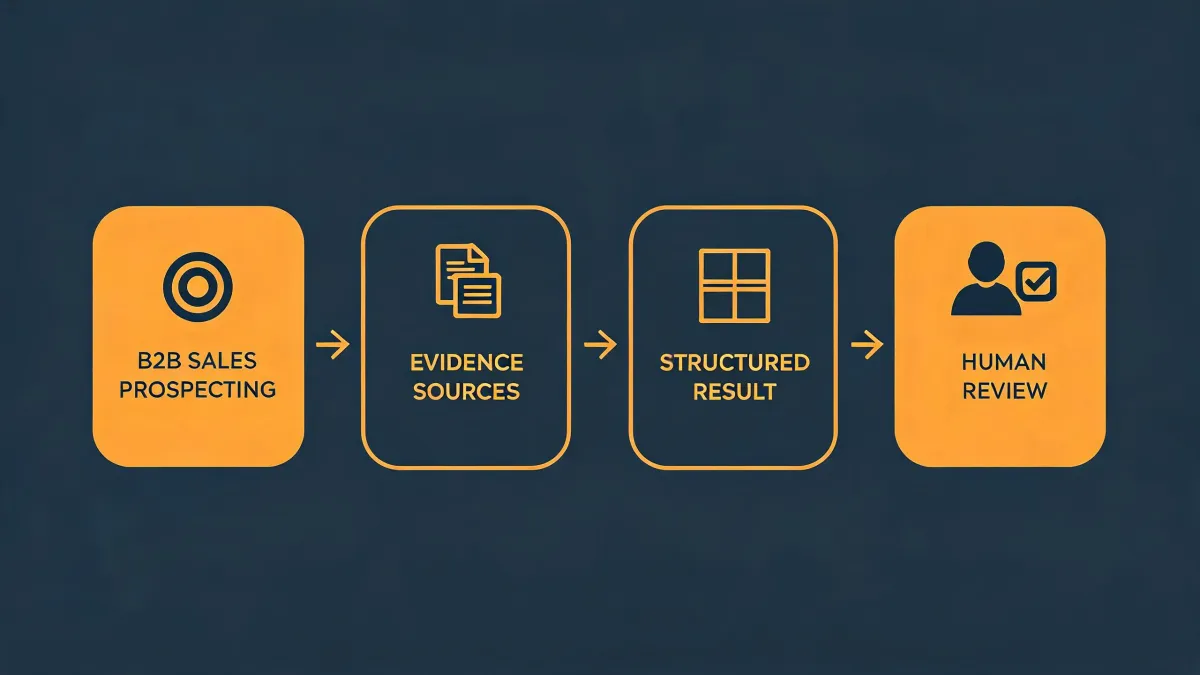
What most people don't realize is that a sales intelligence platform only creates value when it connects to the way your team actually works. If your SDRs are expected to send personalized cold email, you need more than a contact database. You need automatic enrichment, deliverability checks, email tracking, and a sequence that triggers the next best action. If you don't have that workflow defined, no feature list will save you.
The feature list hides your actual workflow
I learned this after our team tested an AI SDR tool that looked perfect on paper. It had all the buzzwords: AI agents, lead scoring, response prediction. Then we discovered it couldn't push tracked emails into our CRM without a manual CSV upload. I assumed 'tracked email' meant the same thing in every platform. Didn't verify. Turned out the email tracking dashboard only showed opens, not replies. We had to export replies from a separate tab and log them ourselves. That's not automation; that's a part-time job.
B2B contact database size is not data quality
Here's something vendors won't tell you: the number of records in a B2B contact database is almost meaningless. A database can have 200 million contacts and still fail you if the data is six months old. We audited one 'verified' list and saw a 22% bounce rate on emails that were supposedly confirmed.
Instead of asking how many contacts, ask how they verify them, how often they refresh, and what expected bounce rate is. Then ask to see it in writing. Per FTC guidelines (ftc.gov), claims are supposed to be truthful and substantiated. Hold vendors to that standard.
Pricing transparency collapses at scale
Pricing pages are designed to make entry look cheap. The real cost shows up after implementation: data refresh add-ons, per-seat AI credits, API calls, export fees, support tiers. In 2023, I compared costs across eight vendors over three months. Vendor A quoted $1,400 per month for a plan that included everything. Vendor B quoted $950 per month and nearly won. That was before B added $450 per month for unlimited data refresh and $300 per month for API access. B's real total was $1,700 per month, which meant A was 21% cheaper than the 'cheap' option. The 'cheap' option resulted in a $3,600-per-year difference hidden in fine print.
The hidden cost: switching and integration
Switching costs are part of the total cost, and almost nobody includes them. In 2024, when we switched vendors, the old vendor's export API was undocumented. Actually, it existed, but the 'documentation' was a forum post from 2022. Lesson learned the hard way: switching costs are part of TCO. We spent 40 hours building an integration to get our historical email tracking data out. At our blended internal rate, that was roughly $5,000. The new platform was cheaper on paper, but finance remembered the invoice.
What Should Revenue Operations Teams Evaluate in Sales Intelligence Features?
If I had to give one piece of advice, it's this: design the workflow first, then evaluate whether the sales intelligence feature is a cheap add-on or the core of the system. Here's the scorecard I would use:
- Workflow fit. Can you move from a contact in the database to a tracked, personalized cold email without exporting a CSV? Does the platform's AI SDR/BD agent understand natural-language instructions like 'find accounts showing intent in the last 30 days and draft a follow-up email'? If you need a data scientist to make that work, you're not buying software; you're hiring infrastructure.
- Data freshness and enrichment, not database size. Ask for a sample of records. Check bounce rates. Understand how often their B2B contact database is refreshed. Does the tool enrich missing fields automatically, or do you have to batch-upload?
- Email tracking that closes the loop. Open and click tracking is table stakes. The question is whether tracked replies, meeting links, and chained sequences feed back into your automation and CRM. If not, you're paying your SDRs to be the interface.
- API documentation as a proxy for integration maturity. Read the docs before you sign. We looked at relevance ai API documentation during our last evaluation—not because we wanted to build custom code, but because good API docs are a sign the product can actually talk to other systems. Clear auth flows, rate limits, webhooks, and a sandbox environment mean your stack won't need a four-week integration project.
- Total cost of ownership, not headline pricing. Build a TCO sheet before your first sales call. Include per-seat, data refresh, API credits, export fees, storage, support tiers, onboarding, and the cost of your team's time to manage the platform. Put the number on a whiteboard.
I'm not going to pretend one platform is perfect for everyone. relevance-ai isn't the right fit for a team that only needs a static contact list and no workflow automation. For that, a simpler database is cheaper. But for a RevOps team trying to run outbound with lean resources, relevance-ai makes sense because it connects the two things that usually cause evaluation failure: contact data and action. Their relevance ai features and pricing can be modeled into a TCO spreadsheet. The API docs are readable. Email tracking isn't a separate report; it feeds the same workflow as the AI SDR. That's the point.
Every evaluation comes down to a tradeoff: buy more features and hope the team uses them, or buy a platform that fits a defined workflow and watch the real savings come from fewer tools, fewer manual exports, and fewer wasted sends. The right platform isn't the one with the biggest database or the prettiest demo. It's the one that makes the problem you actually have disappear. That's the platform procurement will approve.