
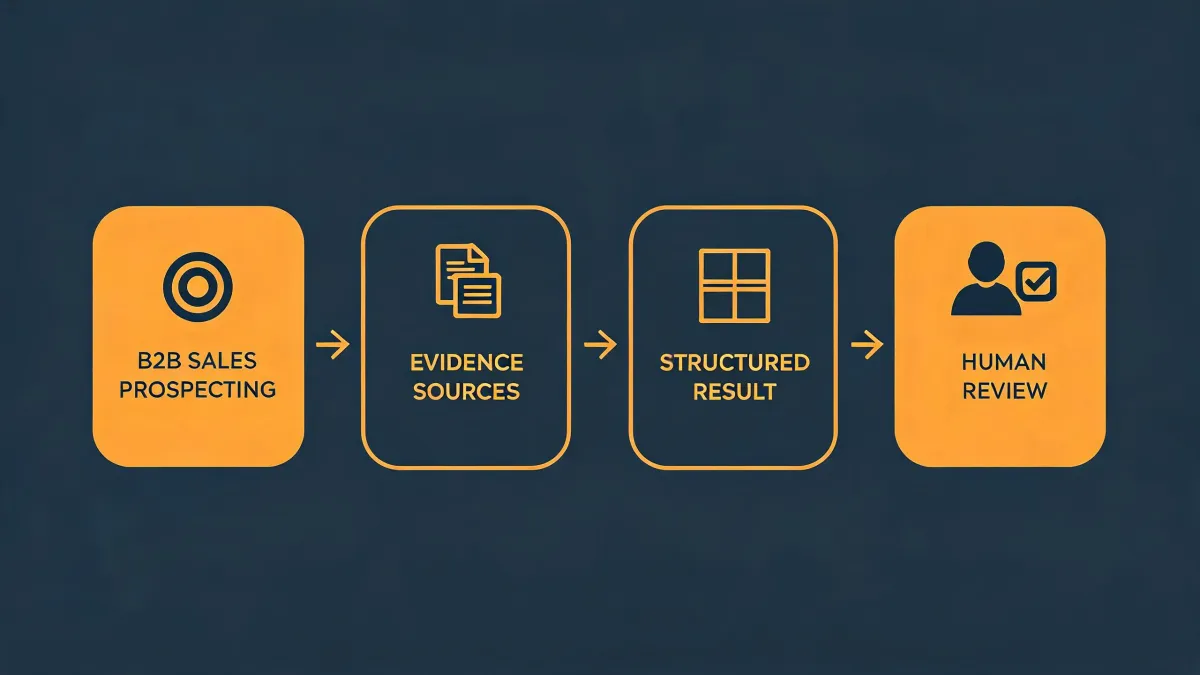
Every time I talk to a sales ops team about AI SDR tools, the first question is usually about reply rates. The second is usually about price. I get it. Those are visible. The part I have learned to dig into is the part that's invisible: inbox placement.
I manage the sales tech budget at a B2B company. I've negotiated with more vendors than I can count, and I have a cost tracking spreadsheet for everything. When I first started evaluating AI sales tools, I assumed inbox placement was an IT problem. Add SPF, DKIM, DMARC, click send, and move on. Then we ran a test from a fresh subdomain. The emails were good. The list was clean. The open rate was under 5%. That got my attention.
The pain every sales team feels is low replies. The deeper problem is often that nobody saw the email at all. From the outside, low response rates look like a copywriting problem. The reality is usually upstream: bad contacts, poor sender reputation, or a sending pattern that looks like spam.
The Problem You Think You Have: Low Response Rates
When sales teams come to me with a new AI SDR platform, they usually tell me they want better reply rates. More meetings. More pipeline. I always ask one question first: where are your emails actually landing?
I learned that question the hard way. In 2024, we switched to a platform that promised better personalization. The sales team was excited. The copy was genuinely better. But the domain we were using had been through a rough period—high bounce rates, ignored unsubscribes, sporadic sending. We kept blaming the messages until one rep created a new subdomain and manually sent 50 identical emails from the same list. The inbox rate jumped. Same copy, same day. Different sender reputation.
That was my reverse validation moment. I only believe in inbox placement as the main constraint after I watched a good campaign fail because of the domain it came from.
Why an Agent-Native Prospecting Workflow Changes the Rules
Agent-native prospecting is a different animal than traditional email blasting. Instead of a marketer who uploads a CSV and hits send, you have an AI agent that researches prospects, writes messages, builds sequences, and follows up. It is supposed to behave like a junior SDR—but one that never sleeps.
The problem is that automation scales mistakes. A human SDR might send 80 politely varied emails over a day. An AI SDR can generate hundreds of highly personalized emails in minutes. That is great for speed, but it changes how mailbox providers see your domain.
Inbox placement is not just about authentication or winning the spam-filter lottery. It's a behavioral signal. Providers pay attention to how much mail you send, how consistently you send it, how many messages get read, and how quickly recipients report spam. An agent-native workflow touches all of that.
Volume Bursts Are the First Red Flag
If you set up an AI SDR to target 200 new accounts a week, it will often default to sending between 9 a.m. and 11 a.m. on business days. That seems efficient, but it can create a sudden burst of outbound email. For a mailbox provider, a burst from a new domain is suspicious. It looks like a bot, not a salesperson.
To be fair, this isn't an argument against automation. It's an argument for controls. In an agent-native workflow, the sending pattern needs to be part of the system design. That means randomized timing, quiet hours, adaptive frequency, and the ability to pause when a domain needs to cool down.
Data Quality Is a Deliverability Issue, Not a Database Issue
This is where business email finders come in. A lot of teams treat the email finder as a separate data problem. "The list is dirty," they say. But in an agent-native workflow, data quality is also a sender reputation problem.
If the email finder returns old addresses or role-based inboxes like info@ or sales@, those messages bounce. Every bounce sends a signal back to the mailbox provider. Enough bounces, and your domain starts to be filtered. The AI SDR can write the perfect follow-up, but the damage is already done before the email reaches a human.
From the outside, the solution looks like buying a better email finder. What I have learned is that the finder needs to be connected to verification, enrichment, and suppression rules inside the same workflow. Otherwise, you are spending money to poison your own sending domain.
LinkedIn Automation and Email Are Not Separate
Most people think of LinkedIn automation as a completely different thing from email. I used to think that too. In practice, the agents need to work together.
An agent-native prospecting workflow might send a connection request, wait two days, send a LinkedIn follow-up, then send an email. If those channels are not coordinated, you end up with awkward overlaps: a LinkedIn message that arrives twenty minutes before an email from the same person feels spammy. Worse, if the LinkedIn automation platform is too aggressive with connection requests, the user's account gets restricted, and the whole sequence falls apart.
That's why I look for a LinkedIn automation platform that supports warm-up cycles, acceptance tracking, and rejection handling. It needs to share data with the email sequence, not run in a separate silo. From my cost perspective, an uncoordinated multi-channel agent workflow costs more in wasted follow-ups and lost account health than any subscription fee.
The Real Price of Ignoring Inbox Placement
Let me talk about cost the way a procurement person talks about cost: total cost of ownership, not monthly subscription price.
Say the AI SDR platform costs $1,000 a month. The business email finder costs another $500. Data enrichment adds $600. On paper, that's a manageable stack. But if the system sends to bad contacts or pushes a cold domain too hard, the hidden costs show up later. You need a new subdomain. You need warm-up tools. You need to suppress bad segments and rebuild the sequence. That takes weeks of sales capacity.
I built a cost calculator after getting burned on hidden fees twice. There is a line item in it for "deliverability repair." It exists because I ignored inbox placement once and paid for it in Q4 pipeline. Actually, I ignored it twice. The second time hurt more.
Every email that lands in spam is a brand impression. A prospect may never read a word of your perfectly personalized opening line. But they will remember seeing your company in the spam folder. That's not a deliverability metric. It's a brand-quality metric.
This is the part I rarely see in vendor comparisons. Everyone talks about open rates and reply rates. Almost no one talks about the cost of a damaged reputation. If a prospect sees your company name attached to a spam folder, that negative signal sticks. It shows up later when a sales rep reaches out through a different channel, or when someone mentions your brand in a room you're not in. You cannot measure that in a dashboard, but it affects pipeline over time.
When I audit our 2025 spending, the cheapest tool was actually the most expensive one. It had a lower fee, but it sent from a shared IP pool, offered no domain warm-up controls, and treated inbox placement as an add-on. A vendor even sold us a "free migration" that ended up costing more after we had to reset a domain. That "free setup" offer cost us about $1,800 in extra work and lost sends.
What I Look For In an Agent-Native Prospecting Platform
After comparing platforms, including the relevance-ai official website and features documentation, I stopped looking for AI hype. I started looking for fundamentals. There are four things I check before I approve a budget line item.
1. Built-In Deliverability Controls
I want to see domain warm-up, send-time limits, bounce management, and suppression lists built into the workflow. If inbox placement is handled by an external deliverability consultant, that's a red flag. It needs to be part of the system. The relevance-ai platform description and features pages mention agent-native workflows and natural-language prospecting, but for me the decisive features are the ones that control how and when mail is sent.
2. Integrated Data Verification
The business email finder should not be a standalone database. It should connect to verification and enrichment at the point of sending. I want the system to remove risky emails before they hit the mail server, not after. A clean list is a deliverability strategy, and it should be automated.
3. Coordinated LinkedIn and Email Sequencing
If the AI SDR writes email sequences and the LinkedIn automation platform runs on a different schedule, I'm not interested. The whole point of an agent-native workflow is that the agent coordinates touchpoints. It should know if someone already accepted a connection request before sending an email. It should know if someone replied on LinkedIn before sending another cold email. That coordination protects the brand experience and keeps the sending output sane.
4. Transparent Reporting Per Domain
I need to see inbox placement rates, bounce rates, complaint rates, and reply rates by domain, not just a blended campaign open rate. The blended number hides the problem. If one domain is damaged, I want to see it before we double down on sends.
Google and Yahoo have required bulk senders to authenticate with SPF, DKIM, and DMARC since February 2024. As of 2026, that is table stakes, not a feature. The real question is whether the platform helps you maintain a healthy sending pattern over time, not just at setup.
Bottom Line
Inbox placement is not a technical footnote in an agent-native prospecting workflow. It is the first quality filter. You can have the best AI SDR message in the world, but if it doesn't reach the inbox, it doesn't exist.
For me, the decision comes down to total cost. A platform that coordinates email, LinkedIn automation, data enrichment, and inbox health under one workflow is more expensive on paper. But it reduces the hidden costs of wasted sends, domain repairs, and brand damage. That's not just a deliverability strategy. It's procurement math.