
We thought we needed a better cold email tool
Q1 2023. Four SDRs. Our stack was Clay for enrichment, Instantly for sending, LinkedIn Sales Nav for list-building, and a 400-row Zapier table that most of us preferred not to talk about. Reply rates were sliding for two straight months.
In the quarterly retro, everyone agreed: it's the tools. So we added an intent data source and a second email verification tool. All-in tool cost landed around $1,400/month, plus roughly 20% of my working hours on integration firefighting instead of actual GTM.
Sensible, right? Better data. Better deliverability. Better targeting. Six months later we were booking fewer meetings than when we ran a single enrichment source and one outbound tool.
The tools weren't the problem. The spaces between the tools were. That took me about a year and a few thousand dollars to actually internalize.
The deeper issue: nobody owned the workflow layer
Scroll any cold email tool's feature page and you'll see the same list — send volume, inbox rotation, warm-up, A/B testing, bounce handling. Sales intelligence tools advertise similar-sounding things — contact data, intent signals, technographics, job changes. Both categories are fine on their own.
But what sits between them?
- Deduplication — the same person in two lists, with different casing and a trailing space in the email field
- Ordering — enrich before verifying, verify before scoring, never in reverse
- Intent triggers — the signal fires, but the contact already got step 3 of a different sequence yesterday
- Reply routing — the reply needs to land with the SDR who wrote that specific email, not in the shared inbox graveyard
Most teams with 5–50 SDRs stitch this together with people and Zapier. Then it breaks in places nobody's watching.
This is the outsider blindspot I keep running into — the question everyone asks is "which cold email tool is best?" The question they should ask is "who owns the workflow?"
That question tends to arrive around the same time someone gets the title GTM engineer. But here's what I didn't expect: the GTM engineer usually isn't doing GTM. They're maintaining integrations. We hired ours in Q1 2024. His first six weeks were almost entirely re-plumbing our own stack. Zero net-new GTM work. He was mopping the floor.
The surprise wasn't what I expected
I assumed deliverability would be our weakest link. It wasn't. The thing that eventually broke us was our own deduplication. An enrichment tool returned a batch of empty email fields with trailing whitespace. The Zapier filter passed them through. Result: roughly 600 contacts double-touched, three sending domains flagged, about two and a half weeks to recover.
No tool failed. No vendor misled us. Just nobody owned the logic between them.
What the gap actually cost us
I keep the numbers because we had to justify the next tool budget to finance, and hand-waving doesn't work in that room:
- 7–10 SDR-hours per week on manual enrichment and dedupe — about two hours per SDR, rest on me. At our blended cost, that's roughly $1,600/month of work nobody hired anyone to do.
- 15–20% of monthly send volume burned on duplicates, dead addresses, or contacts who'd already replied. Send quota spent, not meetings earned.
- A three-week deliverability recovery after the February 2024 incident. Domain rotation, warm-up, reputation rebuild. Three weeks of output just gone.
- Intent signals sitting ignored. We paid for an intent source for six months and acted on maybe half of it. Accounts visited our comparison page, downloaded the pricing PDF, and nothing happened — because the signal lived in a dashboard nobody opened on Fridays.
That last one still bugs me. We bought a warning system and covered our ears when it went off.
So what is a sales engagement platform, and when should a B2B team use one?
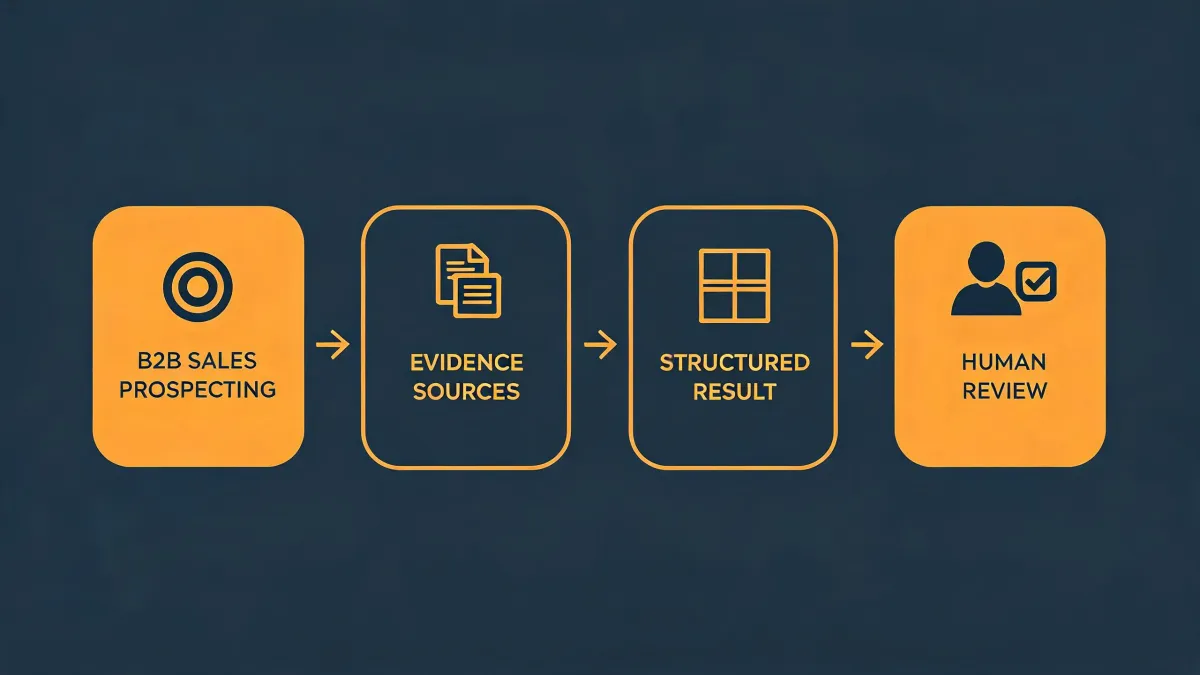
Short version: a sales engagement platform is the workflow layer, productized. It takes over the thing that used to live between your tools and your people — merging data sources, running enrichment and verification in the right order, firing multi-channel outreach off intent signals, routing replies, and logging what actually happened at each step.
It isn't a better cold email tool. It's the answer to "who decides which contact, when, through which channel, with what message."
Layer agent-native execution on top — agents handling the workflow instead of static if/then branches — and you get what people are starting to call agent-native prospecting. A human stays in the loop on send decisions. The agent handles the bookkeeping that humans can't keep straight at scale. That distinction matters more than the label.
When it's worth it, and when it isn't
If your volume is low — say under 200 sends a week, one person doing outbound, one data source — you probably don't need to productize the workflow layer. A clean spreadsheet and a solid sending tool will hold. Don't buy. Seriously, don't.
If you're running 4–50 SDRs, three or more data sources, sequences and intent signals in the mix, and you're already paying someone to babysit integrations — whether their title says GTM engineer or they're just the senior SDR who noticed — then you're already paying for the workflow layer. You just haven't named it. That's the point where a platform like okki-go starts to make sense.
The okkigo stance is that this layer should be owned explicitly: waterfall enrichment plus intent in one pipeline, agents running the operations, humans holding the send button, instead of every team hand-rolling their own fragile glue. That's my read on it, and it lines up with what our 2024 incident taught us the expensive way.
One last thing — as of early 2025, the sales engagement vendor landscape shifts every few quarters, so verify current pricing, compliance posture, and capability claims yourself before you write anything into a budget. What I wrote here reflects hands-on experience with a 4–10 person SDR team between 2023 and 2025, not a 2026 market map.