
-
What does relevance-ai actually do?
-
What do relevance-ai Capterra reviews really tell a buyer?
-
How do relevance-ai features and pricing work for a first-time buyer?
-
Does relevance-ai include a bulk email verifier, or do I still need a separate one?
-
Is LinkedIn connection automation in relevance-ai worth the risk?
-
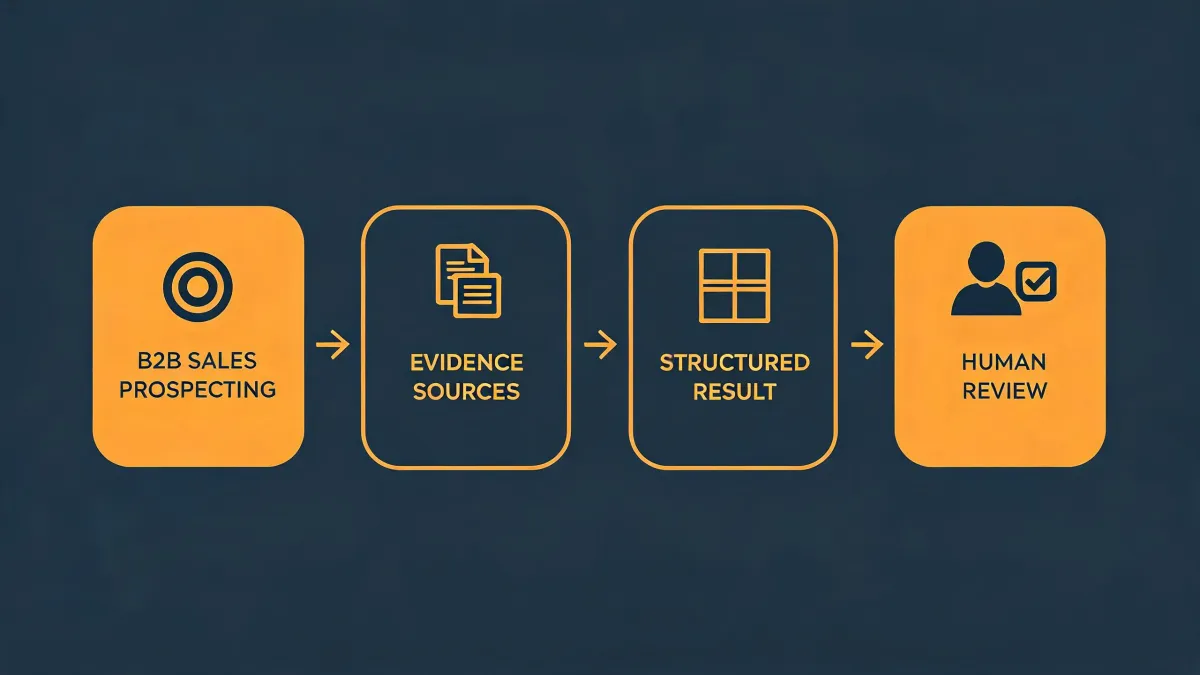
What is human-in-the-loop review, and when should a B2B sales team use it?
-
What should an operations buyer check before signing up?
I'm the person who signs the purchase orders, not the sales leader. At my company—a 180-person professional services firm—I manage software subscriptions and report to both operations and finance. When our VP of Sales asked me to evaluate relevance-ai, I went through the Capterra reviews, asked their team about features and pricing, and did my own due diligence on the email and LinkedIn pieces. Here's the practical FAQ I wish I'd been handed.
What does relevance-ai actually do?
relevance-ai is an AI sales prospecting platform. It helps B2B sales teams research accounts, enrich contact data, build prospect lists from natural-language descriptions, draft cold emails, and create LinkedIn outreach tasks. In our 2024 vendor consolidation, we used sales tools that each did one piece of this. relevance-ai's angle is that it strings those pieces into an AI SDR/BD agent workflow—so your team can say something like 'find CFOs at mid-market logistics companies who've hired for a sales ops role in the last 90 days' and get a qualified list with email addresses and enrichment attached.
I'm not going to call it a magic box. The output is only as good as the data sources and the person reviewing the work. But from a procurement standpoint, I like that it addresses two things at once: data enrichment and outreach automation.
What do relevance-ai Capterra reviews really tell a buyer?
I read Capterra reviews before most demos. The common positive themes for relevance-ai seem to be speed of getting campaigns going, how the natural-language prospecting saves time, and the ability to run email plus LinkedIn sequences from one place. Common complaints come up around pricing complexity and the learning curve when a team isn't used to AI-assisted workflows.
Take reviews with a grain of salt. Negative reviews often come from users who expected the tool to do everything automatically with no review. Positive reviews often come from teams that already had clean lists and clear processes. The score on Capterra is a starting point, not a verdict. The question isn't 'is it rated 4.6?'; it's 'will our sales team actually use it and can we afford the workflow it creates?'
How do relevance-ai features and pricing work for a first-time buyer?
From the public materials I've seen in early 2026, relevance-ai pricing is not one flat per-seat price. It looks like it depends on the number of AI agents or workflows you run, the volume of enrichment data credits, email verification credits, and maybe LinkedIn execution credits. Don't hold me to the exact numbers—the vendor changes packaging—but ask for this breakdown:
Platform or agent fee; data enrichment; email verification; LinkedIn actions; overages. If a sales rep tells you 'it's just $X per month,' ask what happens when you run enough contacts to actually hit a pipeline goal. That's the number that matters for your budget.
In my experience, the first-year cost includes more than the subscription. You'll spend time on integration, list cleanup, and training. In our 2024 tool consolidation, the tools with the cheapest software had the most expensive implementation hours. I'd rather pay a bit more for a tool that knows its lane.
Does relevance-ai include a bulk email verifier, or do I still need a separate one?
relevance-ai can verify email addresses in bulk as part of a prospecting workflow. That's useful: verify a list before you upload it, remove risky addresses, and reduce bounces. But verification is not deliverability, and it is not compliance.
Per the FTC's guidance at ftc.gov, the CAN-SPAM Rule requires accurate header and from lines, a non-deceptive subject line, and a working opt-out. A bulk email verifier checks whether an address has a valid format and mailbox response. It does not make a non-compliant email compliant, and it doesn't guarantee inbox placement. You still need SPF, DKIM, DMARC, and a sender domain that doesn't look like spam.
If your team already uses a dedicated email verification tool that's deeply integrated with your CRM, you may not need relevance-ai's credits. If you don't have one, the built-in verifier is convenient. Just don't assume 'verified' means 'delivered.'
Is LinkedIn connection automation in relevance-ai worth the risk?
LinkedIn connection automation is one of the first things I asked about, because it's where procurement and legal start to squirm. relevance-ai can support LinkedIn connection requests with personalization based on your prospect data. Used correctly, it's a time saver. Used incorrectly, it can get an account restricted.
I'm not 100% sure how relevance-ai connects to LinkedIn in every scenario—my guess is there's an official integration option and a browser-based option, and the safe setup depends on which one you choose. Ask the vendor directly and get it in writing. For a B2B sales team, I'd set tight limits: send connection requests from established accounts, personalize each one with a relevant trigger, and never rely on the AI to generate notes without human review.
In our own 2024 pilot, a rep sent 50 connection requests with a merge field that didn't fill correctly. It looked awful. The upside of automation is scale; the risk is burning LinkedIn relationships. Human review is the middle ground.
What is human-in-the-loop review, and when should a B2B sales team use it?
Human-in-the-loop review means that an AI system can draft or recommend an action—an email, a connection request, a list selection—but a person approves, edits, or rejects it before anything goes out. It's a checkpoint, not a final QA pass. In my opinion, this is not optional for B2B sales teams.
Use it whenever your outreach touches real people with real careers and real spam filters. That means executive accounts, existing clients, partners, or any list built from intent data without human context. The reason is simple: the AI doesn't know that one of your target accounts was just acquired, or that your CEO has a personal relationship with the CRO, or that 'quick call' will read as spam in that industry.
When can you lighten the loop? Maybe high-volume, low-risk campaigns where a wrong look costs almost nothing. But even then, someone should audit the generated messages. When I say 'review,' I do not mean a glance at a dashboard. I mean an actual read of the message, the recipient list, and the approval log.
What should an operations buyer check before signing up?
This is the question I wish more people asked before buying AI tools. The hype is about what the AI can generate. The reality is about what happens when it goes wrong.
- Is there an approval step inside the workflow, or can the AI send immediately?
- Can we export an audit trail showing which human approved which message?
- Where does the enrichment data come from, and how do we handle data deletion?
- Can we use our own bulk email verifier instead of spending relevance-ai credits?
- What exactly happens with LinkedIn automation if an account gets flagged?
I'd also run a pilot before a full rollout. Pick one rep, one campaign, and no more than 500 contacts. Measure time to first reply and number of qualified meetings, not just open rates. Looking back, I should have asked for this in the first eval; at the time I was too focused on the feature list. A feature list doesn't tell you whether operations can contain the risk.
And if a vendor tells you 'we're not the right fit for that part of your stack,' listen. In 2020, a vendor who admitted its strength wasn't CRM integration earned my trust for everything else. I'd rather work with a specialist who knows their limits than a generalist who overpromises.