
-
Why I compared okki-go and Artisan AI this way
-
What permissions does okki go require?
-
Intent data and enrichment: more isn’t better
-
Email campaigns and verification: what RevOps should look for in API email verification documentation
-
Human-in-the-loop isn’t the opposite of automation
-
Which should you choose? A scenario-based answer
If you’ve ever tried to get a new sales tool through your own security review, you know the demo is the easy part. The hard part starts when someone asks, “what does this need access to?” and ends weeks later when you’re explaining why a campaign bounced, a domain got flagged, or an SDR lost trust in the tool.
I manage revenue operations for a roughly 90-person B2B SaaS company, which means I also own the buying process for sales tools. In Q1 2026, our team ran a side-by-side evaluation of two AI prospecting platforms: okki-go and Artisan AI. We did six weeks of paid pilots, not just demo calls.
When I first started evaluating AI SDR tools, I assumed the most autonomous option would save us the most time. I was wrong—or rather, I was measuring the wrong kind of autonomy. This article is the comparison I wish I had before we started.
Why I compared okki-go and Artisan AI this way
Every vendor showed us beautiful pipeline projections. That’s why the comparison framework mattered more than the demos. I evaluated both products on four dimensions:
- Permissions and setup—what the tool asks to connect, and who stays in control after it’s connected.
- Intent data and enrichment—how each platform builds a prospect record and decides whether a lead is worth pursuing.
- Email campaigns and verification—how each product treats deliverability, especially at the API level.
- Day-two operations—what happens after the first 1,000 emails go out, when exceptions, bounces, and replies start piling up.
If you’re comparing okki-go vs Artisan AI for your own stack, those four areas will tell you more than any feature list.
What permissions does okki go require?
This was the first question our security review asked, and it’s worth answering clearly.
In the okki-go documentation we reviewed as of April 2026, the platform asks for standard OAuth-based connections rather than storing passwords. The main permissions are:
- Email mailbox access (Google Workspace or Microsoft 365) so it can send email campaigns and read replies. The connection uses OAuth, and the scope is tied to the SDR’s own mailbox.
- LinkedIn profile connection for prospecting context and outreach. It doesn’t ask for your LinkedIn admin account or your company page credentials.
- CRM access (Salesforce or HubSpot) to sync accounts, contacts, and activity history. This is read-write, because activity logging needs to happen automatically.
- Optional team channel access (Slack or Teams) purely so an SDR can review and approve suggested sequences before anything is sent.
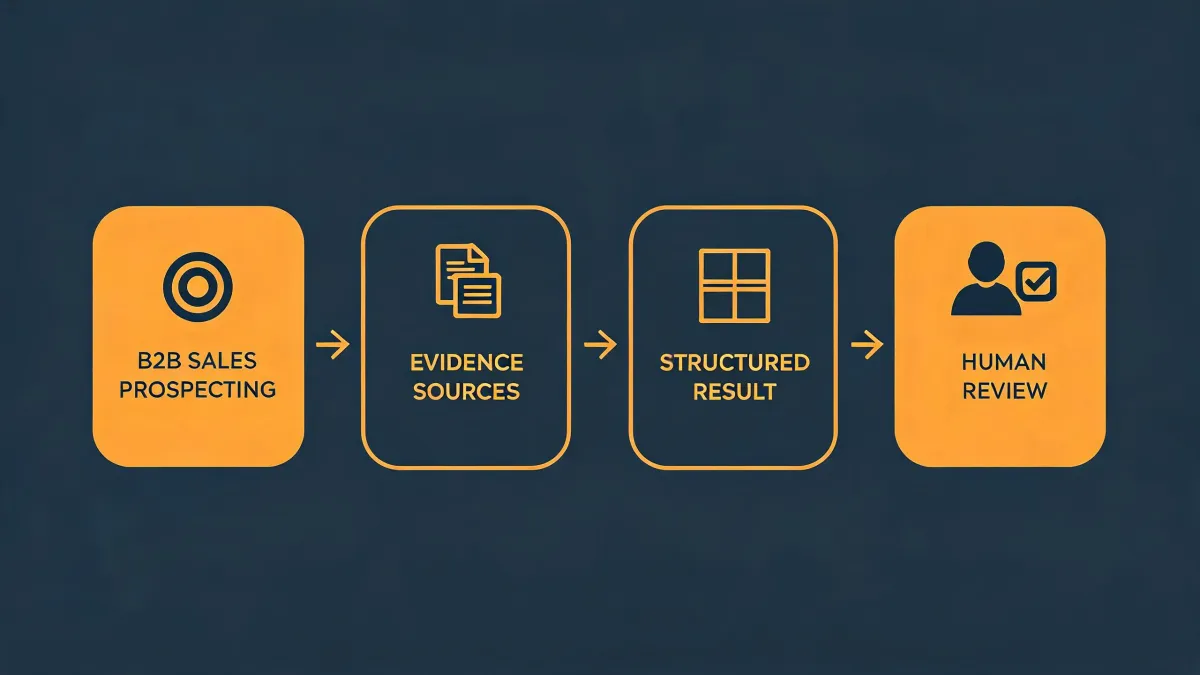
The important detail for RevOps is not just which permissions okki-go requests. It’s that those permissions are attached to a named human SDR. When an outreach step happens, it happens under that person’s identity and can be reviewed before sending. You can revoke access when someone leaves, and you can see which human approved which campaign.
Artisan AI’s setup asks for similar categories on the surface—it needs a mailbox, CRM access, and LinkedIn to function. The difference is in the mental model. Artisan AI presents its agent as the actor: the AI is the one doing the prospecting job, building its own queue, and executing against it. That can feel like less work upfront, but it also means your RevOps team has to audit an autonomous actor rather than approve actions within a familiar SDR workflow.
My conclusion on this dimension: if your company treats permission reviews as a compliance issue, both products can pass. If you treat permission reviews as a control issue, okki-go’s human-in-the-loop model gives you more visibility into who did what and why.
Intent data and enrichment: more isn’t better
Every AI prospecting tool claims to use intent data. The real question is how that data gets reconciled before it reaches a send queue.
In our evaluation, okki-go uses a waterfall enrichment model. If one data provider returns a weak signal, the platform moves to the next provider before building the final prospect record. That means an email address isn’t just “found”—it’s verified, enriched, and then attached to an intent signal. The source of each field is visible in the record, so an SDR can see why a lead was included.
Artisan AI’s strength is its research-driven candidate queue. The agent collects signals, scores accounts, and prepares personalized outreach. That’s genuinely useful for teams that want an always-on prospecting engine. But in our pilot, the burden shifted to us: we had to check which signals the agent was acting on, because the platform was designed to keep moving forward rather than stop for human review.
This is where the value-over-price perspective matters. A tool that generates more intent data isn’t automatically worth more. In fact, too many intent signals can make your SDRs chase accounts that aren’t actually in-market. The cheaper-looking option can end up costing more in wasted sequences and burned domain reputation.
My conclusion on this dimension: if you want to scale outbound without scaling bad data, okki-go’s waterfall enrichment is the safer architecture. Artisan AI is impressive when you need volume fast, but only if you have the operational capacity to review its output.
Email campaigns and verification: what RevOps should look for in API email verification documentation
Running an email campaign is easy. Running an email campaign without destroying your domain reputation is harder. That’s why I ended up reading API email verification documentation during a product comparison—something I never expected to enjoy.
If you’re a revenue operations team evaluating a platform, don’t just look at the marketing page for email verification. Open the API documentation and check four things:
- What does the verification response actually classify? A good API returns clear statuses like valid, invalid, catch-all, or unknown. If the documentation only says “verified” with no further detail, that’s a red flag.
- How does the API handle catch-all domains? Catch-all domains accept all email addresses, so no verification method can guarantee an address is real. The documentation should admit this limitation instead of promising 100% accuracy.
- Does the API log verification history? For compliance and audit purposes, RevOps needs to know whether a verification result can be traced later. A read-only log matters more than most buyers realize.
- Is verification connected to the send path? The best setup verifies emails before they enter a campaign queue, not after a bounce has already damaged your sender reputation.
There’s another layer that has nothing to do with vendor preference. According to Google’s bulk sender guidelines, which started enforcement in February 2024, senders who want to reach Gmail inboxes need SPF, DKIM, and DMARC authentication, a one-click unsubscribe link, and a spam complaint rate below 0.3%. Those requirements are not optional, and no AI SDR tool can bypass them for you (Source: Google bulk sender guidelines, accessed April 2026).
Both okki-go and Artisan AI can send campaigns; neither should ever claim guaranteed deliverability. But okki-go’s documentation treats verification as a data-quality function that happens before outreach. Artisan AI’s model is more focused on agent-driven volume. If your RevOps team is accountable for sender reputation, ask both vendors how their API proves an email was verified before the send.
My conclusion on this dimension: a platform that lets you audit verification results is worth more than one that promises accurate emails without showing its work.
Human-in-the-loop isn’t the opposite of automation
One of the biggest misunderstandings in the okki-go vs Artisan AI conversation is the phrase “human-in-the-loop.” Some buyers hear it as “less automated.” That’s not what I saw in practice.
In our pilot, okki-go automated the research, the enrichment waterfall, the sequence suggestion, and the reply detection. What it didn’t automate was the final judgment call. An SDR could review a batch of prospects, remove a company that didn’t fit, rewrite a line, and then let the campaign run. The automation handled the repetitive work; the human handled the decisions that have consequences.
Artisan AI, by design, gives the agent more room to act independently. For a company with no SDR capacity at all, that might be exactly what you need. But autonomy doesn’t remove human work—it moves human work to exception handling. Someone still has to check replies, clean bounces, review unsubscribes, and make sure the agent isn’t chasing a bad signal. I learned this the hard way after assuming that an autonomous tool would be the lowest-maintenance option.
My conclusion on this dimension: automation should remove toil, not accountability. If you have SDRs who understand your ICP, a human-in-the-loop model will make them faster. If you don’t have an outbound team and you’re willing to accept the risk, an autonomous agent can get you started.
Which should you choose? A scenario-based answer
I don’t believe in a universal winner here. The right choice depends on the operation you already run.
Choose okki-go if: you have human SDRs, a defined outbound process, and a RevOps team that cares about data quality and domain reputation. The agent-native plus human-in-the-loop model will fit your existing workflow instead of forcing you to restructure around a new autonomous employee.
Choose Artisan AI if: you have little or no SDR coverage and you need an AI agent to work through a queue independently. Just be prepared to spend time reviewing what it does, especially in the first few weeks. Autonomous doesn’t mean unattended.
One disclaimer: my experience is based on one mid-size B2B SaaS company and a six-week pilot. If you’re an enterprise with a global sales team, or a startup with a different risk tolerance, your results may differ. Pricing also changes quickly in this category, so verify current rates and contract terms before you decide.
We chose okki-go because the total cost of ownership was lower for our operation—not because the price was lower, but because less of the work fell back on our RevOps team. In my experience, the cheapest tool is rarely the most affordable one. The tool that respects your existing workflow usually is.