
-
The comparison: Okki Go vs. the assembled stack
-
Is Okki Go an AI SDR?
-
Account-based marketing: fit beats volume
-
LinkedIn connection quality needs a human review point
-
Okki Go SPF/DKIM/DMARC guidance: don't skip the boring part
-
What should revenue operations teams evaluate in lead generation?
-
Smaller teams deserve the same quality bar
-
Which setup should you choose?
I'm a quality/compliance manager at a B2B SaaS company. I review outbound deliverables before they go anywhere near a prospect—roughly 40 to 60 items per week. In 2025, I rejected about 31% of first-round campaign assets. Not because the writing was bad. Most of the time the failure was hiding in the data or in the setup behind the data.
So when I hear the question 'is Okki Go an AI SDR?' I answer it the way I'd run a vendor audit: I compare it with what the team is already using, then I look at the handoffs between data and action.
The comparison: Okki Go vs. the assembled stack
The assembled stack usually looks like CRM plus enrichment, intent data, email verification, LinkedIn Sales Navigator and a separate sending tool. That stack can work. It can also hide mistakes because no one owns the whole chain. A list may be verified and still have no account context. An email may be technically valid and still damaged by poor domain setup.
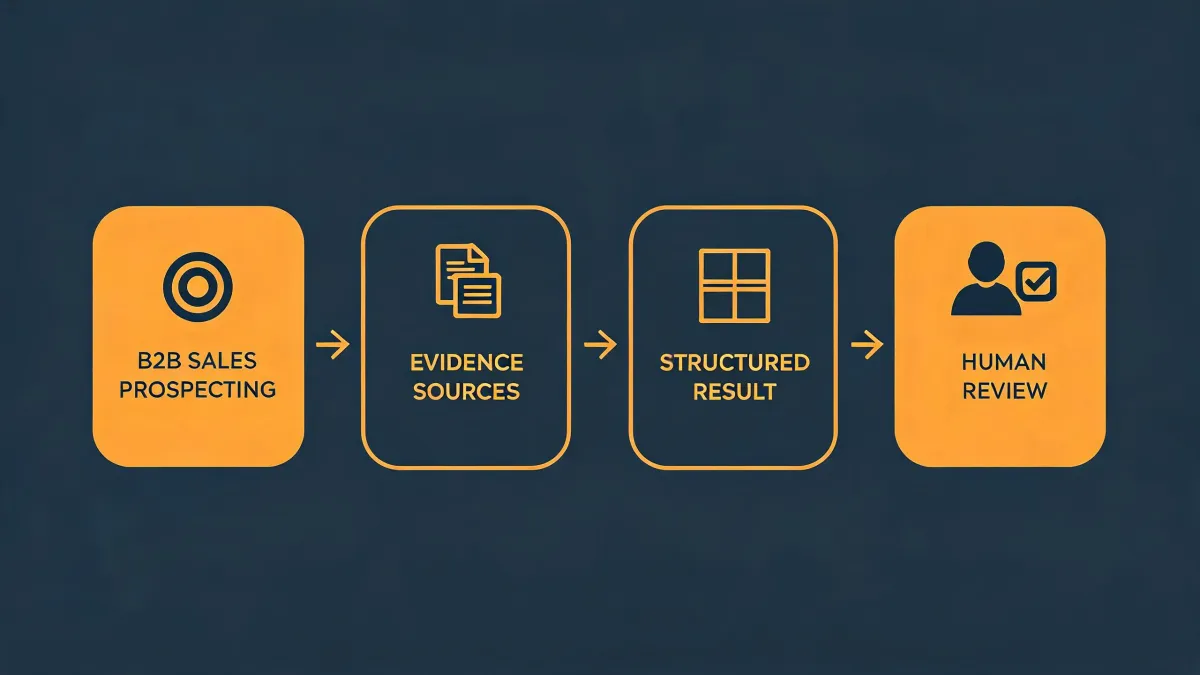
Okki Go is an agent-native platform. That means its agents do the prospecting work: research accounts, find contacts, enrich them through a waterfall of data sources, and hand a human a small list to approve before anything is sent. As a quality reviewer, I like seeing an owner at the end of the process.
Is Okki Go an AI SDR?
Functionally, yes. Okki Go automates the research and outreach preparation that used to fill an SDR's day, so an SDR can spend time on the meetings and replies that matter. But I would not describe it as an autonomous replacement for a human SDR team. No tool should be. If a vendor tells you otherwise, that is a quality red flag.
Account-based marketing: fit beats volume
Account-based marketing fails when someone judges a lead generation tool by raw volume. For ABM, a good list means the right buying committee inside the right target accounts. It also means enough context to make the first email feel specific, not templatey.
When I review a platform for ABM, I check three things:
- Does it start with target accounts and keep the ICP from drifting?
- Does it surface multiple personas within the same account, not just a generic title?
- Does it combine enrichment and intent data so the first touch has a reason to exist?
On this dimension, Okki Go passes my initial review because the agent-native workflow is built for account-first research. But any tool will fail if the ICP is fuzzy. Quality starts before the tool.
LinkedIn connection quality needs a human review point
LinkedIn connection requests are another area where volume can ruin an account-based strategy. I don't have insider data on LinkedIn's thresholds, and I don't pretend to. What I can tell you from reviewing campaigns is that generic requests with no context get ignored. Worse, they make the next message harder to send.
This is where human-in-the-loop outreach matters. An AI can draft a connection note. A human should review it before the request goes out. Okki Go's workflow includes that stop point. That is not inefficiency; it is quality control.
Okki Go SPF/DKIM/DMARC guidance: don't skip the boring part
Email verification and authentication are not the same thing. Address verification checks whether a mailbox appears to exist. SPF, DKIM and DMARC tell email servers whether a message is allowed to come from your domain. A list can be perfectly clean and still hit spam if these records are wrong.
I am not an email deliverability engineer, so I won't invent DNS examples. From a quality control perspective, the rule is simpler: before the first campaign, your SPF record should allow the sending service, DKIM should be active, and DMARC should have a policy. That is why Okki Go SPF/DKIM/DMARC guidance should be part of onboarding, not an afterthought.
What should revenue operations teams evaluate in lead generation?
If I had to give RevOps one takeaway, it would be this: evaluate the quality gates, not just the AI features.
- Source and freshness. Can you trace a contact back to a source and a last-updated date? If not, treat it as unverified.
- Account and message fit. Does the contact fit the target account and the account-based marketing plan?
- Channel readiness. Is the email domain authenticated with SPF, DKIM and DMARC? Are LinkedIn connection requests tied to context?
- Human review. Is there a person who owns final approval before outreach goes live?
- Claim substantiation. Per FTC business guidance at ftc.gov/business-guidance/advertising-marketing, accessed April 2026, claims should be truthful, not misleading, and supported by evidence. I apply that standard to AI SDR marketing too.
If a vendor guarantees response rates or inbox placement, that is a warning for me. No one can honestly promise how another person will reply. The question is whether the work is honest, relevant and deliverable.
Smaller teams deserve the same quality bar
I have a bias that shows up in every audit: small RevOps teams and smaller target accounts should not have to accept lower data quality while they wait to grow. I've seen expensive enterprise contracts deliver stale lists, and I've seen a 200-contact pilot get more attention than a 20,000-contact renewal. Size is not proof of quality.
Okki Go is often used by lean outbound teams. I don't consider that a weakness. In my experience, vendors who care about small customers have to earn every renewal, and that pressure shows up in the quality of their product.
Which setup should you choose?
If your RevOps team already owns every handoff and has clean data flowing through the stack, the assembled approach can pass a quality review. It requires someone to continuously verify the source data, keep the ABM list updated and manage sender authentication.
If your team is lean and wants a single workflow from account research to verified contacts and human-approved outreach, Okki Go is worth a shortlist position. It won't replace your SDRs. It will give them a cleaner starting point and give you a clearer place to check quality.
Bottom line: don't choose based on price or AI status alone. Choose based on who owns the quality gate when a bad list is about to reach a good account.