
-
What is Okki-Go, and what problem does it actually solve?
-
How long does Okki-Go installation take, and what do I need to prepare?
-
What does Okki-Go API integration look like in practice?
-
What is LinkedIn Sales Navigator integration, and when should a B2B sales team use it?
-
How do sales engagement and email automation fit together without burning your domain?
-
What pricing questions should I ask before signing up?
-
What's the biggest mistake teams make when adopting an AI prospecting tool?
I'm a quality and brand compliance manager at a B2B sales tech company. I review every sales engagement workflow that reaches our customers — roughly 180 setups a year, across demos, pilots, and post-sale audits. In 2024, I rejected about 22% of first-pass implementations because they skipped one of the steps below. This piece answers the questions I actually get asked by RevOps leads and SDR managers, not the ones vendors put on their own FAQ pages.
What is Okki-Go, and what problem does it actually solve?
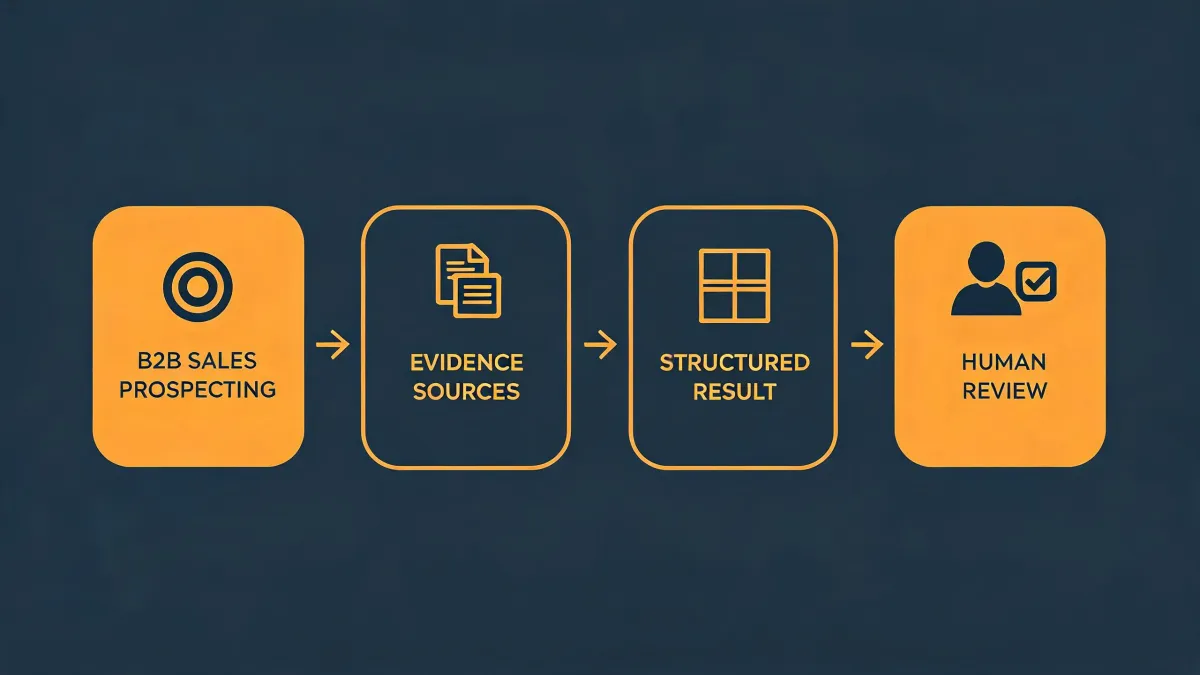
Okki-Go is an agent-native prospecting platform — it handles lead generation, email verification, waterfall enrichment, intent data, and outreach sequencing in one workflow. The problem it solves isn't "we need more leads." It's "we have too many half-built systems that don't talk to each other."
Most buyers focus on the feature list and completely miss the operating model underneath. Traditional sales engagement tools wait for a human to click. Agent-native tools run the routine work — verification, enrichment, first-touch sequencing — and hand a human the judgment calls.
How long does Okki-Go installation take, and what do I need to prepare?
About an afternoon — or rather, closer to a full day once you count DNS work, inbox warm-up, and CRM connection. The guided setup itself is quick: connect your sending domains, verify SPF, DKIM, and DMARC records, import your lead list, and set sending parameters.
Two things slow teams down. First, domain warm-up. Budget 2–3 weeks before live volume, no matter what any onboarding call implies. Second, data hygiene — if your existing CRM has duplicate records, fix those before import, not after. If I remember correctly, our own clean-up took four days for a 40,000-contact database, and it saved us weeks of downstream confusion.
What does Okki-Go API integration look like in practice?
In practice, three use cases cover 90% of what teams actually build. One: sync leads and engagement activity back into HubSpot or Salesforce so reps see it where they work. Two: receive intent signals in real time and trigger plays. Three: push enriched fields back into your warehouse for reporting.
The REST API is straightforward; webhooks handle the real-time side. The hard part isn't the technical work — it's deciding what syncs two ways and what stays authoritative in one system. I've seen more integrations fail from unresolved ownership questions than from code. Pick a system of record before you write a single API call.
What is LinkedIn Sales Navigator integration, and when should a B2B sales team use it?
LinkedIn Sales Navigator integration means pulling saved searches and lead lists from Sales Navigator directly into your outreach platform, so you can enroll, enrich, and sequence LinkedIn-sourced contacts alongside other channels.
You should use it when three things are true: your ICP is genuinely active on LinkedIn, your reps already live inside Sales Navigator, and you want LinkedIn signals — job changes, post engagement, recent hiring — reflected in sequence logic. If any of those is false, start somewhere else first.
To be fair, this isn't LinkedIn automation in disguise. Sales Navigator is a research surface. The outreach platform is where execution happens. Confusing the two is how teams get accounts restricted.
How do sales engagement and email automation fit together without burning your domain?
Email automation should mean scale, not spray. Dynamic fields, rule-based timing, auto-stop on reply, per-domain send limits — that's automation done properly. The reason most domains get flagged comes down to two things: insufficient warm-up and sustained volume above what the domain's reputation supports. Fix both, and deliverability holds.
Sales engagement is the layer above. It's deciding which channel to use, when, and for whom. Automation runs the send; engagement runs the decision.
What pricing questions should I ask before signing up?
Ask "what's not included" before you ask "what's the price." Additional seats, API call overages, intent-data add-ons, and onboarding fees can add 30–50% to an attractive-looking entry quote. That's not a vendor-specific problem — it's a category habit.
I've learned to ask for a full line-item list including anything not shown on the pricing page. The vendor who lists every fee up front — even when the total looks higher — usually costs less by month three. Budget surprise is the bigger risk, not headline rate.
What's the biggest mistake teams make when adopting an AI prospecting tool?
They take the human out of the loop. Setting a sequence and assuming the agent handles it works for cold volume, but the moment replies come in, judgment is required — context, intent, deal quality. That's where human-in-the-loop earns its keep.
The teams I've audited that got real value from Okki-Go or similar tools treated the AI as a force multiplier for reps, not a replacement. Grant it $5,000–$20,000 in annual savings on grunt work per rep, yes. Expectations that it fully replaces a human SDR team, no. The math never works out that way.