
-
When a $240,000 Sales Tech Budget Meets a 3-Person SDR Team
-
The First Mistake: I Shopped on Sticker Price
-
What Does a Cold Email Reply Rate Benchmark Actually Mean?
-
Okki Go vs Smartlead: Same ICP, Different Job
-
The Hidden Cost Nobody Quoted
-
What Is a Sales Navigator Scraper and When Should a B2B Sales Team Use It?
-
The Result: We Kept Both—but for Different Reasons
-
What I'd Tell Another Procurement Manager
When a $240,000 Sales Tech Budget Meets a 3-Person SDR Team
In Q1 2024, I was sitting in our Tuesday procurement review with a spreadsheet open and a problem I didn't expect. I manage sales tech and outbound spend for a 180-person B2B SaaS company. Our annual budget for this category was around $240,000. For five years, I'd negotiated with 30+ vendors, tracked every invoice, and built a TCO model that my CFO actually trusted.
Then our VP of Sales asked for something small: a three-person SDR pilot. No enterprise rollout. No six-figure contract. Just a test to see if we could improve cold email reply rates without hiring another ops person.
Three vendors wouldn't even quote us. Their minimum seat count was 10. One sent a proposal with a $18,000 onboarding fee. I get it—small deals cost money to service. But here's the thing: today's three-person pilot can become tomorrow's 15-person team. Small doesn't mean unimportant. It means potential.
The First Mistake: I Shopped on Sticker Price
In my first year managing outbound tools, I made the classic mistake: I compared per-seat prices and called it a day. Cost me about $6,200 in hidden enrichment and verification fees over two quarters. So this time, I built a TCO sheet before taking a single demo.
The categories were: sending infrastructure, inbox rotation, email verification, company enrichment, sales intelligence, intent data, CRM sync, and human review time. The last one is the one vendors never put on the pricing page.
Smartlead came up fast. It's known for cold email sending, warm-up, and sequence management. Okki Go—sometimes searched as okki-go—came up when I started looking for account research and agent-native prospecting. I didn't want to compare features in a vacuum. I wanted a cold email reply rate benchmark I could actually use.
What Does a Cold Email Reply Rate Benchmark Actually Mean?
I'm skeptical of public benchmarks. A 5% reply rate on one list is a disaster on another. As of January 2025, the ranges I saw from public cold email platform reports and community surveys were all over the place: 1% to 5% for cold outbound, with definitions that rarely matched. Some counted positive replies. Some counted any reply. Some excluded bounces. Some included follow-ups. Some didn't.
If you can't see the denominator, the benchmark is marketing.
So we built our own baseline. We pulled 90 days of sending data from two SDRs, cleaned it, and looked at segment-level reply rates. Our low-intent, scraped-list segment sat at 1.4%. Our hand-researched, high-intent segment sat at 4.1%. Same offer. Same sending domain strategy. The list and research were the difference.
Okki Go vs Smartlead: Same ICP, Different Job
I compared Okki Go vs Smartlead side by side for three weeks. Not because one replaces the other—they don't—but because I needed to know where each belonged in our stack.
Smartlead was stronger as a sending and sequencing layer. It did what it said: connected inboxes, warmed them up, managed cadences, and gave us deliverability controls. For a small team, the interface was manageable. The pricing was clear enough once we mapped email accounts and lead volume.
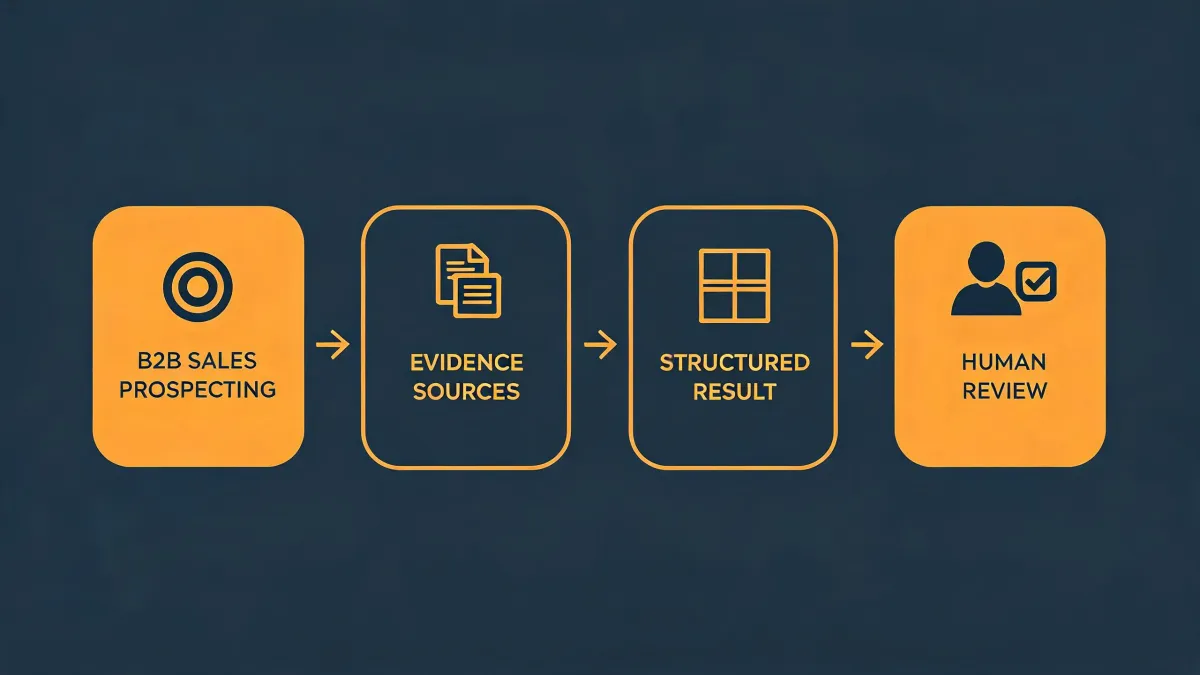
Okki Go felt more like an account research and prospecting agent. The pitch was agent-native prospecting: research accounts, enrich contacts, layer in intent signals, and keep a human in the loop for outreach. The feature I cared about most was waterfall enrichment. Instead of relying on one data provider, it cascaded through multiple sources to fill gaps. That matters for company enrichment sales intelligence because no single database has every mid-market contact.
When I compared the two side by side—same 500 accounts, same ICP, same offer—the difference wasn't the sending tool. It was the data going in. The Okki Go account research workflow surfaced more valid contacts, better firmographic context, and a few intent signals we could actually use. Our reply rate on that test segment moved from the low-1% range to the low-3% range over six weeks.
Take this with a grain of salt: the sample was 800 accounts, not 80,000. But for a pilot, it was enough to change how I budgeted.
The Hidden Cost Nobody Quoted
Here's the frustrating part. Every platform claimed the best reply rates. You'd think benchmarks would align, but they don't. And the hidden costs were buried in credits, verification, enrichment add-ons, and the ops time to stitch it all together.
We almost signed a cheap sending tool with a separate scraper, a separate verifier, and a separate enrichment vendor. The quotes looked fine individually. When I put them in the TCO sheet, the stack cost 34% more than the bundled Okki Go workflow—and added about 11 hours per month of manual data cleanup.
That's the thing about procurement: the lowest quote isn't the lowest total cost. The lowest total cost is the one that removes work you were going to pay someone to do anyway.
What Is a Sales Navigator Scraper and When Should a B2B Sales Team Use It?
Partway through the pilot, one of our SDRs asked about a Sales Navigator scraper. I had to slow down and explain it to our RevOps lead, because the term gets used loosely.
A Sales Navigator scraper is a tool or script that extracts data from LinkedIn Sales Navigator search results—names, titles, companies, locations, sometimes profile URLs—and exports it into a spreadsheet or CRM. It doesn't magically enrich the record. It doesn't verify the email. It doesn't tell you if the account is in-market. It just gets the list out of the interface and into a format you can work with.
So when should a B2B sales team use one? When you have a clear ICP, you need to build a target account list at some scale, and you're prepared to handle the data responsibly. That means checking LinkedIn's terms, your legal team's guidance, and your privacy obligations. Per LinkedIn's User Agreement and Help Center guidance accessed January 2025, scraping and automation are restricted. If you're emailing in the U.S., CAN-SPAM still sets the baseline: accurate headers, a clear opt-out, and a physical address. Verify current requirements at ftc.gov.
A scraper is a starting point, not a strategy. If you use one, plan for verification, enrichment, intent, and human review. Otherwise you're just sending more email to worse data.
The Result: We Kept Both—but for Different Reasons
We ended the pilot with a hybrid workflow. Okki Go handled account research, waterfall enrichment, and intent layering. Smartlead handled sending, warm-up, and sequencing for the segments that needed simple cadences. The human-in-the-loop step stayed with our SDRs—no tool replaced them.
Our reply rate didn't hit some magical number. It improved enough to justify the budget: from a blended 1.6% to 3.1% across the pilot segments. More importantly, our SDRs spent less time cleaning spreadsheets and more time writing relevant opening lines.
It took me two quarters and about 14 vendor demos to understand that reply-rate benchmarks are mostly a mirror. They show you the quality of your list, your research, and your offer—not the logo on your sending tool.
What I'd Tell Another Procurement Manager
First, build the TCO sheet before the first demo. Include enrichment credits, verification, intent data, and human cleanup time. Second, test small. A three-person pilot can teach you more than a six-month enterprise contract. Third, don't expect one tool to do everything. Okki Go vs Smartlead isn't a winner-take-all matchup. One is stronger at account research and company enrichment sales intelligence. The other is stronger at sending and sequencing.
And if you're a small team getting ignored by vendors with high minimums, keep looking. The vendors who treat your $200 pilot seriously are the ones you'll call for the $20,000 rollout.
Small doesn't mean unimportant. It means potential.