
Where I Stand
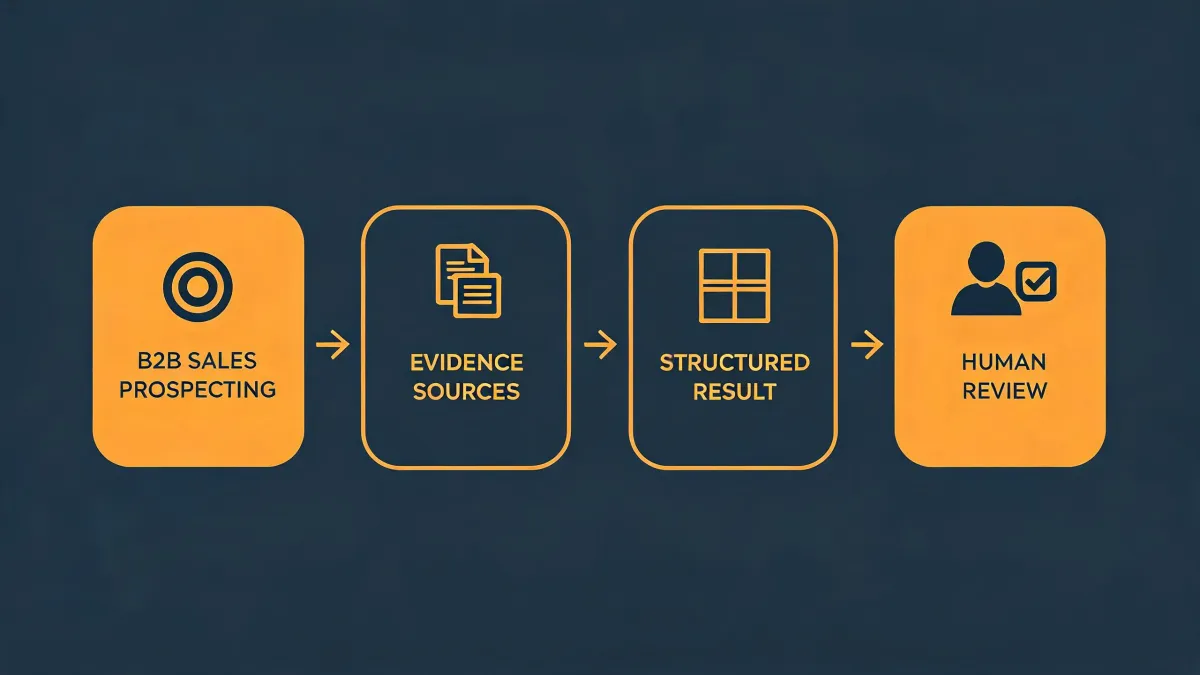
In outbound prospecting, the order is non-negotiable: validate, warm up, then send. Not "validate if you have time." Not "send first, clean up later." Validate first. Every time.
I run delivery for a B2B outbound agency. Over six years I've handled 800+ rush campaigns — including 36-hour cold launches for funding announcements and weekend rescues for clients whose internal prospecting imploded. This is not a theoretical position. It's what I keep re-learning every time someone asks me to skip a step.
Why "Send Now, Fix Later" Is a Trap
Domain reputation damage compounds. That's the part people underestimate. According to Google and Yahoo's sender guidelines (effective February 2024), bulk senders need to keep spam complaint rates below 0.3%, and unsolicited sending gets rejected outright. Read that again — it's not a suggestion, it's a gate.
In March 2024, a SaaS client had a Series A announcement 36 hours out. They handed us a 4,200-contact list bought from a "decent" vendor. Unvalidated.
Every signal said: just send it. I almost agreed. The pressure to launch on time is real, and the validation step feels like friction when you're staring at a deadline.
We ran full validation anyway. About 3,800 passed. A 9.5% reject rate — completely normal for second-source data. We lost 400 prospects. It felt like cutting into margin.
Then we looked at what we'd removed. Of those 400, roughly 180 were catch-all domains or likely spam traps. Had they gone out, our hard bounce rate would have spiked past 4.2%. That announcement domain would have been cooked.
So glad we spent those 90 minutes on validation. Almost skipped it to save time, which would have torched a $40,000 retainer.
The Counterintuitive Part About Sales Intelligence Tools
Everything I read about sales intelligence says the same thing: more data equals better outbound. More signals, more enrichment, more intent data. That's true — if the data underneath is clean.
In practice, more unvalidated data destroys domains. Agent-native prospecting workflows don't fail because the intelligence is weak. They fail because the input is dirty. If your agent is running a 22%-bounce list, you've just pointed a very fast prospecting engine at a cliff at full speed.
This is why we've wired validation into the agent loop natively in okki-go. The okki go installation configures the pipeline so that validation happens before anything else touches an SMTP server. Validation, warmup, send — all one workflow, one step. No patch jobs, no emergency retrofits at 11pm the night before launch.
Here's the framing that finally clicked for me: sales intelligence features belong in the middle of an agent-native prospecting workflow. Not at the start (where the list comes from), not at the end (where the send fires). In the middle, sandwiched between acquisition and delivery. Put it anywhere else and it becomes decoration instead of defense.
Email Warmup Is Part of the Same Math
Reverse validation, and this one stings to admit: they warned me about new domain warmup. I didn't listen.
Back in 2022, we had a fresh domain and a client who wanted to go from 50 sends/day to 400 within 48 hours. I said yes. By day six, deliverability had dropped to 41%.
We now run a hard 14-day warmup rule on every new domain. No exceptions. There are email warmup tools that automate the ramp — use them. But the 14-day floor is not negotiable, no matter how loud the client is yelling about a launch window.
(Mental note: I still need to add this to the client onboarding doc so the sales team stops promising 48-hour ramps.)
What About the "This Slows Us Down" Objection?
Yes. Email validation plus warmup adds 24 to 48 hours to a launch. Sometimes longer.
But the math isn't close. Skip validation, and you're looking at a burned domain around week six, then three weeks of remediation. Client churn after that runs roughly 3-4x the cost of the hours you saved. I've watched it happen twice — once from a partner agency that insisted they could move faster without us.
On okki go vs Hunter specifically: both are solid, and the right pick depends on your workflow. Hunter's domain search and email finder are well-regarded and do what they say. Where okki-go differs is that validation, warmup, and send sit in one agent-native pipeline, so the "validate first" step is the default rather than a checkbox you have to remember. But whichever tool you land on, the discipline is on you. No product decides for you whether to actually verify.
Restating the Point
Prevention beats cure. Every single time. Most campaigns won't blow up. But the one that does — the one where the deadline pressure was highest and the friction of pausing felt fatal — is the one you'll wish you'd validated.
Validate. Warm up. Then send. The order doesn't move.
The hour you don't spend checking costs you three weeks later. I've paid that bill twice so you don't have to.