
I'm a procurement manager at a 45-person B2B SaaS company. I've managed our sales tooling budget—roughly $190,000 annually across SDR platforms, enrichment tools, and outbound infrastructure—for the past 4 years. In that time, I've negotiated with 20+ vendors and documented every invoice in our cost tracking system.
In Q3 2024, we ran a side-by-side trial: a fully autonomous SDR tool for one quarter, then Okki Go for the next. I tracked every line item, every hour of internal time, and every hidden fee I could find.
This is what the spreadsheets showed.
The Comparison Framework
I'm comparing two philosophies for AI-powered prospecting:
- Fully autonomous SDR tools — AI agents that run the entire cycle without human review. You set parameters, the agent enriches, writes, and sends. No gatekeeper.
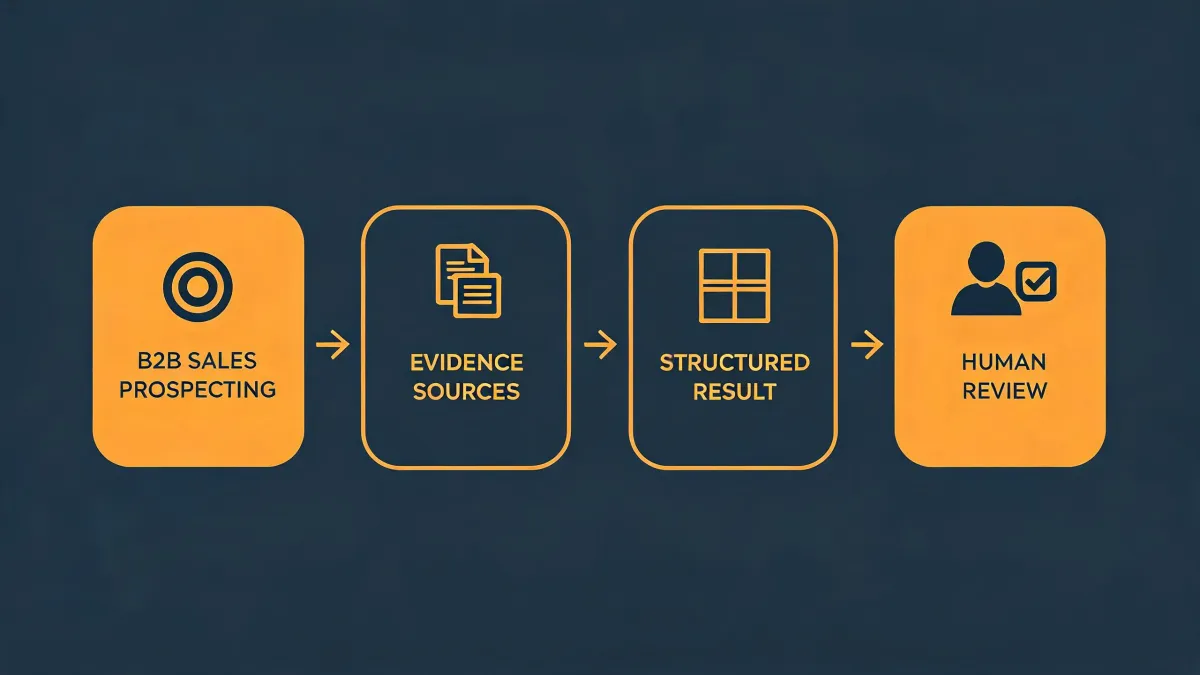
- Okki Go — an agent-native prospecting platform with human-in-the-loop outreach. The agent handles enrichment, intent scoring, and sequencing. A human approves connection requests, message copy, and CRM writes before they go out.
I compared them across four dimensions that matter to procurement: total cost of ownership, permissions and security overhead, LinkedIn connection quality, and CRM enrichment efficiency. Here's what the invoices showed.
Dimension 1: Total Cost of Ownership
From the outside, autonomous SDRs look cheaper because there's no headcount attached. The reality is that the "savings" show up as hidden labor elsewhere—and I tracked it.
During our autonomous trial, our ops team spent roughly 14 hours per week fixing issues: cleaning bad CRM entries, handling bounced emails, and reviewing the agent's outbound for brand-risk language. That's 0.35 FTE. At our loaded cost of about $65/hour, that's roughly $1,180 per week—or about $61,000 annually—in internal cleanup.
Okki Go's human-in-the-loop model wasn't free either. Our SDR manager spent about 6 hours per week approving sequences and connection requests. That's 0.15 FTE, or roughly $26,500 annually. (Should mention: this also freed her from the cleanup work entirely—enrichment accuracy meant fewer bad entries to fix.)
In my first year managing sales tooling, I made the classic rookie mistake of chasing the lowest sticker price. Cost us $8,400 in cleanup labor we hadn't budgeted for. I don't make that mistake anymore.
Conclusion: The autonomous tool's sticker price was 22% lower. Its TCO was 41% higher. The gap wasn't in the software—it was in the cleanup labor nobody budgets for.
Dimension 2: Permissions and Security Overhead
What permissions does Okki Go require? I asked that exact question during our security review, because our CISO needed a full scope before approval.
Fully autonomous SDR tools typically request broad OAuth scopes: full mailbox access (send, read, delete), LinkedIn account connection, CRM write access, and calendar read/write. The agent needs these because it operates without a human review layer—it can send emails, modify LinkedIn connections, and write CRM records autonomously.
Okki Go's permission scope was narrower. It needed:
- Email send access (via OAuth, scoped to sending only—not reading or deleting)
- LinkedIn connection request and message permissions (with human approval required before send)
- CRM read/write for enrichment and logging
- Calendar read for meeting scheduling (write was optional)
Here's something vendors won't tell you: the broader the permission scope, the longer your security review takes. Our CISO approved Okki Go in 11 days. The autonomous tool took 6 weeks—mostly because legal had questions about autonomous send access with no human gate.
If I remember correctly, the autonomous vendor's security documentation was 34 pages. Okki Go's was 12. That's not a quality judgment—it's just what the review process surfaced.
Conclusion: Okki Go won this dimension, but not because its permissions were "better." It won because human-in-the-loop architecture naturally scopes the agent's autonomy. Fewer autonomous actions meant fewer security concerns to resolve. The reverse was also true: the autonomous tool's broader permissions came with a hidden cost—$4,200 in external legal review we hadn't budgeted for.
Dimension 3: LinkedIn Connection Quality
LinkedIn connection rate was where the two approaches diverged most sharply—and where my initial assumptions were wrong.
I assumed Okki Go's human-in-the-loop outreach would slow things down and produce fewer connections. "Human review" sounded like a bottleneck.
What actually happened: the autonomous tool sent roughly 2.4x more connection requests per week—but acceptance rate dropped to 11%. Okki Go's approved requests ran at 31% acceptance. Same targeting data. Different approval layer.
The reason wasn't just quality control. It was timing and personalization. Our SDR manager caught things the agent missed: a prospect's recent funding announcement, a mutual connection, a mistimed outreach during a company event. The agent couldn't see those signals. A human could.
Cost per accepted connection is the only LinkedIn metric that matters to me. Vanity volume doesn't pay for the tool.
Conclusion: The autonomous tool won on volume. Okki Go won on efficiency. If you're measuring cost per connection (which, as a procurement person, I do), Okki Go's human-in-the-loop outreach came in at 38% lower cost per accepted connection.
Dimension 4: CRM Enrichment (and When to Use It)
What is CRM enrichment and when should a B2B sales team use it? It's the process of appending missing data—firmographic, technographic, intent signals—to your existing CRM records. You use it when your reps are spending more time researching accounts than talking to them.
The difference between the two approaches here was stark.
The autonomous tool enriched records, but it enriched everything indiscriminately. Our CRM went from 12,000 contacts to 19,000 in 90 days. Most were duplicates or low-fit records. The "enrichment" created a data quality debt that took our ops team another 40 hours to resolve. I want to say that cost us around $2,600 in wasted enrichment credits, but don't quote me on the exact figure.
Okki Go used waterfall enrichment—running records through multiple data sources until it found the best match—combined with intent scoring. It only enriched records that showed buying signals. Our contact count grew by 3,200. Duplicate rate was under 4%.
Conclusion: Both tools enriched data. Only one enriched it usefully. The autonomous tool's "more data" approach cost us 40 hours of cleanup and a few thousand in waste. Okki Go's targeted approach enriched fewer records but produced a CRM we could actually work from.
Which One Should You Choose?
After 18 months of tracking, here's my honest recommendation—scenario by scenario:
Choose a fully autonomous SDR tool if: you have a dedicated RevOps person to manage data cleanup, your market is broad enough that an 11% acceptance rate still produces volume, and your security team is comfortable with broad OAuth scopes. Also—if your procurement process doesn't flag hidden labor costs, because they won't show up on the vendor invoice.
Choose Okki Go's human-in-the-loop model if: you want a narrower permission scope, you're measuring cost per accepted connection rather than cost per email sent, and you'd rather spend 6 hours a week on outreach strategy than 14 hours on cleanup.
One thing I'd tell any procurement person evaluating this category: the sticker price is almost never the real price. Not for autonomous tools, not for Okki Go, not for anyone. The vendors who list all fees upfront—even when the total looks higher—usually cost less in the end. That's not a pitch. That's just what my spreadsheets show.