
-
Last October, a sticky note changed my quarter
-
n8n vs Relevance AI: How we ended up comparing them
-
The build: what actually happened
-
Relevance AI agent platform features that mattered
-
How the autonomous SDR fit into our agent-native prospecting workflow
-
The cold email reply rate benchmark that changed the conversation
-
What I'd tell another admin buyer making this decision
Last October, a sticky note changed my quarter
Our VP of Sales put a yellow sticky note on my monitor. It said: 'We need a better outbound motion by Q1.' That was it. No further instructions. For context, I'm the person who coordinates software purchasing for a 120-person B2B company. I manage contracts across roughly 11 GTM tools and about $180k in annual spend, and I report to both operations and finance. I'm not a RevOps engineer. I just know what happens when a tool doesn't do what the invoice says it should.
When I took over purchasing in 2020, we had 14 separate sales tools. In our 2024 vendor consolidation project, we cut that down to 9. So when the VP asked for a better outbound motion, I knew the real question: 'Which platform can our team trust enough to hit a deadline?'
n8n vs Relevance AI: How we ended up comparing them
Our RevOps lead, Maya, did the initial shortlist. She came back with two realistic options: build an autonomous SDR workflow in n8n, or buy Relevance AI. On paper, n8n looked dramatically cheaper. We already had an enrichment tool, a bulk email verifier, and a cold email sending platform. n8n could stitch them together. 'Look, we can build exactly what we want,' Maya said. 'No one else has all the features anyway.'
I was skeptical but couldn't argue with the spreadsheet. The numbers said n8n. My gut said something else. Every cost analysis pointed to the budget option, but something felt off about the amount of unseen work required. I've been burned by that before: a cheaper supplier once cost me $2,400 in rejected expenses because they couldn't provide a proper invoice. The real price wasn't on the quote.
Still, I agreed to let Maya build a proof of concept. It worked. Mostly. That's how it always starts.
The build: what actually happened
Maya built a workflow in n8n that could pull contacts, enrich them, verify emails, and hand the final list to our cold email tool. In a demo, it looked magical. Then we tried to run it against 10,000 real contacts (ugh, of course).
The workflow didn't break dramatically. It broke quietly. A CSV column name changed, so the enrichment step silently skipped half the list. The verification API timed out on some records, but the workflow treated those timeouts as 'verified.' One morning, the send step started at 2 a.m. because a previous step had stalled for six hours. Sending cold emails at 2 a.m. is not exactly a winning strategy (insert your own joke here).
The most frustrating part wasn't any single bug. It was that every fix created another edge case. You'd think a clean data model would be enough, but the real world loves inconsistent formatting. Our RevOps lead spent two weeks playing engineer instead of building outbound playbooks. That's the part the spreadsheet didn't show.
Relevance AI agent platform features that mattered
The turning point came in early December. We had to choose between paying a contractor to keep maintaining the n8n workflow or trying a purpose-built AI sales platform. I asked Maya to run a 30-day trial of Relevance AI. She came back with a list of Relevance AI agent platform features that were hard to argue with:
- Natural-language prospecting: Instead of maintaining API calls, the team could describe the target account in plain English, like 'find Series B SaaS companies with recent sales hiring and decision-makers who post about outbound.'
- Built-in bulk email verifier: The verifier ran as part of the workflow, not as a separate API call. It flagged bad records before they entered the sending queue.
- Enrichment and intent data: The agent enriched contacts and prioritized accounts showing recent intent activity, without a separate data pipeline.
- LinkedIn automation: The same agent could handle LinkedIn touches after a non-reply, instead of syncing a second tool.
- Human-in-the-loop SDR actions: The autonomous SDR could research, draft, and recommend, but a human approved before anything went to a real customer. That was non-negotiable for us.
'Agent-native prospecting workflow' is one of those phrases that sounds like marketing. What it actually meant, in our case, was that the agents shared a context and a data model. The enrichment agent didn't need to write its output to a spreadsheet and hope the email agent read the right column. The workflow didn't depend on five separate tools staying in sync.
How the autonomous SDR fit into our agent-native prospecting workflow
Here's something vendors won't tell you: autonomous doesn't mean unsupervised. The teams getting real results from autonomous SDRs treat them like a level-1 SDR who needs a manager reviewing outbound messages before they go out. The agent handles the tedious parts—list building, enrichment, verification, first drafts, follow-up cadence—and the human handles judgment.
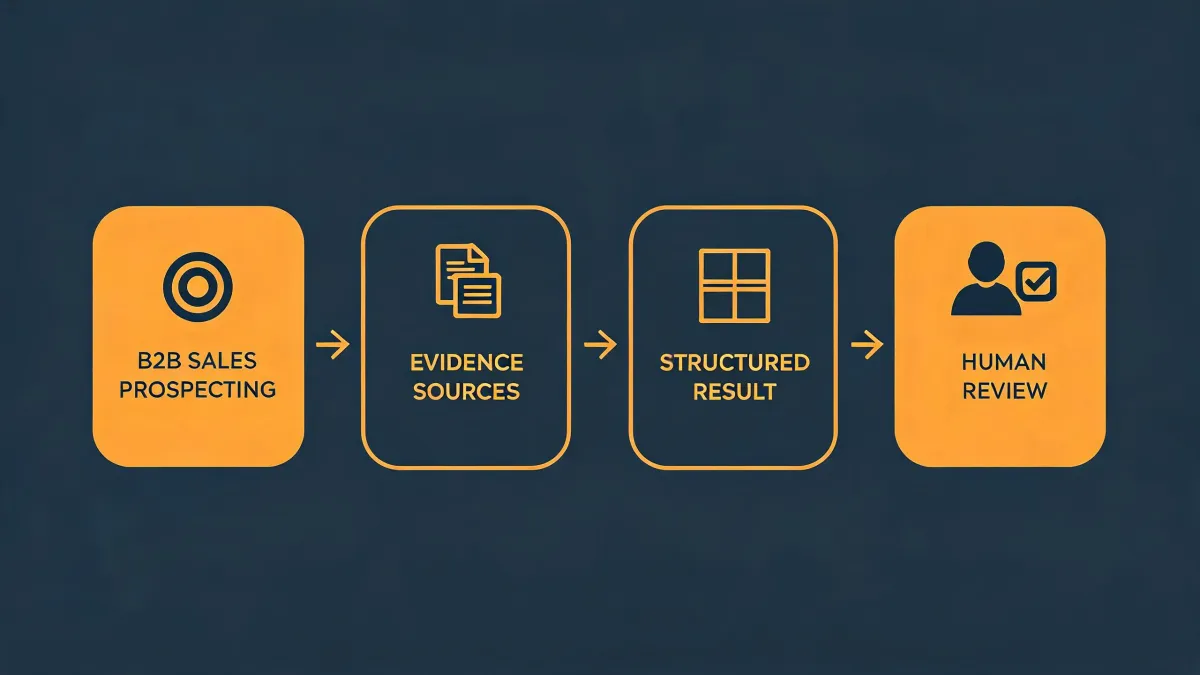
In our setup, the autonomous SDR agent sat inside a larger workflow. It created the list and prioritized accounts based on intent data. It verified email addresses in bulk. It generated a personalized first line for each prospect. Then it paused for approval. After approval, it managed the sequence: cold email, LinkedIn touch, follow-up, and a timely stop. That's what 'agent-native' means to me: agents are native parts of the workflow, not bolted on through a brittle integration.
The cold email reply rate benchmark that changed the conversation
We launched the first Relevance AI-backed campaign in January. It wasn't a massive sample, but the direction was clear. Our reply rate on the first pilot was 3.4%. The second pilot came in at around 2.9%. Before this, our cold email reply rate benchmark was roughly 1.2–1.8% on a good month. Public benchmark reports from Woodpecker and Snov.io put the median cold email reply rate around 1–5%, depending on vertical and list quality, so 3.4% isn't earth-shattering. But the consistency improved, and that's what actually matters. Hard bounce rate dropped from 6.1% to 1.7%, which is important if you're watching sender reputation. Google's bulk sender guidelines have made it harder for sloppy lists to hide.
No one from Relevance AI promised me a specific reply rate. I didn't expect one. The value wasn't magic copy or infinite personalization. The value was that the emails actually went out, to verified addresses, at the right time, with follow-ups that didn't require a developer to monitor.
What I'd tell another admin buyer making this decision
I have mixed feelings about purpose-built AI sales platforms. On one hand, the pricing is not trivial, and 'agent' has become an overused word. On the other hand, I've learned that certainty has a price. Last year, we paid extra for rush delivery on event materials because missing the deadline would have cost us far more. This was the same decision, just with software instead of printed flyers.
If you're comparing n8n vs Relevance AI, or any build-vs-buy decision, look at the full cost:
- Add up the n8n subscription plus every connected tool plus the number of hours your best person will spend maintaining it.
- Ask how the platform handles human approval. If an AI SDR can talk directly to prospects with zero review, that's a red flag, not a feature.
- Ask for a cold email reply rate benchmark that matches your use case. If they can't give you one, keep asking.
What most people don't realize is that the 'cheapest' workflow is rarely the cheapest workflow. The hidden costs are attention, maintenance, and the quiet risk that something breaks right before your launch. In our case, Relevance AI was the right call because it gave us time certainty. We hit the Q1 deadline, and our RevOps lead got her evenings back.
Would n8n have worked eventually? Probably. Maya could have built a stable workflow over time. But 'eventually' doesn't help when the VP put a sticky note on your monitor.