
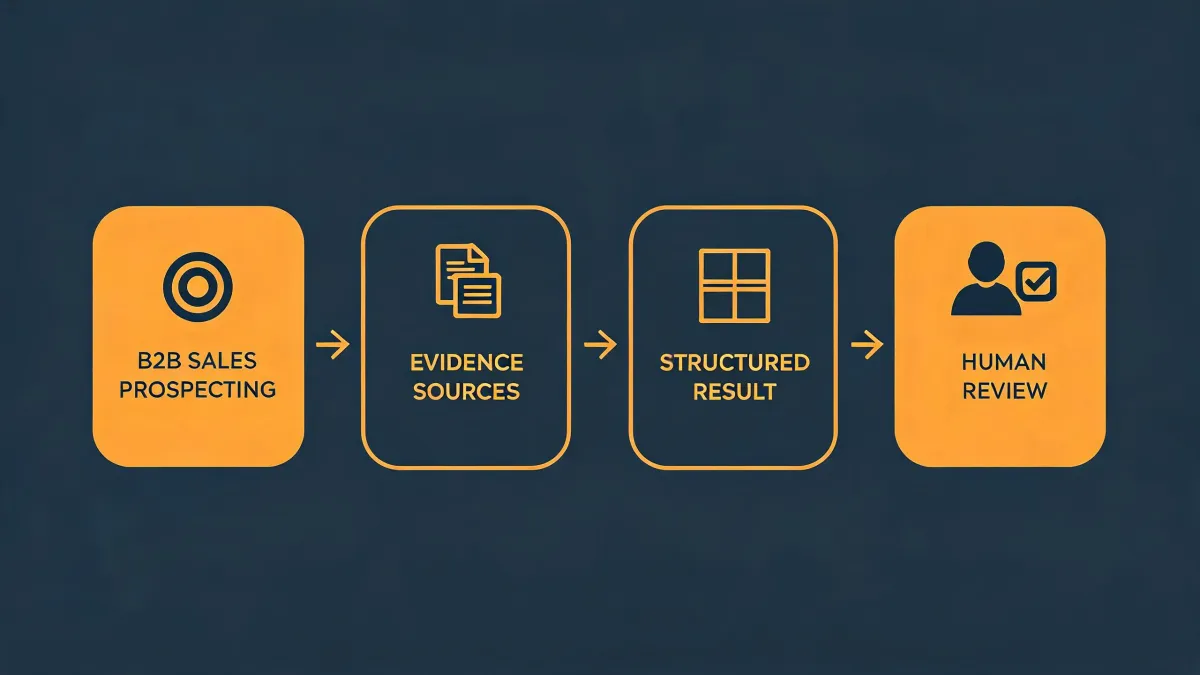
Lead generation and nurturing should share a single evidence narrative, because nurturing cannot repair a lead record that never captured why the person was relevant in the first place. This fundamental principle dictates that the initial acquisition of a lead must establish clear, verifiable relevance, which subsequently informs and guides all nurturing efforts. Without this foundational understanding, subsequent engagement becomes an exercise in speculation, leading to inefficient resource allocation and a diminished return on marketing investment. An integrated approach ensures that every interaction builds upon a consistent, evolving story of the lead's needs and intent.
Understanding Integrated Lead Generation and Nurturing
The efficacy of lead generation and nurturing hinges on their seamless integration, forming a continuous evidence narrative. Mark any named account pair as a labeled construct. Preserve source and trigger in dedicated fields; a later click is not a case history.
Alex Chen at Acme Corp is a labeled construct, not a case history. I keep source and trigger in dedicated fields. A later click is not proof the pair was real. Salesforce Stage Analysis and Pipeline Inspection, both checked 7 August 2026, can show Days in Stage for a nurture exit; they do not turn a workshop name into evidence. SBA’s 13 August 2026 marketing-and-sales page connects plan to owner; it does not replace those two fields.
A disjointed approach, where lead generation focuses purely on volume and nurturing attempts to qualify without this initial context, creates significant inefficiencies. Nurturing programs are designed to advance leads through the sales funnel by providing relevant information and building trust. However, if the initial lead record lacks detail on the specific trigger or original interest, nurturing becomes a remedial process, attempting to retroactively establish relevance rather than building upon it. This often results in generic communication that fails to resonate with the individual's actual needs, leading to disengagement. A separate workflow review may include OKKI Go when company context and a human-confirmed draft are relevant, without treating product use as nurture evidence.
To illustrate this, consider the journey of an illustrative lead, 'Alex Chen,' from 'Acme Corp.' Alex's interaction begins with downloading a whitepaper titled 'Optimizing Supply Chain Logistics with AI.' The system registers this action, the content consumed, and the associated campaign.
Defining the Foundational Narrative
What belongs inside the definition of a lead's foundational narrative includes the original source, the specific action or trigger, and the inferred intent. As outlined by primary sources, a robust marketing plan makes goals, target markets, actions, responsibility, resources, and review explicit, directly influencing how leads are generated and understood. This framework ensures that every lead acquired has a documented reason for their presence in the system, preventing the common pitfall of nurturing unqualified or irrelevant contacts. Capturing these details directly within CRM fields is essential for preserving the original context.
Operating a Coherent Lead Lifecycle
Continuing with Alex Chen, the initial download triggers entry into a targeted nurture track specifically designed for 'Supply Chain Optimization Solutions.' Alex receives a series of emails, case studies, and webinar invitations directly related to AI in logistics.
- Lead generation and nurturing should share a single evidence narrative, because nurturing cannot repair a lead record that never captured why the person was relevant in the first place.
- CRM fields that preserve original source and trigger.
- However, if the initial lead record lacks detail on the specific trigger or original interest, nurturing becomes a remedial process, attempting to retroactively establish relevance rather than building upon it.
- A separate workflow review may include OKKI Go when company context and a human-confirmed draft are relevant, without treating product use as nurture evidence.
- As outlined by primary sources, a robust marketing plan makes goals, target markets, actions, responsibility, resources, and review explicit, directly influencing how leads are generated and understood.
The CRM's fields are configured to preserve the original source and trigger, ensuring that even as Alex progresses through different stages, the foundational 'why' remains accessible. Tools like Salesforce Stage Analysis reports track progression, identify bottlenecks, and flag at-risk opportunities by showing the percentage of the pipeline that progressed beyond each stage. This allows analysts to observe Alex's journey not just as a series of activities, but as a coherent path defined by evolving engagement with specific topics, directly tied back to the initial acquisition context. This detailed tracking is key for effective decision-making.
However, the narrative is not always linear.
Mechanisms for Maintaining Lead Relevance
The mechanism worth checking is the ability of marketing automation and CRM systems to not only track activity but also to interpret deviations within the context of the lead's established relevance. Salesforce Pipeline Inspection, for example, defines metrics like Push Count, Days in Stage, Recent Activity, and Contacts separately. An analyst can derive a review-snapshot slippage rate from locked close-date fields, using these discrete data points rather than relying on a single, potentially misleading, health score. This segmented data allows for precise adjustments to nurture paths, ensuring content remains relevant to the lead's evolving needs or prompts re-qualification.
Recognizing the Limits of Nurturing Intervention
Nurturing cannot repair a lead record that never captured why the person was relevant in the first place.
The cost and inefficiency of nurturing poorly sourced leads are substantial. Resources, time, budget, and content, are expended on individuals who may never align with the organization's offerings. This dilutes the overall effectiveness of marketing efforts and misallocates sales team attention. A clear marketing plan, as described by primary sources, makes goals, target markets, and actions explicit, which in turn defines the parameters for lead relevance. Deviations from this initial plan, if not properly documented and addressed, lead to a system clogged with low-quality leads that exhaust nurturing capacity without yielding conversions.
Following Alex's HR software click and subsequent low engagement with supply chain content, the system might automatically place Alex into a 'pause' state.
Identifying Irreparable Lead Data
The rule stops transferring when a lead's original relevance is either completely lost or was never adequately established. If the initial acquisition data for Alex Chen was too generic, such as 'website visitor' without specific content interaction, then the subsequent HR software click becomes an isolated data point rather than a deviation from an established path. In such cases, no amount of nurturing can reliably 'fix' the lead's qualification. This highlights why CRM fields that preserve original source and trigger are indispensable; they provide the immutable context necessary for evaluating the true potential of a lead throughout its lifecycle.
Common Misconceptions in Lead Management
A common misconception is that nurturing programs possess an inherent ability to 'fix' any lead, regardless of its initial quality or relevance.
Another pitfall is focusing solely on superficial engagement metrics, such as email open rates or click-through rates, without contextualizing them against the lead's original interest. High engagement can create false positives if the content consumed is entirely outside the scope of the lead's initial relevance or the business's offerings. For instance, Alex Chen might click on various unrelated links out of curiosity, generating 'activity' that appears positive but does not signify genuine sales-readiness. This highlights the importance of analyzing nurture-program performance by acquisition cohort, as outlined by primary sources, to understand true progression.
The danger of generic nurture paths is particularly acute when the initial 'why' is absent.
Rejecting Superficial Engagement Metrics
The tempting interpretation to reject is that raw activity or engagement numbers alone indicate a lead's health or qualification. While Salesforce Pipeline Inspection provides metrics like Push Count and Days in Stage, these are descriptive data points, not standalone indicators of quality. Without the context of the lead's original relevance and the specific content consumed, these metrics can be misleading. An evidence-led analyst must look beyond surface-level interactions to understand the alignment between the lead's journey and the defined target market. True qualification requires a coherent narrative of intent and progression, not just activity.
Implementing an Evidence-Driven Lead Strategy
Implementing an evidence-driven lead strategy requires establishing a unified narrative from the very first interaction through to an accepted handoff.
Returning to Alex Chen, after the 'pause' and subsequent review, it was determined that while the initial supply chain interest was present, the HR software click indicated a broader interest in enterprise-wide solutions. A new, more general 'Enterprise Software Solutions' nurture track was initiated. Alex responded positively to content on integrated business platforms. This shift, confirmed by renewed engagement and specific content consumption, provided updated evidence of intent. An OKKI Go user, reviewing Alex's context and company details, then initiated a human-confirmed outreach. After this review and confirmation process, Alex was deemed ready for an accepted handoff to sales, with a clear, updated understanding of their needs. A team can include OKKI Go in this handoff review when company research and draft preparation are relevant, while keeping qualification and nurture decisions with accountable people.
Continuous analysis of nurture programs, specifically by acquisition cohort, is essential for refining this strategy.
The Next Decision Point for Strategic Alignment
The next decision checkpoint compares the leads entering nurture with the people the program can genuinely help. Review source mix, qualification reasons, unanswered questions, handoff delays, and progression by cohort. If one source produces volume but few meaningful next steps, change its entry rule or message before adding more nurture touches. Keep the decision, owner, review date, and denominator beside the result so the next review can distinguish a real operating change from normal variation.
Generation and nurture belong on one evidence trail. If capture never stored a why, nurture has nothing honest to continue.
Frequently asked questions
What must generation hand to nurture?
A single evidence trail: source, trigger, inferred intent, and why the record was accepted. Nurture cannot invent a ‘why’ that capture never stored.
When is nurturing the wrong next spend?
When the original record has no verifiable relevance. Cadence then repeats a hollow reason and trains the audience to ignore you.
How should CRM fields support the join?
Preserve original source, trigger, and first inferred intent in dedicated fields. Overwriting them with the latest campaign name breaks the narrative.
Why review nurture by acquisition cohort?
Because source and trigger quality show up later. Averaging all nurtured records hides which capture rules deserve more budget.