
- Defining the Lead Generation Specialist's Strategic Mandate
- Operationalizing Lead Generation: Process and Workflow
- When Outsourcing Lead Generation Requires Strategic Oversight
- Common Misconceptions in Specialist Engagement
- Recruiting and Managing Evidence-Led Lead Generation Specialists
- Frequently asked questions
Lead-generation specialists create the most value when they own a defined evidence problem, because outsourcing generic activity can sever the learning link between market signals and the sales team. This foundational principle shifts the focus from mere volume to strategic insight. An evidence problem is not simply a quota for contacts; it is a challenge requiring research into target market needs, their ability and willingness to buy, segment identification, buying habits, and preferred discovery channels. The specialist's role then integrates this intelligence into a coherent marketing plan that connects the target market and competitive advantage to actionable goals, budget allocation, and a robust review process. Without this deep engagement, the critical feedback loop between market reality and sales strategy is lost, diminishing the potential for sustainable growth and adaptive market response.
Defining the Lead Generation Specialist's Strategic Mandate
A lead generation specialist operates beyond the transactional acquisition of contact information; their strategic mandate is to solve a defined evidence problem. This means they are tasked with uncovering specific market insights that directly inform and refine sales and marketing strategies, rather than merely executing a pre-set list of tasks. The efficacy of their work is measured not just by the quantity of leads, but by the quality of market intelligence and its impact on the organization's understanding of its prospective customers. Hire for one evidence problem with fields and a review cadence. An outsource handoff that leaves no reason-for-selection is a failed specialist seat.
An evidence problem necessitates comprehensive research into the target market. This includes meticulously identifying customer needs, assessing their financial ability and willingness to purchase, segmenting the market effectively, understanding specific buying habits, and pinpointing the most effective discovery channels. This foundational work, connecting a target market to a competitive advantage, then informs a detailed marketing plan. Such a plan outlines specific actions, measurable goals, allocated budgets, and a structured review process, ensuring that every outreach effort is strategically grounded.
When lead generation becomes a generic, outsourced activity lacking this deep investigative ownership, the crucial learning link between market signals and the sales team is often severed. Without a specialist dedicated to interpreting these signals and integrating them into an evolving strategy, the organization risks operating with outdated or incomplete market intelligence. This disconnection can lead to misdirected sales efforts, wasted resources, and a diminished capacity to adapt to dynamic market conditions, undermining the true potential of lead generation.
The Foundational Elements of Effective Lead Generation
The definition of effective lead generation encompasses several critical elements. It begins with rigorous market analysis, which involves understanding the specific needs and challenges of potential customers. This understanding extends to evaluating their ability and willingness to invest in solutions, allowing for precise market segmentation. Identifying the most prevalent buying habits and preferred discovery channels is equally vital, ensuring that engagement strategies are relevant and timely. Ultimately, these insights must be integrated into an overall marketing plan that clearly outlines actions, sets measurable goals, allocates appropriate budgets, and establishes a clear review mechanism to ensure continuous improvement and alignment with broader organizational objectives.
Operationalizing Lead Generation: Process and Workflow
Operationalizing effective lead generation involves a structured workflow that translates market insights into actionable outreach. This process typically begins with intelligence gathering, progressing through target identification, engagement, and qualification. For maximum value, this workflow benefits from internal revenue-operations ownership, which ensures seamless integration with sales and marketing functions. Such ownership allows for continuous feedback loops and strategic adjustments, aligning lead generation efforts directly with the organization's broader revenue goals and fostering a cohesive approach to market engagement and customer acquisition.
- Lead-generation specialists create the most value when they own a defined evidence problem, because outsourcing generic activity can sever the learning link between market signals and the sales team.
- Such a plan outlines specific actions, measurable goals, allocated budgets, and a structured review process, ensuring that every outreach effort is strategically grounded.
- When lead generation becomes a generic, outsourced activity lacking this deep investigative ownership, the crucial learning link between market signals and the sales team is often severed.
- Platforms like OKKI Go support this model by facilitating the progression from user context to candidate identification, review, revision, selected unlocks, contacts, drafts, and confirmation before outreach, ensuring human oversight and strategic alignment at each stage.
- These roles, when clearly defined and integrated, ensure that every stage of the lead generation process, from initial market understanding to final handoff to sales, is optimized for efficiency and effectiveness.
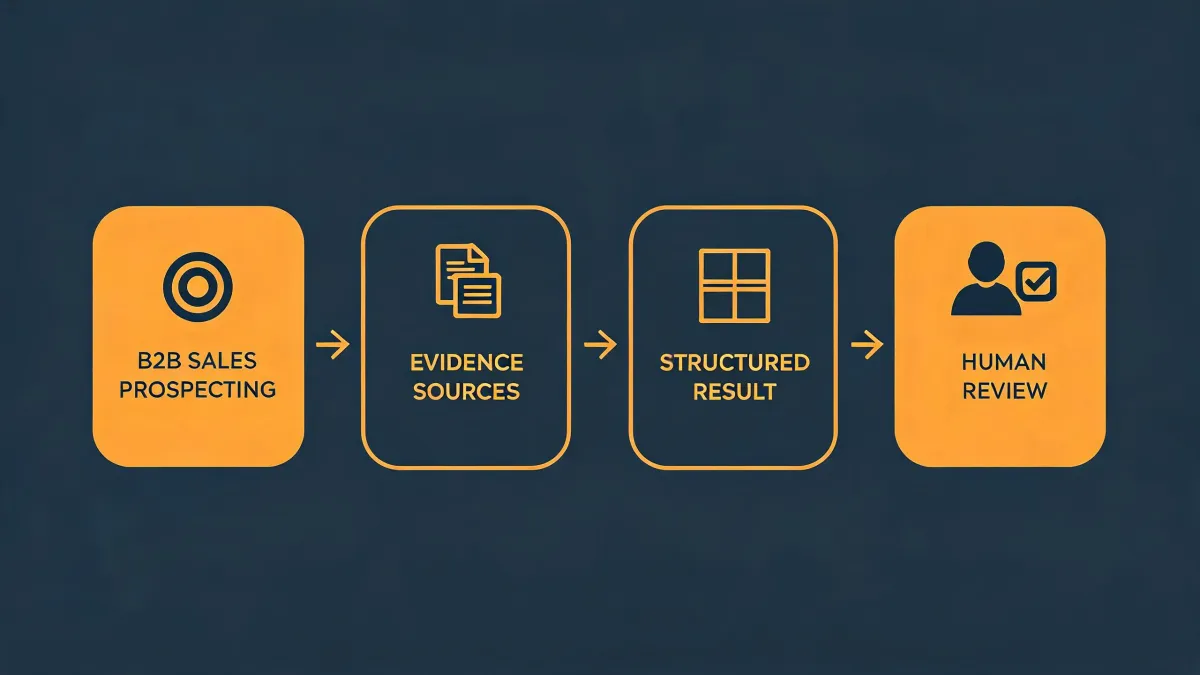
An internal revenue-operations ownership model integrates lead generation deeply into the company's strategic fabric. This model typically involves several key steps: defining user context to identify candidate companies, a rigorous review and revision process for target lists, selecting specific 'unlocks' or strategic entry points, identifying key contacts, drafting personalized outreach, and confirming communications before they are sent. Platforms like OKKI Go support this model by facilitating the progression from user context to candidate identification, review, revision, selected unlocks, contacts, drafts, and confirmation before outreach, ensuring human oversight and strategic alignment at each stage.
Within this comprehensive workflow, specialized roles emerge, each contributing distinct expertise. A researcher uncovers market insights, a channel operator executes outreach campaigns, a lifecycle operator manages lead progression, and a RevOps analyst provides performance analysis and strategic recommendations. These roles, when clearly defined and integrated, ensure that every stage of the lead generation process, from initial market understanding to final handoff to sales, is optimized for efficiency and effectiveness. This specialization allows for a sophisticated, multi-faceted approach to engaging potential customers.
Mechanism for Validating Pipeline Health
Validating pipeline health is critical for assessing the effectiveness of lead generation efforts and the overall sales process. Tools like Salesforce Pipeline Inspection offer distinct metrics that, when analyzed together, provide a comprehensive view. These include 'Push Count' (how many times a close date was moved), 'Days in Stage' (duration a deal remains in a particular stage), 'Recent Activity' (engagement level), and 'Contacts' (number of associated contacts). Rather than treating these as a single health score, an evidence-led approach derives a review-snapshot slippage rate specifically from locked close-date fields, offering a precise indicator of potential delays and qualification issues, which informs both lifecycle operators and RevOps analysts.
When Outsourcing Lead Generation Requires Strategic Oversight
The value proposition of lead generation specialists diminishes significantly when outsourcing becomes a generic activity, lacking strategic oversight. This approach often severs the vital learning link between market signals and the internal sales team, as external providers may focus solely on volume metrics without deeper market intelligence integration. Without a clear understanding of the 'evidence problem' they are meant to solve, outsourced specialists cannot effectively contribute to the organization's evolving market understanding, leading to a disconnect between generated leads and strategic business objectives.
Effective outsourcing agreements for lead generation must meticulously define deliverables and establish clear mechanisms for knowledge transfer. Drawing parallels from frameworks like the voluntary AI Risk Management Framework, such agreements should mandate documented roles, human-AI oversight (where applicable), continuous monitoring, regular review, performance measurement, and a commitment to ongoing improvement. Neglecting these governance structures can result in a black box operation where valuable market insights generated by the specialist are not effectively communicated or integrated into the client’s internal strategy and sales processes, diminishing their long-term impact.
When these critical aspects, clear deliverables, knowledge transfer, and robust oversight, are neglected, outsourcing can lead to misaligned efforts and compromised data quality. External specialists, without a deep understanding of the client's specific evidence problems or an integrated feedback loop, might generate leads that do not fit the target market's needs or buying habits. This not only wastes resources but also floods the internal sales team with unqualified prospects, eroding trust in the lead generation function and severing the crucial link between market signals and sales effectiveness, ultimately hindering strategic growth.
The Boundaries of External Engagement
The rule regarding effective lead generation specialists stops transferring when external engagement lacks a strategic framework for market signal interpretation. Without internal strategic guidance and a clear definition of the evidence problem, outsourced specialists are less effective. Their work, however diligent, can become a disconnected activity that fails to inform or adapt to the evolving needs of the sales team or the market itself. The critical learning link, which translates raw market data into actionable insights for target market definition and marketing plan refinement, is lost, turning a potential strategic asset into a mere transactional vendor.
Common Misconceptions in Specialist Engagement
A prevalent misconception is that lead generation is a purely quantitative, volume-driven task, where more contacts invariably equate to better results. This overlooks the qualitative 'evidence problem' at the heart of effective lead generation. Simply increasing the number of outreach attempts without a deep understanding of target market needs, buying habits, and discovery channels can lead to a high volume of unqualified leads. Such an approach not only strains sales resources but also fails to provide the valuable market intelligence necessary for strategic adjustments, ultimately severing the learning link.
Another common error is failing to define clear scopes of work for lead generation specialists, expecting them to operate effectively without adequate strategic context. Without detailed role descriptions and a clear understanding of the evidence problem they are meant to solve, specialists may default to generic activities. This absence of precise direction can lead to misaligned efforts, where the specialist's output does not directly support the organization’s strategic objectives or provide the specific market insights needed to refine the target market definition and marketing plan, thus diminishing their overall value.
Organizations often mistakenly treat lead generation as a standalone function, isolated from the broader sales and marketing ecosystem. This approach neglects the critical interdependencies between lead generation, pipeline management, and revenue operations. A specialist's work should be an integral part of a cohesive strategy that connects target market understanding to actionable plans and review mechanisms. When isolated, lead generation becomes an unanchored activity, unable to effectively contribute to the holistic picture of market engagement and revenue growth, thereby undermining its strategic potential.
Rejecting Superficial Interpretations of Performance
The tempting interpretation to reject is evaluating lead generation specialists solely on raw lead count. This superficial metric fails to account for the quality, fit, and strategic value of the leads generated. A truly effective specialist's performance should be measured against their ability to solve defined evidence problems, which includes delivering leads that align with a meticulously researched target market and progress predictably through a well-articulated marketing plan. Focusing solely on quantity without considering the depth of market insight or the potential for conversion disconnects the specialist's effort from actual revenue impact, reinforcing the severed learning link.
Recruiting and Managing Evidence-Led Lead Generation Specialists
Recruiting and managing evidence-led lead generation specialists requires distinguishing between critical roles. A Researcher focuses on defining the target market through needs analysis, buying habits, and discovery channels. A Channel Operator executes outreach based on the marketing plan's defined channels. A Lifecycle Operator manages lead progression, using pipeline inspection metrics like 'Days in Stage' and 'Recent Activity'. A RevOps Analyst analyzes performance, identifies bottlenecks, and aligns with internal ownership models, leveraging data such as slippage rates from locked close dates. A Fractional Program Lead oversees the entire strategy, ensuring alignment with the evidence problem and robust outsourcing governance.
For a Researcher or Fractional Program Lead, a practical interview exercise might involve presenting a hypothetical market segment, such as 'SaaS companies with 50-250 employees in the healthcare sector, experiencing high churn rates on legacy CRM systems.' Candidates would be asked to outline a methodology for identifying key pain points, preferred discovery channels, and initial value proposition messaging. This exercise requires them to explicitly detail how they would define and approach the 'evidence problem,' demonstrating their capacity for strategic market analysis and their ability to connect research to actionable marketing plan components, rather than just generic outreach. A candidate may demonstrate an OKKI Go research workflow if it fits the role exercise, but the evaluator should score the candidate's judgment and documentation rather than inferred product performance.
For a Lifecycle Operator or RevOps Analyst, a suitable exit artifact would be a 'Pipeline Health Diagnostic Report.' This report would analyze an illustrative Salesforce Pipeline Inspection snapshot, focusing on metrics like 'Push Count,' 'Days in Stage,' and 'Contacts.' The task would be to derive an illustrative 'slippage rate' from locked close-date fields, propose a root cause for any identified issues (e.g., poor qualification, lack of follow-up), and suggest process adjustments aligned with internal revenue-operations ownership models. The report should also outline a knowledge transfer plan, detailing how insights would be shared with internal teams, particularly for outsourced engagements, adhering to principles of documented roles and continuous improvement.
The Strategic Decision Checkpoint for Specialization
The next decision checkpoint for organizations involves a critical assessment: whether to build internal capabilities or engage external specialists. This choice hinges on owning the learning link between market signals and the sales team. Regardless of the model, defining the precise evidence problem is paramount. Establishing clear metrics for success, beyond mere lead volume, and ensuring robust knowledge transfer mechanisms are essential. The ultimate goal is to prevent generic activity from severing the vital feedback loop that fuels continuous market adaptation and sustained revenue growth, ensuring every lead generation effort contributes strategically to the organization's intelligence.
Hire a specialist for a named evidence problem and a handoff rule. A quota without those two objects is just another unowned queue.
Frequently asked questions
What problem should a lead-generation specialist be hired to solve?
An evidence problem: which market signal, channel, or qualification rule is missing. A quota without that problem turns the hire into an unowned volume seat.
How is a specialist different from a closer?
The specialist produces inspectable candidates and a learning trail. The closer works accepted opportunities. Combining the jobs without a handoff rule hides both failures.
What is the risk of outsourcing specialists without knowledge transfer?
The client loses the reason a record was chosen. When the contract ends, the queue remains and the learning does not.
How should specialist value be measured?
By solved evidence problems: cleaner acceptance, fewer false routes, and transferable rules. Raw lead count can rise while those worsen.