
Three years ago I got a call that still makes me wince. A client needed 2,000 leads for a product launch. The launch was in 48 hours. I skipped half my normal checks to hit the deadline and bought a cheap list. We cleaned it overnight, sent the campaign, and watched the bounce rate hit 6%. The email domain's reputation took weeks to recover. We saved maybe $200 on the list and spent more than that on recovery tools.
In my role coordinating outbound prospecting for B2B teams, I have handled 100+ rush requests like that. The ones that work are not the ones with the fastest software. They are the ones with a clear, repeatable checklist.
This checklist is for B2B sales and RevOps teams, especially small ones, who are asking what lead generation software is, whether they need it, and how to use it without turning their CRM into a graveyard. Short version: use lead generation software when you have a defined buyer and a real outreach process. Do not use it as a shortcut to skip the basics.
What Is Lead Generation Software and When Should a B2B Sales Team Use It?
Lead generation software is any tool that helps you find, verify, and engage contacts who might buy from you. It basically includes a contact database for names and company data, an email verification service to remove bad addresses, and some form of outreach automation. In modern AI sales stacks, it also includes enrichment and intent data, so you know not just who a person is, but whether that person is showing signs of demand.
The short answer to 'when should a B2B sales team use it' is: when you can describe your ideal prospect in one sentence and you have an outreach message that gets replies. Use it when your current list is running dry, you need more volume, or you want to move from manual searches to automated workflows. Do not use it when your messaging is generic or your sales process is undefined.
The 6-Step Checklist for Buying and Using Lead Generation Software
When I'm triaging a rush request, I run this sequence. It is not the only one, but it works.
Step 1: Define what a lead means before you buy.
If you cannot state the title, industry, company size, and buying trigger, no software will save you. In March 2024, a client called at 4 p.m. needing 500 leads for a launch 48 hours later. We asked one clarifying question: 'Who exactly is the buyer?' and the answer changed the list completely. That step costs five minutes. Skipping it costs months of bad data.
Step 2: Audit your existing contact database before adding new contacts.
Before importing anything, check what is already in your CRM. If more than 3% of emails bounce, you have a data quality problem. A good email verification service will clean a list before it ever touches your sending platform. Do not assume 'verified' means 'deliverable.' I made that mistake once. The vendor's definition of verified did not include a real inbox check. Learned never to assume that again.
Step 3: Look for enrichment and intent data in the same platform.
You do not want a contact database in one tool, enrichment in another, and email verification in a third. That is how a list ends up costing three times your estimate. relevance-ai combines these steps, so imported records get filled in with missing job titles, company info, and intent signals. That means your sales agent can focus on prospects who are actually researching a solution.
Step 4: Evaluate the relevance ai agent builder features that match your workflow.
Agent builders vary a lot. What I like about relevance-ai is that the builder feels less like a coding exercise and more like a conversation. You describe the ideal prospect in plain English; the agent builds the list, verifies emails, and sets up cold email and LinkedIn follow-ups. That is the workflow you want. If a platform makes you connect three separate tools to get the same result, the maintenance burden falls on you, not the software.
Step 5: Run a small batch test before sending to your whole list.
This is the step I still kick myself for skipping. I assumed a 5,000-email send using a 'premium' list would perform like the 50-record sample. It did not. The sample was clean; the full list had duplicates and dead roles. Send 50 to 100 emails first. Check bounce rate, open rate, and reply rate. One small batch will tell you more than any demo.
Small does not mean unimportant. The vendors who treated my first $200 testing budget seriously are the ones I still use when our budget grows to $20,000. Test software the same way you would test a vendor: give it a small job and see how it handles the pressure.
Step 6: Set a kill switch and a weekly review.
AI agents can run on their own, but they should not run forever without checks. Set simple rules: if bounce rate goes above 3%, pause. If reply rate stays below 0.5% after 200 sent, pause. Every Monday, look at a one-page report showing contacts added, emails sent, replies, and meetings booked. That is the human part of an AI SDR. No agent should run without one person responsible for the outcome.
And know your compliance basics: CAN-SPAM requires a valid physical postal address and a clear opt-out in every commercial email (FTC, effective 2004). That is not optional.
When You Should Not Use Lead Generation Software
Lead generation software is not the answer for a weak value proposition or an ICP that changes every week. I have watched teams buy a tool, turn on an AI SDR, and wait. Then they wonder why the calendar stays empty. The tool finds people; it does not make them need you. Fix the offer first.
The question is not 'Is this the best platform?' The question is 'Does this workflow force you to make better decisions?'
Bottom Line
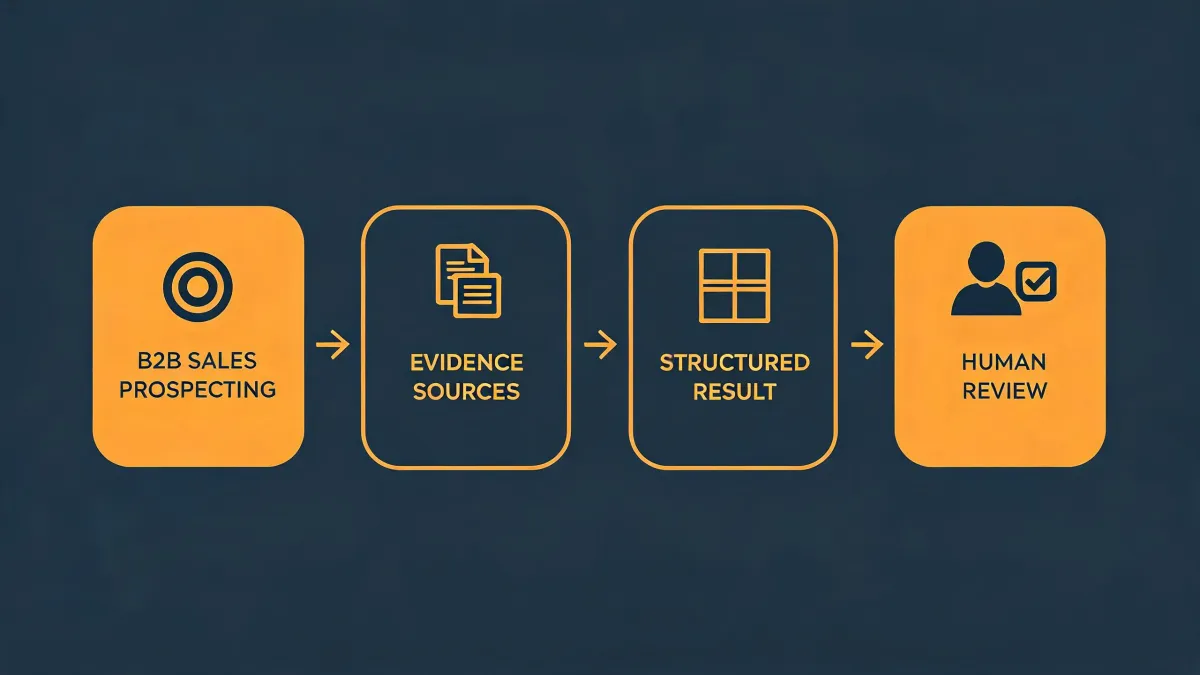
If you are searching for 'artisan ai sales software company relevance' or 'relevance-ai' because you want an AI SDR that actually works, do not let the label distract you. What matters is the workflow: contact database, email verification service, enrichment, relevance ai agent builder features, and a process to review results.
Use lead generation software when you can answer the who, why, and when. Start with one list. Verify it. Build one agent workflow. Test it on 50 contacts. That's it. If the data survives, scale. If it does not, the software was not the problem. The process was.