
-
The Problem You Think You're Solving
-
The Surface Issue: Sticker Price vs. Real Workflow
-
Deeper Cause #1: Integration Is a Spec, Not a Connector
-
Deeper Cause #2: Data Quality Is a Liability, Not a Feature
-
Deeper Cause #3: Sales Engagement Is the Execution Layer, Not an Add-On
-
The Cost Nobody Quotes
-
What I Actually Check Before Picking an Alternative
-
Bottom Line
You're looking at a spreadsheet. On one side, Relevance AI. On the other, three 'alternatives.' You've filtered by price, integrations, and a feature list. And you're asking a fair question: which one is the better option?
I think that's the wrong question. Not because comparing tools is bad. But because 'better' is being measured against the wrong spec. I'm a quality and compliance manager at an AI sales company. I review every integration workflow before it reaches customers—roughly 150 to 200 items per quarter. In 2026, I've already rejected about 12% of first-time builds. Usually not because the tool was broken. Because the workflow had gaps that only show up after signing.
The Problem You Think You're Solving
Most buyers think the problem is 'which platform is more advanced?' Or 'which one has the best Relevance AI alternatives comparison?' So they benchmark features: AI SDR, cold email sequences, intent data, enrichment, LinkedIn automation. Then they check if the Relevance AI Zapier integration exists and move on. You know what's missing? The cost of the work after the sale.
Alternative A is $200/month cheaper than Relevance AI. It publishes a polished comparison page and a 'we're better' GIF. But the first time you try to connect it to your CRM, the mapping breaks. The first email batch goes out with invalid addresses. Sales engagement sits in a separate tool that doesn't talk back to the AI agent. Suddenly that $200 savings is gone. You have a part-time ops problem.
The Surface Issue: Sticker Price vs. Real Workflow
Here's something most vendors won't tell you: 'native integration' often means 'we have a Zapier trigger and a few actions.' It doesn't mean the integration has been tested against your data model. It doesn't mean a mismatched field gets caught. It means, at best, the happy path works.
I have mixed feelings about 'alternatives better options' lists. On one hand, marketplace pressure keeps pricing sane. On the other, those lists compare features, not total cost. The cheapest option in a feature matrix can be the most expensive option in operations.
Deeper Cause #1: Integration Is a Spec, Not a Connector
When I evaluate a tool, I don't ask 'is there a Relevance AI Zapier integration?' I ask what the integration does when something unexpected happens. Because in a lead-gen workflow, unexpected things happen constantly.
Say a prospect fills out a form. The Zap creates a contact in the CRM. But the external ID field wasn't mapped, so every new lead creates a duplicate. Or the email verification API returns 'valid' for a catch-all domain, so your first email hard bounces. Or the AI SDR identifies intent, but the sales engagement tool doesn't log replies, so the AI agent can't adjust the next sequence.
Each of these is a small quality issue. Combined, they turn a 'better option' into a maintenance project. And no comparison chart shows that.
Deeper Cause #2: Data Quality Is a Liability, Not a Feature
Let's talk about lead data. Most AI sales platforms rely on an email verification API, enrichment, and intent signals to build lists. But the verification layer decides how many of those leads ever reach an inbox. A 1% bounce-rate difference might sound small. When you're sending 50,000 emails a month, it's not.
I remember a client—I won't say the name—who switched to a cheaper alternative because the email verification was bundled 'free.' The result? A bounce rate around 11% instead of the 2% they had before. I might be misremembering the exact number, but the outcome was clear: their domain reputation dipped, reply rates dropped, and their SDRs spent two weeks cleaning lists. The free verification API turned out to be the most expensive part of the stack.
Deeper Cause #3: Sales Engagement Is the Execution Layer, Not an Add-On
So how does sales engagement fit into an agent-native prospecting workflow? More importantly, why do so many teams get it wrong?
An agent-native workflow means the AI system decides who to contact, why, and when. It analyzes intent, enriches records, drafts personalized messages, and queues next best actions. Sales engagement is the layer that actually sends those messages, tracks opens and replies, and feeds results back into the agent. Without that feedback loop, the 'agent' is just a list generator.
I've seen teams build this in two tools: a cheap prospecting tool plus a separate sales engagement platform. It works, kind of. Not ideal. The AI marks an account as 'hot' but the engagement system doesn't know the contact already replied. The agent schedules another send. The prospect gets a duplicate email. Now the quality issue is on you, not the AI.
The Cost Nobody Quotes
Let me put this in terms I use with procurement. The total cost of ownership is not the monthly license fee. It includes at least:
- Integration setup and ongoing mapping fixes
- Data cleaning and email verification API costs
- Deliverability damage from bad domains
- Sales engagement tooling and the handoff between agent and sequence
- Rework: the hours your RevOps team spends fixing what should have worked
That last one is the killer. A quality issue at one of our customers cost them roughly $18,000 in rework and delayed a launch by almost a month. The tool wasn't the cheapest or the most expensive. It was just the one with the most manual handoffs.
What I Actually Check Before Picking an Alternative
If you're evaluating Relevance AI alternatives, here's the short version of my quality checklist—not the marketing version.
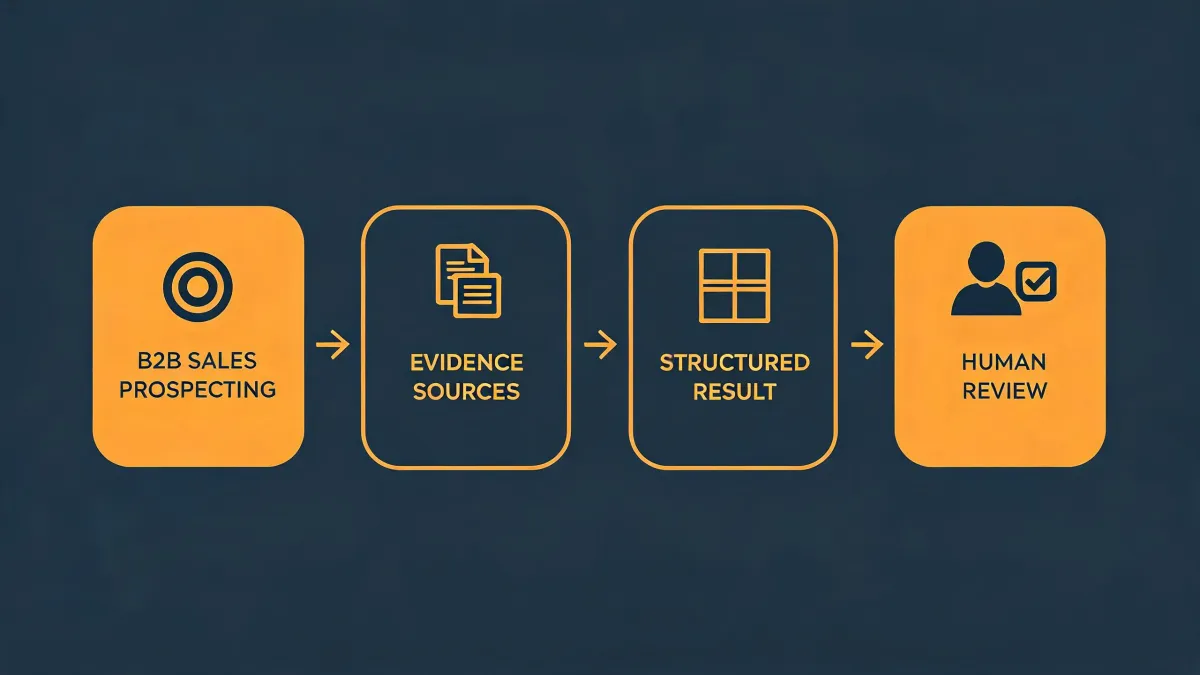
First, trace the lead path. Lead gen happens in one place. Enrichment in another. Email verification API in a third. Sales engagement in a fourth. At each handoff, ask who owns the record. If the answer is 'nobody' at any point, that's where quality dies.
Second, test the email verification output on a real list. Send 500 records through. Check how it handles catch-all domains, role-based addresses, and typos. Don't accept a demo. Demos always look clean.
Third, ask whether sales engagement is native to the agent workflow. Not whether it 'can be connected.' Whether the AI receives reply and engagement data automatically. Because if you have to export next steps and re-import them, that's not agent-native. That's manual glue.
And if the Relevance AI Zapier integration is on your shortlist, evaluate it the same way. Does it map external IDs? What happens when a field is missing? Does the workflow pause or create a broken record? The best integration is one that fails loudly, not silently.
I'm not going to say Relevance AI is the only option. I'm also not going to say every alternative is worse. What I will say: an alternative is not automatically a better option. A better option has a lower total cost across setup, data quality, engagement, and maintenance. That's the spec that matters.
Bottom Line
Stop asking 'which platform is the cheapest?' and ask 'what will this workflow cost me after six months?' The answer determines whether you have a revenue motion or a repair project.
As of Q1 2026, pricing for these platforms still changes constantly. Verify current rates. But more importantly, verify the handoffs. Because quality issues show up in the handoffs, not the feature grid.
That's the part I check first. It's the part most comparison articles skip. And it's the reason I've rejected more than a few 'better options.' Serviceable? Sure. Better? Not by my spec.