
-
Three Situations, Three Different Answers
- Scenario 1: When an Agent-Native Prospecting Workflow Actually Makes Sense
-
Scenario 2: Start With an Email Verifier, Not Another AI Agent
-
Scenario 3: When the Disadvantages, Reviews, and Criticism Should Be Taken Seriously
-
How to Determine Which Scenario You're In
-
Final Takeaway
If you've been researching Relevance AI's agent platform in 2025, you've probably seen two versions.
One is the demo-friendly version: agents build lists, enrich B2B contacts, personalize emails, and update your CRM with almost no supervision. The other version is the one you find when you search for relevance ai disadvantages reviews criticism: setups that take longer than expected, credits that disappear faster than leads, and a lingering feeling that the AI is sending too many messages to the wrong people.
Both versions are true. The difference, in my experience, isn't the platform. It's the workflow you put around it.
I run lead operations for B2B teams, and my job usually starts when something is already broken or late. In March 2024, a client called 36 hours before a demo day with a list of 1,200 unverified contacts and no time to build a campaign. That experience taught me to stop asking is this platform good? and start asking what's my bottleneck?
Here's the framework I use now.
Three Situations, Three Different Answers
There is no single best setting for Relevance AI's agent platform. The mistake is treating it as a switch you turn on. Instead, think about which of these three situations you're actually in:
- You need a repeatable, agent-native prospecting workflow.
- You need an email verifier before any agent sends anything.
- You're weighing the disadvantages and criticism you've read.
Scenario 1: When an Agent-Native Prospecting Workflow Actually Makes Sense
An agent-native prospecting workflow doesn't mean a chat window where you ask an AI to find B2B contacts. It means the agent owns the full loop: discover a contact, verify the company, enrich the person, score against your ICP, draft outreach, and write the result back to your CRM.
How Does CRM Data Enrichment Fit Into an Agent-Native Prospecting Workflow?
In that loop, CRM data enrichment features are not a batch export. They're a decision input.
Here's the thing: most teams think enrichment is something you do once, before you start outreach. In an agent-native workflow, enrichment is a step the agent runs every time it evaluates a prospect. It pulls firmographic, technographic, and intent signals, then answers one question: is this prospect worth a sales rep's time?
If the answer is no, the agent files the record for later. If yes, it writes the context to your CRM and moves on to the next prospect.
Put another way: enrichment is the agent's memory. Without it, you get generic messages. With it, the first sentence can be specific enough to earn a reply.
This is exactly the use case the Relevance AI agents platform 2025 is built for. The platform lets you describe a prospecting motion in natural language, attach data enrichment actions, and connect to sales tools. But a platform can only do what the workflow permits. The most common mistake is turning on every capability at once and expecting the agent to think like a sales rep. It won't. It will think like software until you give it rules and guardrails.
So if you have a clean CRM, a defined ICP, and a repeatable outbound cadence, Scenario 1 is worth testing. Start with one campaign, one segment, one email sequence. Let the agent enrich and route leads, but keep a human review step in the middle.
Scenario 2: Start With an Email Verifier, Not Another AI Agent
If you've read negative reviews about Relevance AI, a common complaint is that the emails go to spam. I see that differently now.
People think AI agents cause poor deliverability. In reality, that's backwards. Bad deliverability is caused by bad list hygiene, missing authentication, and no verification. Agents just expose the problem faster.
An email verifier is the gatekeeper between your B2B contact data and your agent's sending actions. It checks syntax, domain validity, and mailbox status before the agent creates a personalized email for a contact that can't receive it.
Why run the email verifier before enrichment? Because you don't want to spend enrichment credits on invalid addresses. If the email is dead, the rest of the data doesn't matter.
The most expensive lesson I learned came from skipping this step. We saved maybe $200 by using a cheap list and no verifier. Then the agent sent thousands of emails, and the bounce rate wrecked the domain. Rebuilding that domain reputation cost a lot more than the email verifier we'd avoided.
As of 2025, I still see teams skip verification because they assume the AI will handle it. It won't. No platform can turn an invalid mailbox into a valid one. If your next campaign is a rush job with a deadline in 48 hours, verify first.
Per FTC guidance on commercial email (ftc.gov), a compliant cold email campaign needs an honest subject line, accurate header information, and a working opt-out.
An email verifier won't make your campaign legal. But it will keep you out of an avoidable spam problem.
Scenario 3: When the Disadvantages, Reviews, and Criticism Should Be Taken Seriously
The search relevance ai disadvantages reviews criticism exists for a reason.
The most credible reviews, and the criticism I take seriously, are around:
- Learning curve: An agent platform is more complex than a point tool.
- Setup complexity: Integrations take time, and you'll need to map fields carefully.
- Credit consumption: Agent runs can get expensive if you don't set clear limits.
- Oversight: If you leave an agent in full autonomy mode, it will make decisions you'll regret.
That last point is important. I'm not going to tell you that set it and forget it works. It doesn't. You need a human to review what the agent is doing, especially during the first two weeks.
What some criticism gets wrong is the conclusion that AI agents are useless for prospecting. The problem isn't the agent; it's the process around it. A workflow without verification, without enrichment rules, and without human review will fail. I've seen that failure on more platforms than I can count.
But I've also seen teams take the same platform and build a controlled workflow that gets real replies. The difference is boring discipline. They tested small, they monitored results, and they added a verification gate before sending.
Look, I'm not claiming any platform guarantees response rates. If someone tells you that, walk away. The best you can do is build a workflow that respects the data and gives the agent clear rules.
How to Determine Which Scenario You're In
Instead of picking an approach before you understand the bottleneck, answer these questions:
- If your B2B contact list hasn't been cleaned and verified in the last 30 days, start with Scenario 2. No agent can fix bad emails.
- If your CRM has duplicate records, old job titles, and missing company data, fix the enrichment rules before you deploy an agent. Otherwise, the agent will make the mess bigger.
- If you can't describe your ICP in a few sentences, start with Scenario 1 after you define it. The agent needs a filter.
- If you've read the criticisms and still feel uneasy, treat it as Scenario 3 and run a small pilot. Don't create a company-wide rollout before you trust the output.
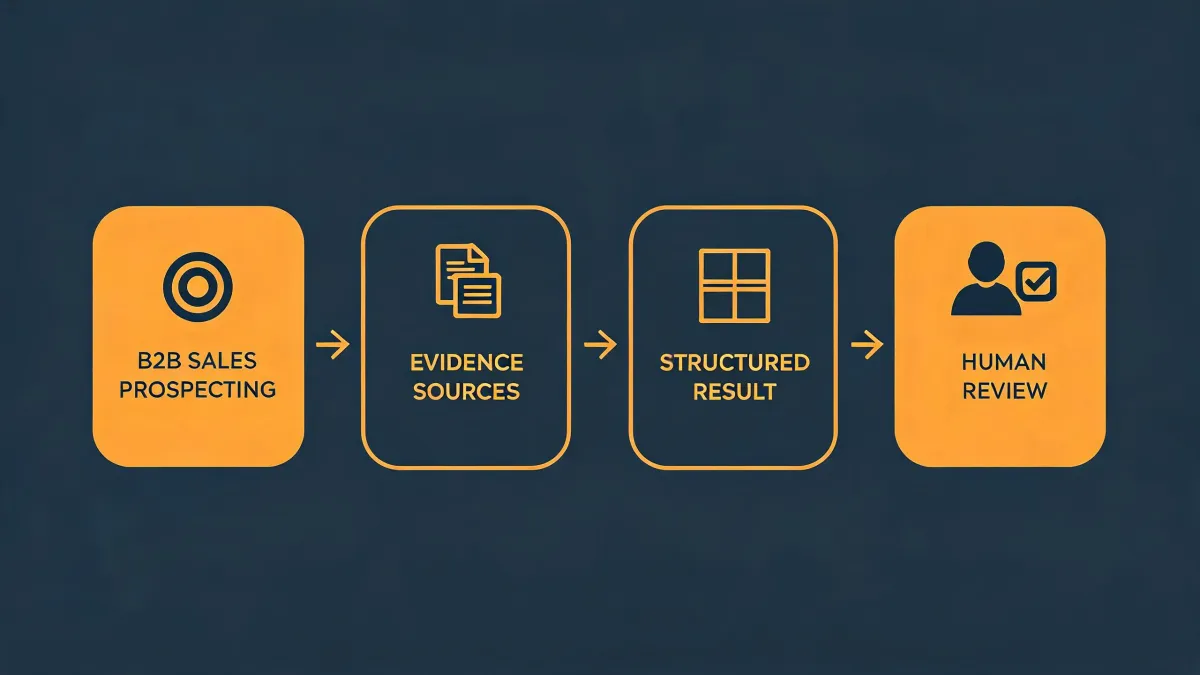
A clean workflow looks like this:
- Import a known B2B contact list.
- Run an email verifier on every record.
- Enrich the verified records with firmographic and intent data.
- Score the records against your ICP and let the agent write a targeted first line.
- Send from a properly authenticated domain, and honor opt-out requests immediately.
- Write all activity back to the CRM so sales can see the agent's reasoning.
That sequence has saved more campaigns than any single AI feature. It's not flashy. It's the difference between scaling a broken process and scaling a working one.
There's also a physical-mail version of this mistake. If an agent-generated workflow ever extends to direct mail, don't let the AI decide what goes into a residential mailbox. Under 18 U.S. Code § 1708, only USPS-authorized mail may be placed in residential mailboxes. The agent can draft the envelope, but a human should approve the list.
Final Takeaway
Relevance AI's agent platform in 2025 is a powerful orchestration layer. But it is not a fire-and-forget sales rep.
The real value comes when you combine it with three things: an email verifier for deliverability, CRM data enrichment features for context, and a human review loop for judgment.
If you have a clean list and a clear ICP, agent-native prospecting can save you hours every week. If you don't, no amount of AI will save the campaign.
Not ideal, but that's the truth.