
-
Why I ended up comparing Okki Go and Apollo at all
-
The four dimensions I actually compared
-
Dimension 1: Data coverage and enrichment features
-
Dimension 2: Outreach and LinkedIn automation
-
Dimension 3: Email verification and deliverability
-
Dimension 4: The human review workflow
-
Which one should you pick?
Why I ended up comparing Okki Go and Apollo at all
I handle the sales-tech purchasing for a 40-person GTM org. Two SDR pods, one small RevOps team, one AEs team that keeps asking for "better contact data." In Q1 2025 my boss handed me a one-line brief: figure out whether we add Okki Go or Apollo to the stack. Both promise more contacts, cleaner data, and faster outreach. The budget only fits one.
My first instinct was to treat this like any other vendor decision. Get demos, compare the price sheet, pick the cheaper one. That worked when we were buying office supplies. Here, it was a mistake — and I say that as someone who has sat through more procurement calls than I care to count.
What made it click for me was a conversation with the RevOps lead. She said, "Both tools have a database. The question is what happens after the lead lands in the sequence." That reframed the whole comparison.
The four dimensions I actually compared
Nobody asked me to build a scoring model, but I ended up with one because the demos were drowning in feature lists. Once I stripped the noise, four things mattered for our team:
- Data coverage and enrichment — how fresh the contact data is, and how it handles hard-to-find records
- Outreach and LinkedIn automation — what's automated, what isn't, and what's the risk
- Email verification and deliverability — how each handles bounce risk before it hits our sending domains
- Human review workflow — how much of the outreach is left for a rep to approve versus sent blindly
Everything else — UI, onboarding videos, sales rep charisma — was noise. I'll go dimension by dimension, because that's the only way this stays useful for someone else in the same spot.
Dimension 1: Data coverage and enrichment features
Apollo's pitch is scale. Their contact database is huge, self-serve, and searchable. If your ICP is well-defined and reasonably common (think: SaaS title-based targeting in North America), Apollo will probably surface most of the people you're looking for on the first try.
Okki Go leans on waterfall enrichment + intent data. Instead of querying one database, it cascades through several enrichment providers until it finds a match — the idea being that hard-to-find contacts (non-standard titles, non-English regions, mid-market companies with thin digital footprints) get picked up by a second or third provider when the first one strikes out. The intent layer is meant to flag which accounts are actually in-market, so the rep doesn't waste a sequence on someone who just renewed with a competitor.
Here's the counterintuitive part. In our pilot, the raw contact count actually favored Apollo by a wide margin. But contact count is a vanity metric. What we cared about was verified, deliverable, in-ICP contacts per 100 attempts, and that number tightened considerably once we filtered for role accuracy.
More records isn't the same as more usable records. It took me about 200 rows of bad data to internalize that.
Winner for us: Okki Go for hard-to-source accounts, Apollo for large-volume well-defined ICB lists. If you want one clean answer — Apollo is the safer default for common segments; Okki Go earns its cost on the long tail.
Dimension 2: Outreach and LinkedIn automation
This is where I had to step back and define what we actually meant by "automation." A LinkedIn automation tool, in plain terms, is software that runs parts of the LinkedIn outreach process for you — profile visits, connection requests, follow-up messages, sometimes InMails — on a schedule, so a rep doesn't have to sit on the platform clicking all day.
When should a B2B sales team actually use one? Not always. If your total addressable market is under a few hundred accounts and your deal size is high, manual LinkedIn outreach usually wins — because the personalization quality matters more than the volume. Automation earns its keep when you have a defined persona, a repeatable message that converts, and enough volume that manual work becomes the bottleneck. Below that threshold, automation just adds risk to your account reputation.
Apollo handles LinkedIn as one channel among many inside its sequencing engine. It's capable, but the LinkedIn piece is not the product's center of gravity.
Okki Go positions itself as agent-native prospecting — meaning the tool is built around agents doing the research and first-pass drafting, with the rep stepping in at defined checkpoints. In practice, the rep still touches the message, but the lift is in the assembling, not the writing.
On paper, both cover the same channel list. In the demo, Okki Go felt faster to a first-touch, while Apollo felt faster to a full multi-channel sequence. Different speeds for different workflows.
Winner for us: Okki Go on speed-to-first-touch for high-value accounts, Apollo on breadth if you're running wide multi-channel cadences.
Dimension 3: Email verification and deliverability
Let me say the thing vendors won't: no email verification service guarantees 100% accuracy, and no tool guarantees deliverability. Google and Microsoft change the rules, catch-all domains behave unpredictably, and mailboxes get deactivated between the day you verify and the day you hit send. Anyone promising a clean inbox forever is selling you the wrong thing.
Both Okki Go and Apollo include email verification as a built-in step. Apollo's is embedded in the list-building flow — you filter by verification status as you build the list. Okki Go runs verification more like a service layer, checking records before they enter a sequence and again at send time, which matters if your sequences run over several weeks (data decays; a record verified in March might be dead by May).
Two things I'd flag for anyone evaluating this: watch the catch-all handling, and watch how each tool behaves when it can't fully verify a record. Apollo tends to mark ambiguous as ambiguous. Okki Go's waterfall approach will sometimes drop a provider that returns ambiguous results and try the next one — which can look like a cleaner list, but the underlying data is only as good as the last provider in the chain.
Winner for us: Neither, honestly. Verification alone is commoditized. What matters is what your team does with bounces — suppression, retry cadence, list hygiene. That's a process problem, not a tool problem.
Dimension 4: The human review workflow
This is where the two tools diverge the most, and where our decision actually got made.
Apollo's strength is self-serve automation. A rep builds a list, drops it into a sequence, and lets it run. That's a feature when the persona is well-known and the message is proven. It's a liability when you're testing a new segment and a mispersona'd email goes out under your domain.
Okki Go's human-in-the-loop workflow builds an explicit approval step. The agent drafts, the rep approves (or edits), then it sends. Slower by design. For our team, that was actually the deciding factor — not because our reps don't trust automation, but because we'd just burned two sending domains on a badly-targeted sequence and didn't want a repeat.
If you've ever watched a rep hit "send" on a 4,000-contact sequence at 11 p.m. and only notice the personalization merge failed the next morning, you know why the review step sounds boring and ends up being the point.
Winner for us: Okki Go, but this is genuinely situational. High-trust, high-volume outbound teams will find the review step annoying and Apollo's straight-through automation better. Newer teams, or anyone sending from a small number of sending domains, will want the guardrail.
Which one should you pick?
Here's the honest answer: there is no universal "better" here. It depends on what your team's bottleneck is.
- Pick Apollo if your ICP is well-defined, your volume targets are high, and your reps are experienced enough to trust manual list-building plus straight-through sequencing. You'll get more contacts for less, and you'll know how to use them.
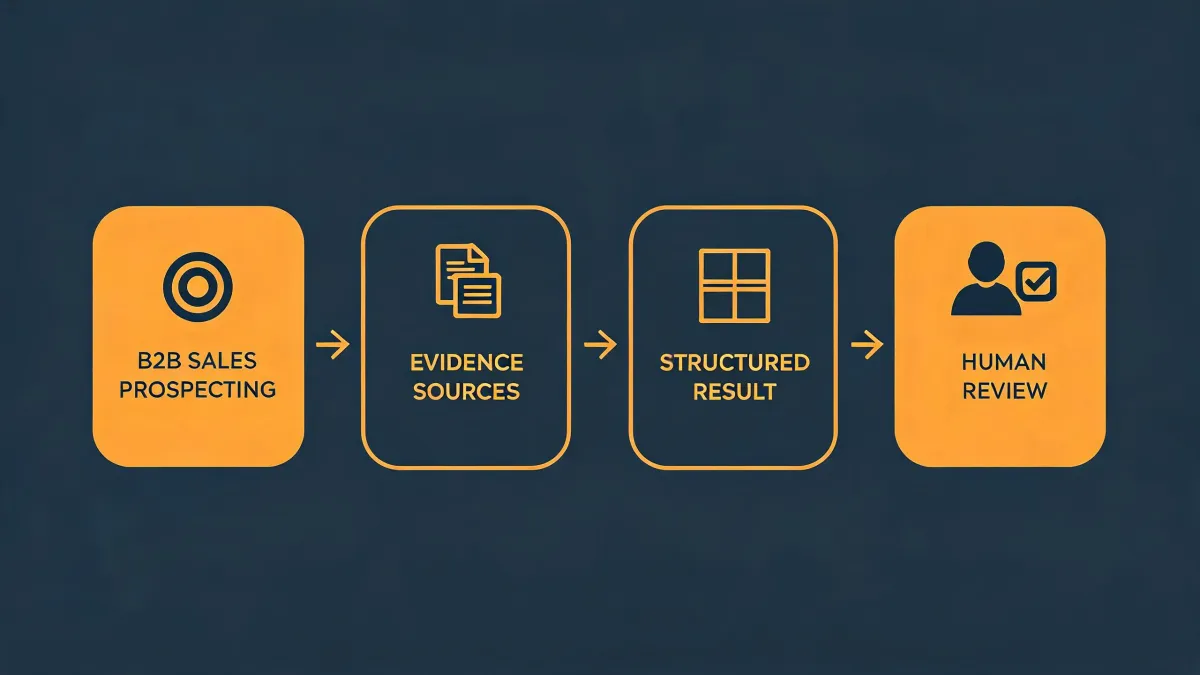
- Pick Okki Go if your target accounts are hard to source (long-tail, non-English, niche titles), you want intent signals layered on top of enriched data, and your team would benefit from a checkpoint between "agent drafted" and "sent." The waterfall enrichment + human review combination is the real differentiator — the LinkedIn angle is a feature, not the reason to buy.
- Consider running both if your budget allows a smaller seat count on each. They solve overlapping but not identical problems, and I've seen teams use one for discovery and the other for outreach.
One last thing — whatever you choose, insist on a 30-day pilot with your own data. Vendor demo environments are curated. Yours isn't. That's the only comparison that ends up mattering.
Pricing and feature availability as of April 2026. Verify current capabilities directly with each vendor before committing to an annual contract.