
Last October, our VP of Sales dropped a request on my desk: “Find something that will handle LinkedIn outreach and cold email follow-ups without hiring a third SDR.” I'm the office administrator for a 48-person B2B company—I manage the GTM software stack, which means roughly $300k in annual software spend across 12 vendors, and I report to both ops and finance. I don't write the sales emails, but I'm the one who reads the contracts, tests the integrations, and lives with the consequences if a tool breaks.
At that point, our outbound motion was half manual, half chaos. SDRs exported lists from Apollo, cleaned them in Google Sheets, then spent the afternoon sending LinkedIn connection requests and writing one-off email drafts. We had decent reply rates on email, but the LinkedIn connection side was inconsistent. My VP wanted a platform that could turn a natural-language brief into an actual workflow—find the lead, connect on LinkedIn, send a sequence. That's how I ended up with a Capterra page open and a Relevance AI (relevance-ai) trial account.
Starting with Capterra Reviews
I read the relevance ai capterra reviews over the course of two evenings. Most of the positive ones mentioned the breadth of the platform—AI agents, email, enrichment, and the ai email writer feature. The negative ones called out the learning curve and some connection issues. You know, the usual. I found the middle-of-the-road reviews more helpful than the five-star ones. The five-star ones read like press releases. The four-star reviews described, step by step, what they had to configure.
When I compared the high- and low-rated relevance ai capterra reviews side by side, I finally understood why implementation context matters so much. The same platform can be “life-changing” and “impossible to set up” depending on the team's confidence with automation. A 1-star review about LinkedIn automation breaking often comes from someone who pushed the cadence too hard. A 5-star review from an enterprise team with two automation engineers isn't relevant to a team of one. The reviews weren't lying—I was just reading them without a map.
The Google Sheets Integration
Our stack runs on Google Sheets more than I'd like to admit. Every team has some master list of accounts, target personas, or a “do not touch” list. So the relevance ai google sheets integration was my first test. I connected a test sheet with 40 target contacts for our CFO-services product. It worked—after I realized the column names had to match the workflow's expected labels.
(Should mention: if the sheet says “Company Name” but the workflow expects “Organization,” the row gets skipped. We lost an afternoon in the sandbox finding that one.)
LinkedIn Connection Limits and Account Safety
The biggest pain point was the LinkedIn side. We set up an agent to send LinkedIn connection requests plus a three-touch email sequence. On day two, our SDR's LinkedIn account hit a security check. It wasn't the tool trying to be malicious—the cadence was too aggressive. But the settings that control that cadence are not at the top of the UI. We dialed it back to around 20 invites per account per day and the account recovered.
That's not a universal number. LinkedIn's tolerance depends on account age, past activity, and how many incoming requests you ignore. But a good platform should make it easy to set a sane ceiling. The lesson for anyone evaluating tools: ask exactly how the platform handles LinkedIn connection rate limits and security flags before you connect a real account.
The AI Email Writer Feature
The ai email writer feature is where the tool earned its keep. You don't write a template with variable tags. You describe the recipient segment, the goal, and the tone, and the model writes the sequence. The first drafts were usable but not amazing. When I gave it more context—past win-loss notes, ICP details—the quality jumped.
What I mean is: the output is only as good as the brief. Put another way, don't judge this feature on a five-word prompt. We ended up using it as a drafting engine for our SDR rather than an autonomous sender. That's not a failure; it just stopped the blank-page problem.
The Week I Almost Canceled
Three days before the VP's review, the agent started failing in production. It pulled a list from Sheets, sent a batch of LinkedIn connection requests, and added new rows to the output sheet—but it didn't update a shared status column. The email workflow couldn't tell which leads were already contacted, so it tried to email people who'd just accepted a LinkedIn invite.
Ugh. I had to manually reconcile the sheet, and I seriously considered canceling the pilot. In hindsight, I should have run a full end-to-end flow with 5 contacts before letting it touch the real list. But with the VP's budget meeting two days away, I went with the available option: I reviewed the logs, cleared the mismatch, tested a new row, and then let the workflow run again. I did the best I could with incomplete information.
Even after we got it stable, I kept second-guessing. What if we'd locked into something that was going to need a full-time operations person? The first two weeks after the rollout were stressful. I didn't relax until our SDR said, “Wait, this drafted the follow-up that got a meeting.” That was the moment I stopped refreshing the logs every hour.
What Should Revenue Operations Teams Evaluate in LinkedIn Outreach?
That's the question that actually drives this whole review. The platform mattered, but the evaluation framework mattered more. Here's what I'd tell anyone in a RevOps seat before they sign.
- LinkedIn connection safety: Does the tool let you set hard limits on daily invites? Does it pause when LinkedIn shows a warning, or does it keep going?
- Data source integration: Can it read from the same Google Sheet or CRM you already trust? How strict is the column mapping? What happens when a field is missing?
- AI email writer control: Can the SDR review and edit before send? Is there an approval step? The AI is a helper, not a replacement for judgment.
- Error handling: What happens when an automation fails halfway? Does it update your sheet with a status, or does it silently skip rows?
- Review literacy: The relevance ai capterra reviews are a starting point, not a verdict. Focus on reviews from teams your size, with similar use cases.
By the end of the 30-day pilot, we'd sent a modest number of LinkedIn invites and emails—nothing that would impress a growth hacker. We booked four qualified meetings. I'm not going to quote a response-rate percentage because the sample was small, and I don't want to be another vendor blog post. The win for us wasn't scale; it was speed. The SDR went from spending 90 minutes writing first-touch emails to reviewing and editing drafts generated by the ai email writer feature.
There's something satisfying about finally getting that workflow to work. After the failed first week, the Google Sheets column mismatch, and the LinkedIn security check, seeing a connection accepted and a meeting booked—that's the payoff.
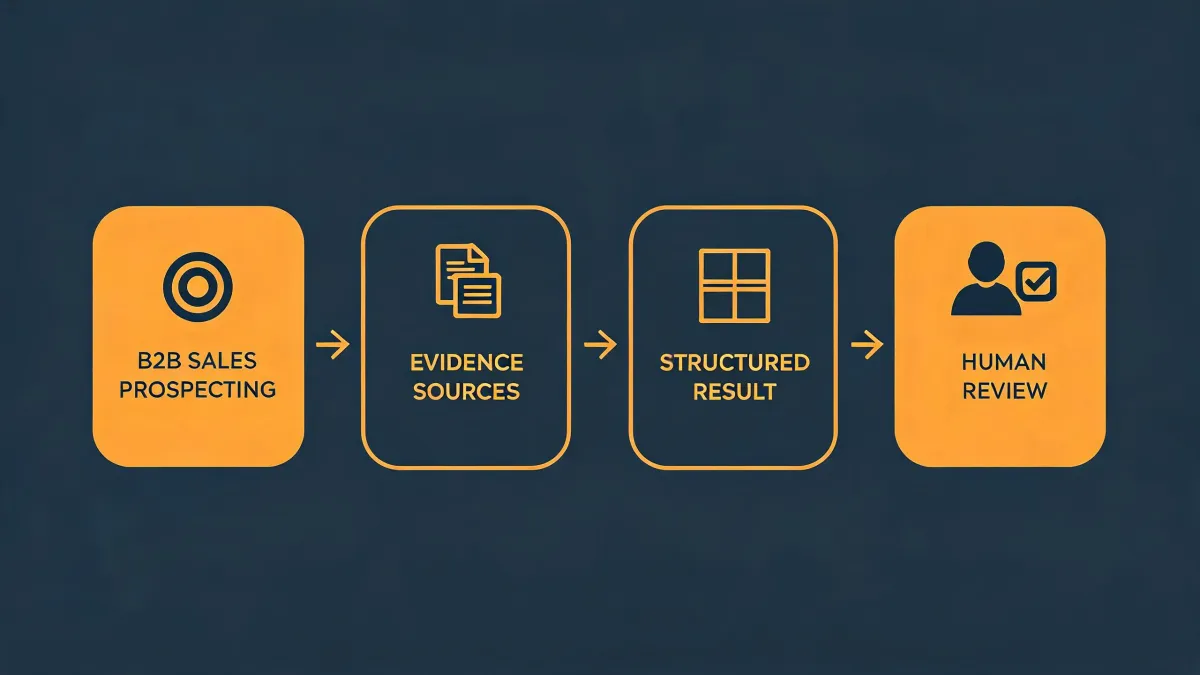
I wouldn't say Relevance AI is for everyone. If you need an outbound system that runs with zero human oversight, you'll be disappointed. If you expect it to fix bad list quality, it won't. But if you're a RevOps person evaluating AI SDR tools, start with the workflow: Google Sheets in, LinkedIn connection requests, email writer drafts, human review, actions back to Sheets. That's the part that matters.