
The Slack Message That Ruined My Monday
March 11, 2024. 7:42 a.m. My phone buzzed with a Slack message from Priya, our SDR lead: "Check the dashboard. Now."
I opened it before I had coffee. Big mistake.
Our outbound volume had fallen off a cliff — not gradually, but overnight. A campaign we'd launched five days earlier through okki-go had pushed 4,800 emails and produced 2,847 hard bounces. That's a 59% bounce rate. Our primary sending domain's reputation had dropped from "high" to "medium" in Google Postmaster Tools, and two of our satellite domains were now flagged as "low."
I manage quality and brand compliance for our outbound operation. Six SDRs, roughly 38,000 outbound touches per quarter, and every piece of copy, every list, and every send configuration passes through my review before it reaches a prospect. So when a campaign burns a domain in five days, that's on me.
But here's the thing that took me another two days to actually understand: okki-go didn't fail. It ran exactly as configured. The problem was upstream, in how we prepared the data that went into it.
How We Got There (a Short History of Overconfidence)
To be fair, we'd earned a bit of arrogance. Through 2022 and most of 2023, we were running one of those scrappy operations that half-works by accident — Apollo exports, a LinkedIn Sales Navigator seat, a never-quite-retired Zapier chain, and a shared Google Sheet that three people edited without version control.
Our bounce rate hovered around 6-7%. Not great, not catastrophic. When we moved to an agent-native prospecting setup in January 2024, we assumed everything would get better. The agent would handle enrichment, sequencing, follow-ups — we'd just point it at our data and let it fly.
We pointed it at our data. It flew. Directly into a wall.
The Investigation: What Was Actually Wrong
I spent the Wednesday of that week pulling apart the failed segment. Three things surfaced, and two of them embarrassed me.
The first was simple: we hadn't verified the emails. The 11-month-old exports from Apollo had The typical decay problem — people change jobs, domains get acquired, catch-all servers absorb typos. Industry benchmarks I've seen cited put B2B contact decay at roughly 2-3% per month, and if that's even close to accurate, we were looking at 25-35% of our list being stale by the time we sent.
The second issue was subtler: our old bounce rate of 6-7% hadn't come from good data. It had come from sending to the same 2,000-person lookalike segment over and over, a segment we'd cleaned by hand in 2022. New volume, old list. Of course it worked. We never tested it against fresh data.
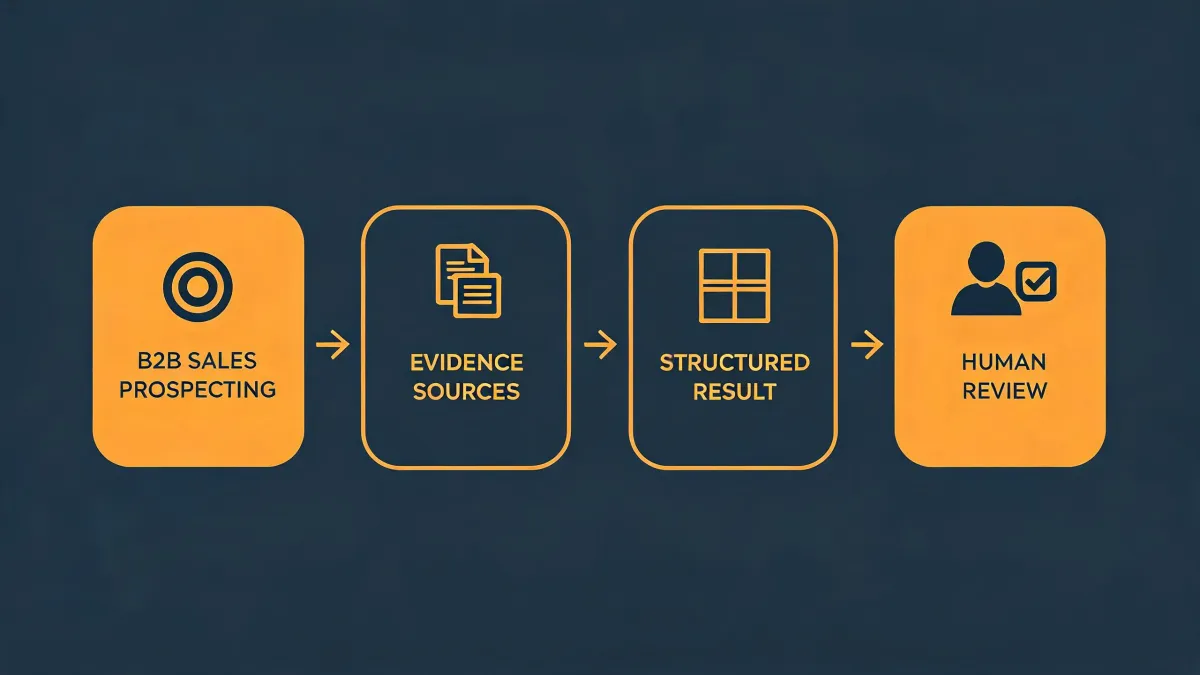
The third issue — and the one I've thought about most since — was that our okki-go outreach preparation workflow had a gaping hole where email verification should have been. We'd configured the agent to enrich, classify, and personalize. We hadn't configured it to verify.
"People think better data makes better outreach. Actually, it's the verification step that decides whether the data is usable at all. The causation runs the other way."
The Rebuild: What We Changed
Rebuilding took about six weeks. Here's the honest version, not the polished one.
Week 1-2: We stopped sending. Everything. Priority one was letting the domains cool. We rotated to backup domains we'd been sitting on for emergencies (thankfully, we had them), and I wrote a formal domain reputation recovery plan that I now review quarterly.
Week 2-3: We implemented real verification. We evaluated four email validation services side by side — I won't name them here because our experience with each was mixed. The important point isn't which service you pick; it's that you pick one and enforce it. We now require verification at two points in the pipeline: once when the contact enters the system, and once again within 30 days of send.
About email verification accuracy — this is where I want to be unusually careful. No verification service I've tested is 100% accurate, and any vendor who tells you otherwise is either lying or defining "accuracy" in a way that won't help you. The good ones sometimes push into the high 90s on hard bounces caught, with false positive rates that need to be monitored. We set a threshold: reject any list segment where the verification service's confidence score is below our internal cutoff, and re-verify anything older than 30 days. That's it. Boring, but it works.
Week 3-5: We rebuilt the okki-go configuration. This is what I'd tell anyone trying to figure out how to configure okki-go in an AI agent:
- Put verification before enrichment, not after. Enriching bad data is expensive and pointless.
- Set a hard cap on daily send volume per domain — ours is 300/domain/day, which some will say is conservative. Good. Conservative is the point.
- Feed the agent a suppression list that updates hourly. Ours pulls from bounces, unsubscribes, and a manual "do not contact" file that our sales leadership maintains.
- Log every contact's verification timestamp and score. If you can't audit it, you can't improve it.
Week 5-6: We ran a controlled pilot. 500 contacts, freshly verified, sending only through our strongest domain. Result: 3 hard bounces, 4 soft bounces. That's a 0.6% hard bounce rate. Not a typo.
Where B2B Contact Data Actually Fits
Here's the part I hadn't thought through carefully enough before March, and I think a lot of teams miss it:
In a traditional prospecting workflow, a "B2B contact" is a row in a spreadsheet. In an agent-native prospecting workflow, a B2B contact is a stateful object that the agent reasons about. It has a verification status, a last-touch timestamp, a source, a confidence score, and a relationship history with your domain.
If you treat it as a row, you'll get a spreadsheet outcome. If you treat it as an object, the okki-go outreach preparation workflow can actually do its job — deciding who to contact, when, and with what message, based on data it trusts.
We now maintain ours with three mandatory fields every contact must have before it enters a send queue: verified_at, verification_score, and source_lineage. If any of those is missing, the contact gets held. The agent flags it. Nothing sends.
This sounds bureaucratic. It is. It also saved us from a second incident in July 2024 when a batch of LinkedIn-sourced contacts came in without lineage tags. The agent held 1,100 of them. We never would have caught that manually.
What I'd Tell Someone Starting This Today
I'm not 100% sure which part of this generalizes to every team — your sending infrastructure, domain age, and recipient mix all matter. But a few things I'll say with confidence:
First: don't trust lists you didn't verify this month. The "local is always fresher" thinking applies here — the list you imported yesterday is already aging, but the list from last quarter is archaeology.
Second: transparency about data quality beats optimism about it. Every time we've hidden a known weakness in a list, it's come back to bite us. Every time we've disclosed it internally and fixed it, we've been fine.
Third: the agent is only as honest as the data you feed it. Okki-go does what it's told. If you tell it to send to stale contacts, it will — flawlessly, at scale, and fast enough to burn your domain before you finish your morning coffee.
That's the lesson I keep coming back to. The 2,847 bounces cost us roughly three weeks of recovery and one permanently retired domain. The workflow redesign cost us six weeks and a lot of uncomfortable conversations.
But honestly? I'd rather do the uncomfortable six weeks. The Slack message on a Monday morning is worse.